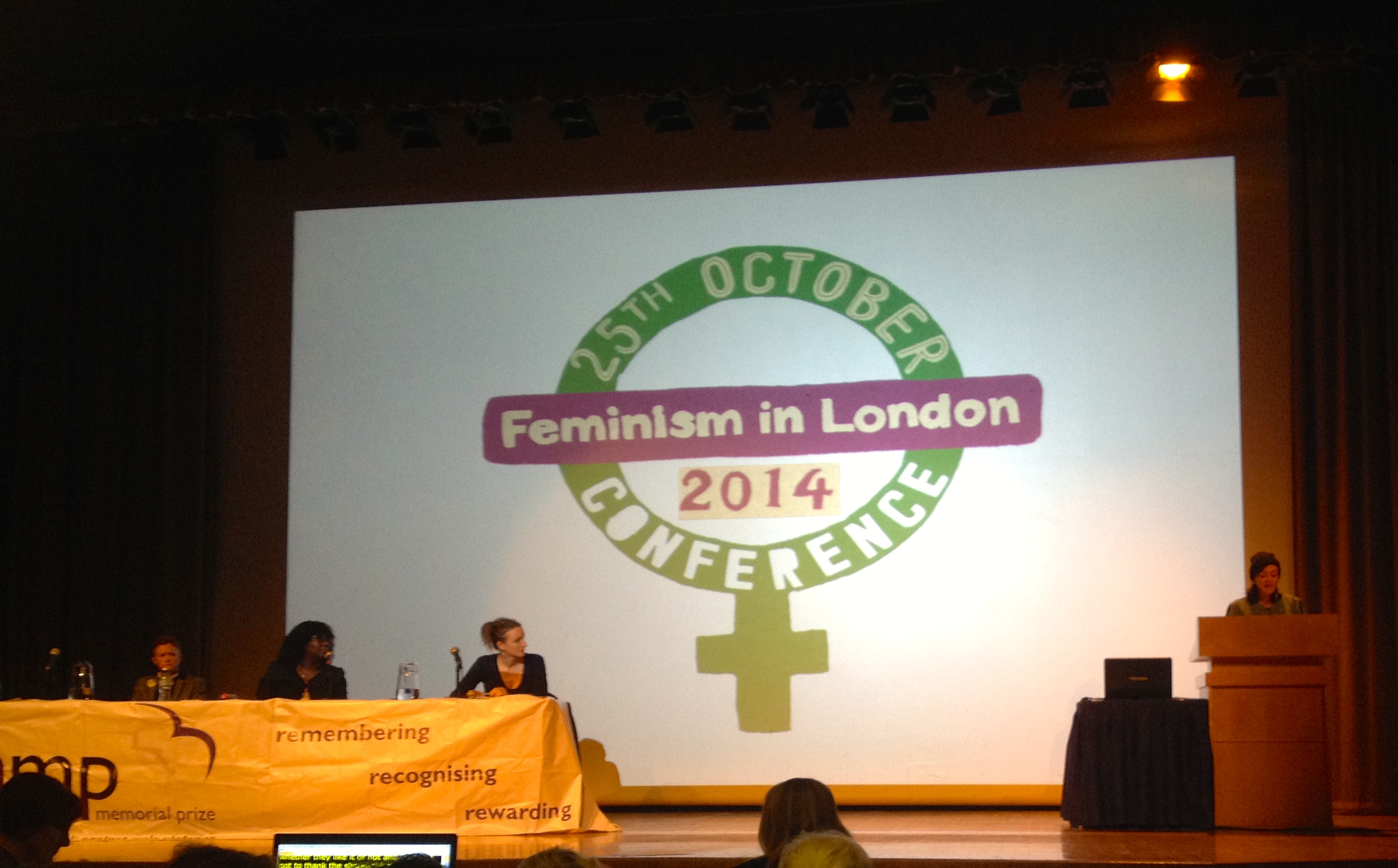
Feminism in London Conference 2014: Part 1

IMG_2542

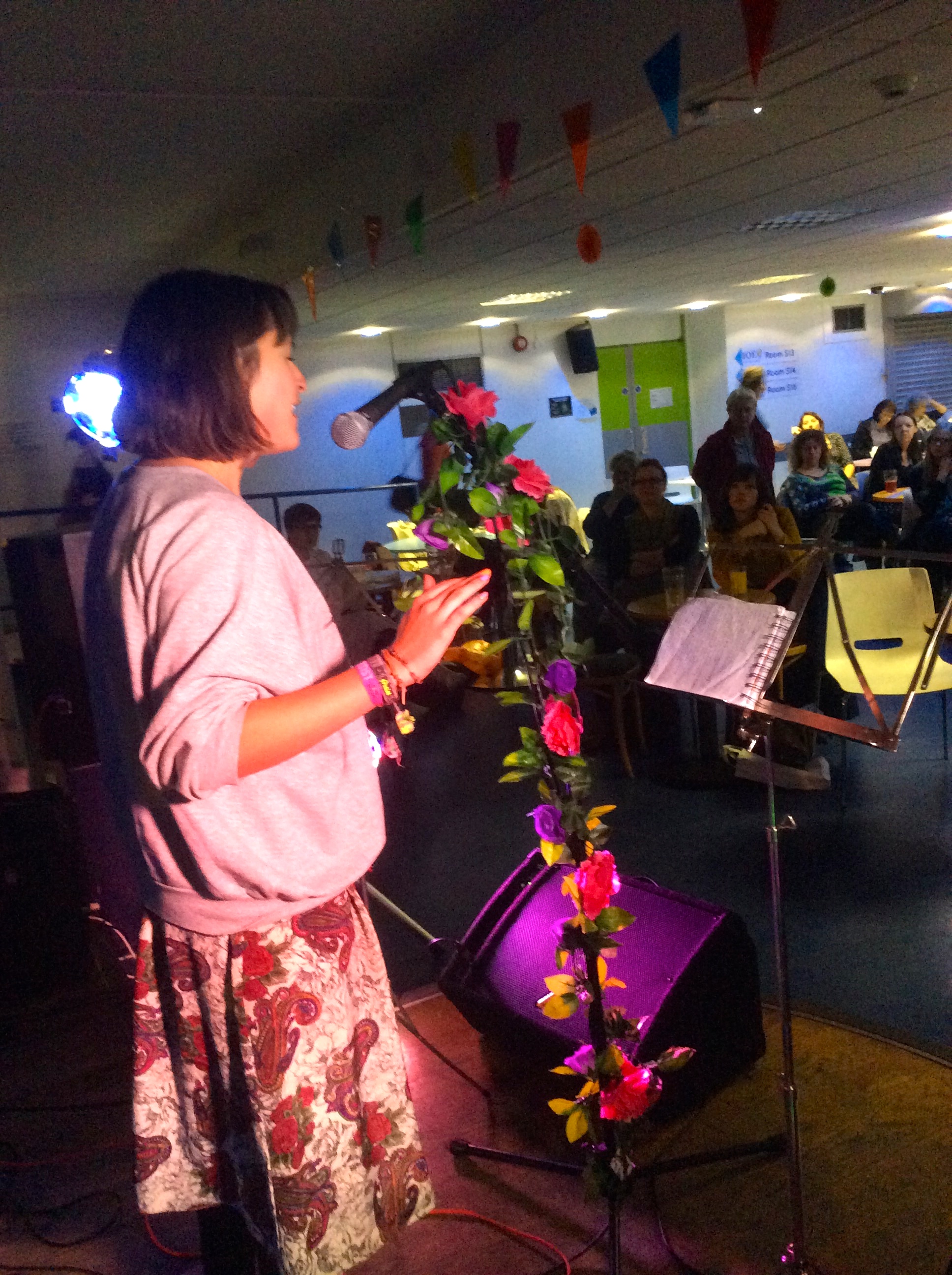
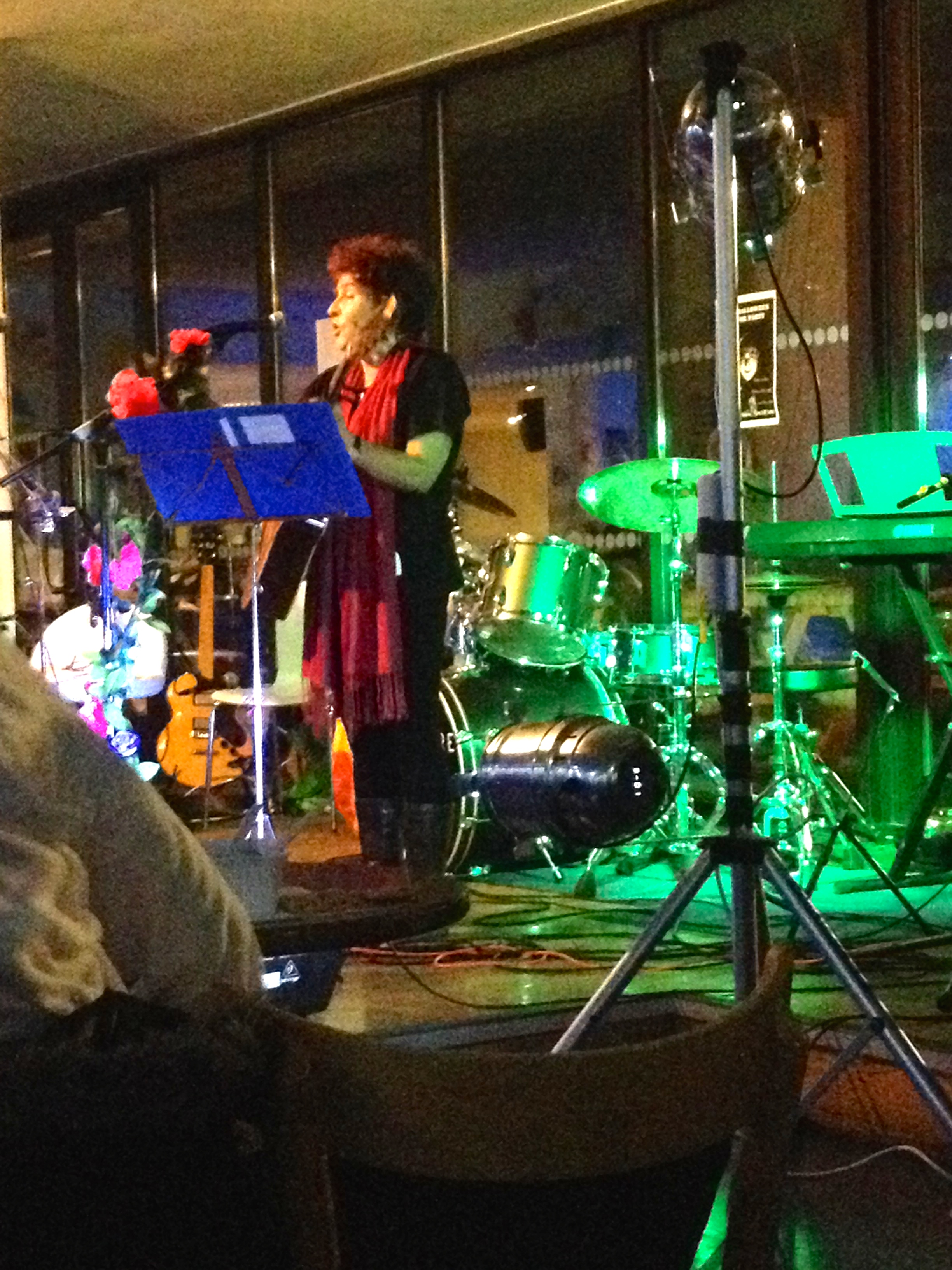
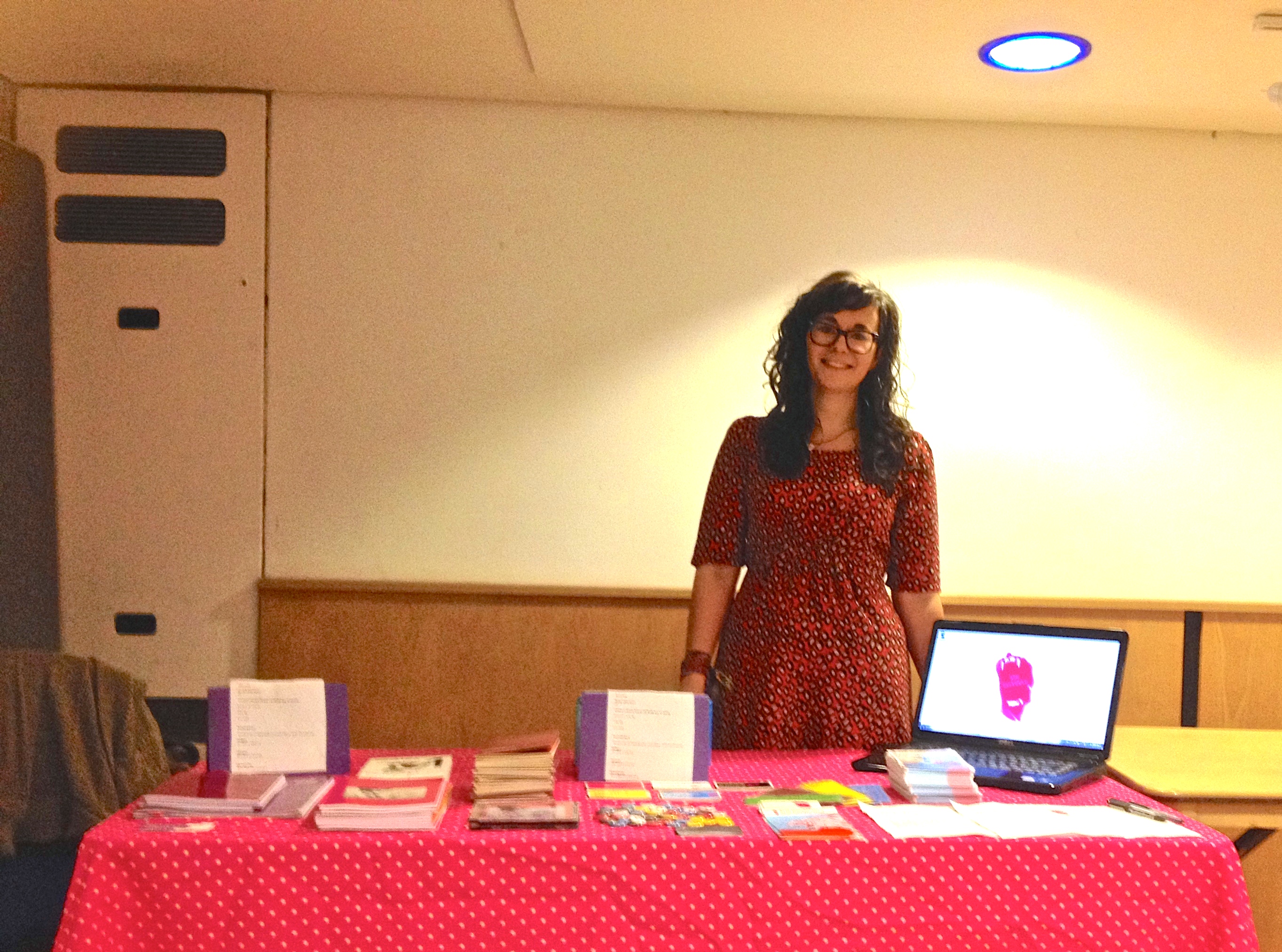
This year at the Feminism in London Conference  I was holding a stall and performing at the after party. My wonderful Mum actually held the store most of the day so that I could enjoy some workshops. In hindsight I wish that I had told her to come along to some of the goings on. I was there promoting She Grrrowls and selling books and other merchandise, such as my Nasty Little Intro. I’m going to divide it up into different posts, or else it will be very long!

From the very first talk of the day, this year’s conference felt very important for me. Last year I wrote a blog post where I detailed my thoughts on the ‘Stop Porn Culture’ talk and I was unsure on my views on porn. I hate to say it has actually been my boyfriend whose views have swayed me into thinking that porn is always exploitation of women. This year it was forcefully said that the Feminist movement needed to agree on this issue and it made me wonder whether my desire to accept that there may be such a thing as Feminist porn is actually too much of a compromise. I still feel like I need to do more research in this area. Even speaking on a similar issue with my boyfriend this week, he didn’t see the connection between the exploitation of women in porn with those on the streets. I guess we both still have some figuring out to do!

What I was talking about was one of the biggest revelations of the weekend for me. There was a distinction made between the language of calling what I would normally call a sex worker, with calling someone a prostitute, and then again with the expression ‘a prostituted woman’. This phrasing highlighted the fact that prostitution is not something that a woman does, but rather, as the verb suggests, something that is done to her. So, even when a woman is not trafficked into the sex trade, it is always going to be a form of exploitation. Some may argue that this is not the case. This is why I would really like to see some statistics on the role of choice in sex work, though I’m aware that it isn’t always going to be quantifiable as it is such a complex matter. At the conference it was argued that to call it ‘sex work’ is to legitimise the work. I feel that to legitimise it and for a sex worker to say ‘I am a sex worker and not a prostituted or trafficked woman’ actually comes from a privileged position. This is where other kinds of intersectional systems of power come into play (something that was discussed last year). How much can ‘choice’ be a factor, I wonder, when a woman has suffered physical and sexual abuse, when a woman suffers from mental health issues, when a woman is addicted to drugs, or when a woman is living in poverty? Are there any women out there who are not white, middle class women who call themselves sex workers? Is selling your body ever something to be empowered by?

Now, to be empowered is something else that was being discussed in this talk. At this point I will say that throughout the presentation I felt like an outsider. It was suggested that the opposition between second and third wave Feminism wasn’t generational, but ideological. However, I cannot help when I was born, that my first experience of any form of Feminism (that wasn’t in history books) was through the Spice Girls and riot grrrl music. I started to feel like I was in an environment where I would be judged for my liking the colour pink, that I shave my legs and get Brazilian waxes, and that I have performed pole dancing routines (not because it was empowering, but because it was fun). I felt that the second wave was being held up as the “right” form of Feminism, and that third wave was too problematic to take anything good away from. I will always be grateful to the Feminists that come before me, but I have always taken issue with some aspects of second wave Feminism, notably the transphobia that has been exhibited by those such as Germaine Greer. On the other hand, more liberal Feminists such as Caitlin Moran have also came out with some problematic things (and, for the record, you need more than a vagina to be a Feminist in my opinion – something asserted during this opening talk).

Negativity aside, I hadn’t thought about radical Feminism and liberal Feminism too deeply. I had always just thought I was a Feminist and not considered the different types within the movement, which may be something I should think more about. I had another revelation whilst listening to the talk. This was with regard to Feminist literature and how the focus has changed through the waves. It was outlined that during the second wave the focus was on the collective liberation of women, whilst now there is more emphasis on the empowerment of individuals. I found this extremely interesting as I am of the view that the Feminist movement is about collective liberation. I think perhaps the focus on individuals has become skewed from introducing a more intersectional Feminism (of which the talk stressed too) and that a collective voice needs to be formed of all individuals’ voices.

What I think is needed is a merging of both waves, perhaps a movement into a forth wave. There was some playful competition between the Dance Squad at UEA and the cheerleaders. Despite being in the former, I found the mockery of the pyramid of cheerleaders problematic. To be a cheerleader is to be underestimated, and as Feminists, we should not do the same. To be a cheerleader, you must train really hard and, like pole dancing, it is essentially a form of gymnastics and it does not need to be sexualised. This is something I have written poetry about and I feel very strongly about. It angers me that the sexualisation of these sports or art forms has created a sense of stigma around it, so that I feel like I cannot be proud about this video. This is precisely what the term ‘slut shaming’ is about. It seemed like this was being misunderstood – third wave Feminists are not saying that women who are called sluts are sluts, they also believe that there is no such thing as a slut. However, what are second wave Feminists doing when they judge the woman who is cheerleading, pole dancing or even performing a burlesque routine? They are slut-shaming. All these activities, I believe, can be done as a Feminist. This does not mean they are Feminist simply due to the performer having a vagina, but that they can play with the art form in a way that does not mean they are being objectified.

I think it is important to critique one another when not supporting the values of Feminism, but sometimes there can be a danger of mocking women in terms of personal taste. As much as I love Kate Smurthwaite and have found a majority of what she says extremely funny and witty, I don’t think we need to make fun of successful women like Victoria Beckham in the name of Feminism. I’m not completely sure where she stands on Feminism now, rejecting it in the past, perhaps due to education on the term, but she has joined the ‘Ban Bossy’ campaign to encourage girls to be leaders. Again, I think hair removal is a matter of personal taste; I don’t think women should be judged either way. I admire women who don’t share their armpits etc. However, I can remove my hair and still be mindful of the complexities of the reasons why I might do this, even though on the surface it feels like a free choice and something I prefer to do in order to feel feminine, or so that I can feel confident and happy with how I look, or simply because it feels nice to have smooth skin.

I think when it comes to sexuality, it can get really complicated. I was disgusted to hear about pornography where a woman was spat on, called a slut, had her head flushed down the toilet whilst penetrating her. I was shocked to hear that these films and photographs were not even that extreme, but easily click-able for pre-teens accessing mainstream pornography (I think this comment referred to boys, but really, it is both boys and girls who are exposed to this, who are curious about sex and who will discover this content). Then again, there was a part of me that questioned how this applies to BDSM relationships. Again, this is not an area I know much about, and anything that may degrade a woman does make me feel uncomfortable. It was simply a question that arose in my mind, wondering where these people may fit into these ideas. Nevertheless, BDSM relationships are not the point here. This is about pornography and this talk did not shy away from making a strong case to oppose pornography. It did more than my unsure rambles can do and so I would like to hear more about the exploitation of women in porn, so I am able to feel confident that by being completely against porn of all kinds, that I am making the right decision.

So, in summary, I have a lot more research and reading to do before I’m clear on where I stand in terms of the sex industry. However, this presentation has had me more convinced that I need to stand against it, if even purely for the reason that we do not know whether women are being exploited – do we really want to take that chance just because 5% of these women claim they feel empowered? This is also so tied up with Capitalism, with complicates the concept of free choice here. I would love any recommendations on where I can go for information and statistics that could persuade others that porn is always bad for women. This talk also made me think more about the distinction between radical and liberal Feminism, and I feel like I am somewhere in between the two and that perhaps we need a fourth wave to emerge in order to be clear that it is individual voices that form a collective voice, that we need to include intersectional perspectives in a way that makes our voice stronger and not weaker. I apologise if I seem to contradict myself, or if this post doesn’t seem well-structured – working out what to think on these issues is difficult when it comes to knowing what is a choice and what is not. One thing remains, that we must stand united as a sisterhood, taking into account all women.

Feminism in London Conference: Part 3


Feminism and men: Working Together for Gender Equality?

Sandy Ruxton and Nikki van der Gaag

For this workshop we were shown a presentation and then got into groups to discuss different questions.

What’s improved?

Thankfully Feminism has done some positive things over the years. There have been changes within the legal system (though still far from perfect), women have the vote (although not in Saudi Arabia), girls’ access to education has improved generally, and in turn women’s employment prospects. These progressions can be why some people think we are equal already. Women and girls have changed a lot, whilst men and boys have not. There is not one country that has achieved true equality yet, and current rates of progression suggest that it will take 95 years to achieve gender equality according to the UN.

What still needs improvement?

Everything that has improved is still not perfect. One of the biggest problems stopping further progress is a culture of sexism and misogyny, all too clear on the web, but, equally prevalent offline. Violence against women is still a big global issue, and along with this is the maternal mortality rates in the developing world. Women do a majority of care work, which is often unpaid. One way to move forward would be to gain more political power; although having women in power doesn’t necessarily mean that women’s issues will be put at the forefront, it would be a massive step forward. Along with this, the glass ceiling still exists when it comes to women moving up the career ladder.

Examples of Men’s Involvement:
He for She
UNFPA, CARE
Instituto Promundo and Sonke Gender Justice
MenEngage
Men Care

What does men’s involvement not mean?

-It does not mean shifting the focus away from women and girls.
-It does not mean men are less powerful than women (Men’s Rights Activists tend to express the view that women are now more dominant).
-It does not mean men should lead on gender issues, but rather that they are standing besides women and supporting them in the fight for gender equality.

The European Context

Ruxton has focused on Europe, and so he delivered some information about the context here. He noted the impact of the financial crisis has in turn seen a rise of right wing populism and racism. One big issue is sexual exploitation and again, the cultural landscape of patriarchal dominance.

Problems:

-Men may be apathetic or resistant to change, either from benefiting from patriarchy, or being in denial.
-Men’s Rights Activists can be hostile towards women.
-There can be a distraction from support for women.

How to encourage men to get involved:

-Men obviously need to see that there are benefits for men too. Sadly, talking solely about women can lead to defensive attitudes.
-The diversity of men’s experiences needs to be taken into account e.g. class, race, mental health issues.
-A focus on opportunity moments in men’s lives and what they can do practically.
-Assertion that gender equality is right in terms of a a wider concept of social justice.
-It is important to address real problems that men experience and open a dialogue.
-It is vital that alliances are built with women and women’s groups (to avoid being an MRA).

Examples of ways men can get involved:

-Individual acts.
-Through education e.g. Great Men Value Great Women.
-Caring for children.
-Anti-violence programmes e.g. White Ribbon.
-Involving men at senior levels in organisations.
-Government initiatives.
-Thinking internationally.

Now for the group discussions…

Unlearning patriarchal masculinity:

Due to traditional gender roles being part of the patriarchy, it is important that men do not take over what women are saying due to their position in society. A good point to focus on is that these gender roles exist for both men and women and that this is a problem as it restricts us all as humans. This was the first discussion group feedback that highlighted the significance of education, and it was not the last. It was stressed that fatherhood is a key time to communicate and pass on an awareness of notions of masculinity in a way that deconstructs the norm. This group commented on different models of power, and that questioning and challenging problematic views was better than being defensive. This was also noted with regard to group situation. The difficulty of this was noted due to the fact that men are often the beneficiaries of the patriarchy.

Obstacles:

The desire to conform was highlighted as a big obstacles, as well as the idea that it is often not seen as a men’s issue too. This also goes in hand with education about Feminism and why it is important to keep the label. One of the men in the group disagreed that Feminism was something that needed “selling”, but perhaps this isn’t reflected in the opposition that women and Feminists are often faced with. It may be a sad fact that we do have to be aware of how we package it. The concept of the invisibility of privilege was also discussed (which also reinforces the idea that we need to present Feminism in an accessible way).

How can we foster men’s involvement?

Some of the ways to do this came up in the discussion on obstacles, but again, engaging different groups of men was stressed, and doing so in cross-disciplinary ways. A method of engaging men from a young age, or even with those with an outdated view of Feminism, would be to find the language to engage with them without the barrier of the label and then saying ‘hey, well that’s Feminism!’

What actions can men take?

I was in this group and I ended up speaking first from a personal experience where I had felt silenced and wished I had the support from my boyfriend and male friend. Whilst we all agreed speaking out against sexism and misogyny was integral to the fight for equality, it was also seen as important to think about barriers that stop men from doing this, such as the need to conform. It was also highlighted that we needed to eradicate the association of guilt and shame with inequality; it is not a case of men vs. women, and individual men need not take on the burden of representing the patriarchy, but should instead unite against male dominance in society for a more egalitarian environment. Again, an education of Feminism both past and present is a a vital way to take action. A focus on positive actions is needed in order to go with this idea of rebranding Feminism, so that it is not misunderstood, as it often is. Again, there was an emphasis on joining men’s groups with women’s in order to form alliances.

Additional Comments:

Some books were mentioned, including ‘Tackling Macho Values’ and ‘Why Some Men Hurt Women and How Some MenCan Help.’ Some final points were noted about men believing we have equality and having a confusion about Feminism, and with that not making men feel like they are the enemy just because they are ignorant to this. Anger was brought up and there were mixed views on the impact of anger, with some men saying that it could be off-putting, whilst others showing an understanding that it a normal reaction to injustice. A woman commented that anger comes from a position of powerlessness and so it is important to recharge by coming together with like-minded people to talk about these things. It can be exhausting going to yet another boyfriend and explaining why you’re a Feminist and why he should be too. I thought that anger is sometimes inevitable, but it is important to hone these feelings of upset and anger. So, instead of it taking its toll on personal relationships, you can make videos and blog posts about these issues. Then you can show others what you think in a more articulate way than within arguments that make occur spontaneously from conversations on gender equality.

I felt close to tears, but as we were rotating poems between the three of us, I had to put it to the back of my mind and tell myself she must not have understood the poem. I stayed for a bit of the Stepney Sisters, but left early as I was tired and had a long journey to go back to the suburbs. I’m already looking forward to next year’s conference and wonder where I will be on the journey of Feminism then.


 

Tell A Story: #1 Desert Island at Bestival 2014

I’ll write a proper update soon. Things are busy. I got ill for four weeks… that didn’t help. I feel like I have to sit down and write a big long post, like, settle down, let me tell you a story with a cup of tea.

Anyway, speaking of stories, while you wait for another long post (because our attention spans are so great, and you love me so much), have a listen to this podcast on Tell a Story. It features myself alongside two other members of the old (old!) Roundhouse Collective, Joel Auterson and Sophie Fenella – and we’re now called ‘Kid Glove’! I hope you like it, because it was a long process.

It also features Kate Tempest, Tim Clare and Scroobius Pip. I wasn’t very good at it; I’m an INFJ (which I just got a book on) and maybe that has something to do with it. I need to be briefed and have time to prepare… hence I’m not on it much! Oh my god, that was literally the only vaguely good thing I came out with.

Not quitting the day job just yet folks. At least I’m educating a few young people on the way.

National Poetry Day

I celebrated National Poetry Day by taking some of my intervention students to NPD Live at Southbank. Then I went to a slam with some recycled poems, plus one from my Nasty Little Intro that I learnt whilst waiting.

I came joint first place in the Genesis Slam (there were only three of us…) Sadly I will have to Skype/send videos in for the final in December as I’m on unpaid leave for an Arvon writing residency (exciting!). I also managed to forget my lines in a poem-song I did because there was a head-to-head to attempt to get a winner, but I took a RISK, and that happens.

I am also very happy about getting fancy cinema tickets for two, plus pie and mash!

11.08.14: Poery and Activism Workshop

Monday 11th August (18:00-20:00) at The Albany, Blue Room

POETRY AND ACTIVISM: WHAT’S THE ISSUE WITH “ISSUE” POETRY?

With Carmina Masoliver

Poetry can be a means to tackle different issues: areas where we feel there’s injustice, raising awareness about something that deserves more attention, or finding a way to produce activist art. However, a problem may emerge from writing about topics such as sexism, racism, homophobia, and so on, in that the poems become too obviously ‘issue poems’ and may appear to an audience too clichéd or didactic. How do we avoid this in our poetry? How do we make sure that what we produce is still a poem, and not just a rant? This workshop aims to explore the ‘issue poem’ and to understand how we make the ‘issue’ go away.

Poet, writer and performer, Carmina Masoliver also mentors, tutors, facilitates workshops and organises events. She runs ‘She Grrrowls’ arts nights and edits the ‘Poetry&Paint’ anthology.

If you’re interested in attending any of these, email Jacob (mail@jacobsamlarose.com). You’ll then receive confirmation. There are other great workshops running that week by other Burn After Reading members, all taking place at The Albany.


  • Tuesday 12th August: 18:00-20:00— Language and Innovation with Cameron Bray
  • Wednesday 13th August: 18:00-20:00— ‘You Bring Out The Black Woman In Me’ with Rachel Long
  • Thursday 14th August: 18:00-20:00— Form and Structure with Lewis Buxton
  • Friday 15th August: 17:00-19:00— Physical Poetry: Exploring Ways of Using the Body in Poetry with Sophie Fenella Robinski


26.06.14 – Wayfaring Stranger @ Open Arts Cafe, 7.30pm

wayfaring poetry

“Traveling is a brutality. It forces you to trust strangers and to lose sight of all that familiar comfort of home and friends. You are constantly off balance.” – Cesare Pavese 

Open Arts Café is an evening of new work by up-and-coming artists.  This month they are exploring strangers, wayfarers and travelling.  

Please join us for wine and snacks as our artists take you around the world.  

Nearest tube: Marble Arch 

Pay what you can 

*** 

With  music from  Lewis Barfoot  and Maya Levy 

Comedic theatre from Chris Boyd 

Poetry from Carmina Masoliver 

Short story from Giles Roberts

Short film from  Victoria Fiore

Clowning and Acrobatics from Poceczka

Visual arts exhibit from Corinne Weidmann and Grace Esther Kalibbala 

14.06.14 – ‘Writing in the Blackout’ Launch

blackoutI will be reading my ‘Vultures’ poem from the ‘Writing in the Blackout’ Anthology during its launch party at Keats House Museum, Saturday 14th June. I wrote the poem as a collaboration with Matthew Dickerson; his image was commissioned for the anthology. The anthology is a online zine that explores themes of censorship in the arts and freedom of expression. Carmina has had her work featured here and will be standing alongside other selected poets to perform their work. The launch will also have 25 limited edition copies of the anthology available to buy for just £5. For more event info, please visit the page here.


Poetry Rivals

It has now been officially announced that I am the winner the 16-25 category for the 2013 entries for Poetry Rivals. I first entered four years ago, when my hair was much shorter! I performed a piece which is now part of my 15-20 minute poem ‘Circles’, which was inspired by my university dissertation text by Sarah Kane.

I came back and I wanted to win (I came to win, to fight, to conquer, to thrive etc…). The prize is amazing – a performance poetry package with Mark Grist, a professional recording of a poem and a paid performance at a UK festival. I have worked hard to get to a position where I stood a chance in winning, and I would have been disappointed if I didn’t. I attend slams but hadn’t felt that same desire to win before. I guess all the nerves and adrenaline paid off!

I hung out in Peterborough for quite an unnecessarily long time and so I had time to rehearse my poem, though I already knew it well. I know my age and experience may have given me an advantage within this category (I’ve just turned 25), but this certainly didn’t make me complacent. I was really impressed by the quality of the poetry from everyone else who competed. The standard was much higher than when I had been before (in my opinion) and I’m sure that if those in attendance keep writing and getting out there, that they will win another year.

Carmina Masoliver

Again, I thank the judges Hollie McNish, Mixy and Tim Clare. It was great to watch them all perform. Hollie, I hadn’t seen since I started out seven years ago, and I connected to the way she made the personal political, and entwined her poetry with story telling. Having not ever been placed first with my poetry performances, it was about time!

You can read my winning poem ‘Paradise’ here, which I wrote as part of the ‘No More Page Three’ campaign.

304_2012

304_2025

29.05.2014 – MOSAIC

Thursday 29th May – MOSAIC at Rose Theatre Cafe, 7.30pm
24-26 High Street, KT1 1HL Kingston, Kingston Upon Thames

11.05.2014 – TOWIE

Sunday 11th May – The Only Way is Ethics: Troublemakers Takeover Day, 11am-1pm
230 Bishopsgate, London EC2M 4QH