Review: Amy

I’m in my room, listening to Amy Winehouse, having watched the documentary about her, Amy, last night. The main tragedy highlighted, aside from her obvious addiction, was the way she was treated by both her father and on-off partner, Blake. That said, relationships are not perfect, Blake was clearly vulnerable and damaged like Amy, and they cannot claim responsibility for her death. What was sickeningly apparent was that the media did have an enormous part to play in this tragedy. Amy never wanted the fame she got, even said she would give it back if she could, and before she reached such heights said that she would go mad and wouldn’t be able to handle it. Such is the fate of those who die at the hand of the paparazzi, and those who buy into sensationalist tabloid journalism, as covered in the poetry of Amber Tamblyn in Dark Sparkler.
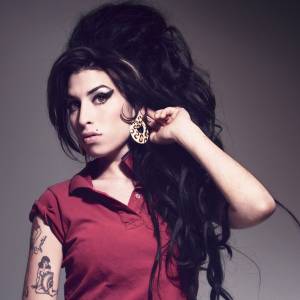
amy-winehouse-tattoos

Other than her tragic story, what stood out was her music and talent. Seeing her at her best performing at various stages in her career, lyrics picked out on the screen, provoked a feeling that hit you straight in the gut. Although sometimes not always agreeing with some of the content, for the most part I loved her blend of sarcastic wit, sorrowful heart-wrenching pain, and empowering sentiments such as “in this blue shade, my tears dry on their own”. The songs have always had a slick rhythm to them as well, such as in favourite In My Bed. At the heart of Amy’s music was a desire for connection, and that desire to use music to heal the self and heal others was what kept her writing and recording new material despite the chaos of her personal life. That temptation to self-destruct is also relatable to those of us who have traits of hyper-achievement, for they are two sides of the same coin.
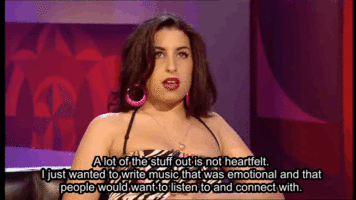
200_s

In 2008 I was 19 years old and I wrote a poem called Blanket; as I watched the documentary, I remembered it writing it in response to Amy’s rising success since she moved from Frank to Back to Black, and the pitfalls that were well documented in the media. The poem went as follows:

I want to build myself up to the highest height,
just to look down at the fall and be filled with fright.
I want to be, the best I can be,
prove them wrong about my poetry.
Yeah, I want that pretty face, with the tear stains on show,
mascara up my eyes, just so that they all know.
I want to be perfect, to be a success,
I want to be one of the best.
I want them all to read my lips, read my mind,
then drink myself to destruction at the end of the night.

I want to fall in love again with a good boy,
just so he can break my heart,
because if I’m in a mess, feel my life is destroyed
then it at least provides more material for my art.

And I can just pick up my needle and thread,
scrub with soap, the sheets on my bed,
try stitching my life up to resemble what was,
continue the search for the Wizard of Oz,
pray for a change to a non-existent God,
click my heels together,
come home.

It was about how I could relate to the apparent dichotomy between success and failure, construction and destruction. The only thing I can do is to keep following the path to better myself, and that includes trying not to obsess about what success is and striving for it at the expense of my health. Because it’s a combination of both working and playing hard that can lead to exhaustion. I’ve come a long way since being a teenager and going to university, where getting off-your-face is standard, even on Sundays.

Nowadays, I rarely miss a roast dinner, I make sure to exercise regularly, and although work is always at the front of my mind, I make an effort to carve our significant space for maintaining relationships. I may joke about this being to do with me “getting old”, but actually it’s just finding out more about who I am and what’s important to me. And the fact that I feel it the next day when I’ve only had two pints, probably shows that I can’t take much more. But I often relate to the idea of the “death-wish” as at times there is a flicker of desire, a kind of magnetic pull, to be destructive.

Tony Bennett says in the film that “life teaches you how to live it—if you live long enough.” It is and always will be a tragedy that we don’t get to see Amy prosper, that her bulimia meant she was too weak this last time to fight against the alcohol poisoning she inflicted on herself accidentally. What urged me to write about this was the relatability for young women, and so as this has become self-reflective, I’m sure many others will feel that it could have been anyone, had they not had the time to recover from such a series of events.

The best I can do to take on board Amy’s story is to take inspiration from her creative drive, and keep focused on this. And to not let anyone stop me from doing what I want to do, whether a parent or romantic partner. I’ll never be able to listen to Rehab in a club, but I will listen in my room, or sing along with my mum in the kitchen.
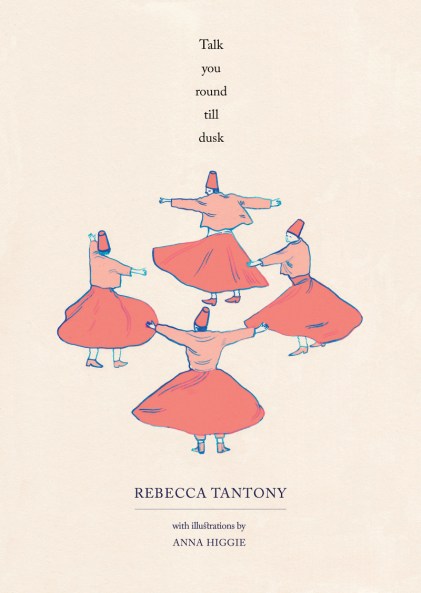
Book Review: Talk you round till dusk by Rebecca Tantony

I received a copy of Rebecca Tantony’s Talk you round till dusk by illustrator Anna Higgie, who I met last year when I performed at BoomTown. You can have a peak inside the book to see the beautiful illustrations here. You can also buy some of her work from the book at her Etsy shop.

talk-you-round-till-dusk-cover_800

I fell in love with this book after reading the first piece and it’s become one of my favourite books from Burning Eye Books.  The pieces flow between flash fiction, poetry and short stories, each piece with strikingly vivid imagery and captivating stories. Slipping between third and first person, placing a ‘you’ between lines of poetry, leaving you wondering where the stories lie between autobiographical and fiction. This use of the lyrical ‘I’ is something I always find fascinating, and enjoy the element of play this offers.

Much of the work deals with relationships and searching, love and travel. At times it’s heart-breaking: ‘he only liked women who felt safe without colour and peroxide to hide behind.’ At other times it’s liberating:

‘What did you do that for?’

‘I did it for me,’ she said, before the wind set her hair free, spilling it across the sky.

From the statement ‘women don’t normally drink pints,’ I could immediately relate. When the next page spoke of Andalucia, I recalled fond memories of Nerja. Tantony managed to capture the feeling of the place, and its pages fuelled my excitement to carry out the same path and live in Spain: ‘Instead of breaking up we had moved to Spain’ hit me with its poignancy, and yet its humour. With orange blossoms showing the direction for discovery at the end, there is a perfect balance of reality and romance.

Different pieces are intercepted with short poetic descriptions and musings, like notes in a travel journal, such as ‘I found your at sunrise and fell in love with a combination of body parts’. The collection takes the reader across the world, from Spain to India, Cyprus, San Francisco, through a Californian road-trip, to Paris, to Mexico, and ending back in Bristol. Through the turbulence of many characters, of wanderings and wondering whether ‘we might not make it back together in one piece’, at the end of one year and the start of a next, bubbling with excitement with the journeys we might go on, it seems apt to end on the sentiment of We are Braver This Way. In it we find the title quotation: ‘I’ll talk you round till dusk and when the final countdown/comes we’ll be dancing, won’t we?’ Whether we get the happy ending we long for is up to you.

Talk you round till dusk is available from Burning Eye Books (2015) for £9.99.

Body Hair: Armpit Alert

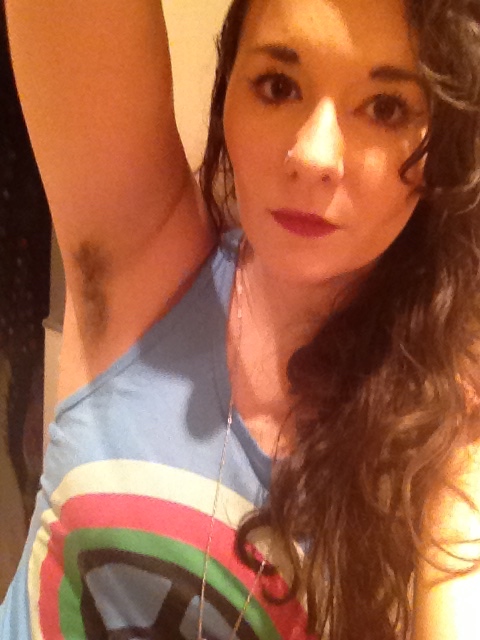
Dr. Breanne Fahs has been quoted to say that when a woman shows her armpit hair it “becomes an act of political resistance because it highlights the presence of an otherwise silent or erased aspect of women’s bodies.” It’s winter, so it’s been an act of political resistance that has been easy to embrace. The picture below is probably the closest I’ll get to exposing my hairy armpits to the world. When not on show, I’m happy to grow! But if I’m honest, there’s a deep-seated attitude ingrained in me that probably underlies just why I will continue to shave in the summer months, despite the fact the hair grows back within what seems like minutes, and with such sensitive skin, it’s near impossible for it to be smooth unless the optimum amount of time is left in between shaves.

IMG_3391.jpg
How more hippie can you get?

It’s not complex to work out why I’m embarrassed to bare my hair on the beach. I think it’s around 90% of women who remove armpit hair. It even feels a little silly that messages that are so obviously articulated are still able to influence me so powerfully. I remember when I was about seven years old, in Italy, I thought I saw the armpit hair of an older, American girl. It seemed like such a shock to me. I remember telling my Mum, who has, of course, handed down body-hair shame to me like a precious heirloom.

When I started to grow hair there myself, I was still at primary school. A girl saw that I had hair there. It was almost like I hadn’t noticed it myself. I don’t remember thinking anything of it growing there until it was pointed out to me by another girl. This was obviously accompanied by an “urgh!” All it took was these two experienced, strong enough for them to stand out in mind mind all these years later, to form this idea that I’m not presentable in my natural state.

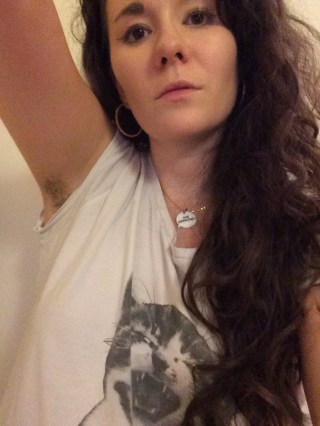
IMG_0010

Maybe one day, I’ll become brave enough to step out in the real world like this. But for now, this is as Feminist as my armpits get. Meow. Just had a massive curry and going to have a bath, eat chocolate in front of telly, half wishing I was dancing to Beyonce (but only half, because I’m like 26 now, getting old, staying in for NYE etc). #Iwokeuplikethis #flawless

Feminism in London: Suppressed Histories

I wanted to start blogging, like, actually properly. I often plan so that I blog for a specific reason and by the time I get round to it, I end up writing so much that I would be surprised if anyone bothered to read it! Blogging is meant to be short and frequent, right? Maybe it’s some subconscious fear about putting y writing out there, that part of me is scared that people will read it and so write so much to put them off!

Feminism in London was nearly two months ago. I could only attend on the Sunday, so the first talk I went to was by Max Dashu, who spoke about women’s suppressed histories. It was so eye-opening that I immediately noted down the website. I have also just signed up subscribed to the YouTube account. I’d highly recommend watching this extract from the Women’s Power DVD.

It is important when talking of empowerment from a position of historic oppression, that we don’t paint ourselves solely in a position of inferiority and victimhood. This connects very much to how power is perceived: in terms of ‘domination, force and supremacy… these systems are more than patriarchal; they are colonial and imperial’ Women’s oppression is one story, but, as Chimamanda Ngozi Adichie stated in the video below, it is vital that we hear all stories. Here we can consider a global perspective: one that doesn’t necessarily align with the story we get told.

The video states that ‘in classic Eurocentric history, women end up as footnotes to the main story’ and this is a view so widely accepted that when watching The Apprentice on catch-up, one team decided to cut off the woman’s long hair in a silhouette in order to make the image look like a man, which they described as “gender neutral”. No, my friend, man is not neutral, but is often deemed so because of the patriarchy’s position of this as the default. Whilst Feminism becomes more and more about challenging gender as a social construct, it is still important to raise the voices of those who have been silent too long.

Over Land, Over Sea – poems for those seeking refuge

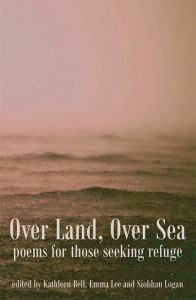
poets4refugees-over_land_over_sea-196x300My poem Sinking Ship is featured in a collection of poems for those seeking refuge, Over Land, Over Sea, where proceeds from sales of the book will be shared between the charities: Médecins Sans Frontières, Leicester City of Sanctuary and Nottingham Refugee Forum. It is available for purchase for £9.99 from Five Leaves Press and would make a lovely Christmas present for those who care about this issue. Charitable presents are something that has recently interested me, and I’d like to also recommend the Roy Castle Lung Foundation, which funds vital lung cancer research. I particularly like the statement necklaces and chunky earrings on offer here.

Contributors include: Alan Baker, Kathleen Bell, A.C. Clarke, Kerry Featherstone, Chrissie Gittins, Mark Goodwin, Tania Hershman, Siobhan Logan, Emma Lee, Carol Leeming, Joanne Limburg, Aoife Mannix, Roy Marshall, Hubert Moore, Thomas Orszag-Lund, Simon Perril, Sheenagh Pugh, Mahendra Solanki, Maria Taylor, Rory Waterman, Gregory Woods, and Siobhan Logan.

It is available to buy in the Five Leaves bookshop in Nottingham, by phone  (0115 8373097) or by email (bookshop@fiveleaves.co.uk) with free p&p for UK orders.(Overseas orders welcome, please email for delivery estimate). All major Credit Cards & Paypal accepted.

Also, current Young Poet Laureate for London, Selina Nwulu touches on these themes in her poem Before. Watch here.

26.08.15 – 29.05.15 – BBC Edinburgh Fringe Festival Slam

The BBC Edinburgh Fringe Slam is hosted by Sophia Walker. Judges will be Clive Birnie, Eleanor Livingstone, Matt Panesh and Fay Roberts. Check out the website for more details.

News: She Grrrowls and Audio Book Radio

She Grrrowls is settled into its new home at Apples & Pears – it’s crazy to think that half a year has gone, and 16th July will be the last event before the summer break (all being well, returning in September). Check out what you missed last week:

In other news, I’m currently working on an anthology of ten poets from the She Grrrowls alumni after receiving funding from Ideas Tap to commission some new poems. I just need a publisher now! I’m hoping to get it out for December to have a launch event.

I’ve also been listening to this radio documentary, with poetry by Kate Tempest after having listened to lots of clips shared by Falling Tree. Again, you can listen to it here:

Speaking of radio, I’ll be having some poems featured on Audio Book Radio. Tune in on Friday 26th June at 2pm, 10pm and Saturday 27th at 6am.

The Last Word Festival

The Last Word Festival is a week-long annual festival of spoken word events at The Roundhouse. In addition to  the scratch show for ‘Dear Adventure’ with Kid Glove, I watched ten other shows. You can find five of them reviewed briefly here, and another five reviewed on The Norwich Radical website.

Sophie Rose

Quiet Violence

I hadn’t seen Sophie Rose perform, and this ending up being of of my favourite shows of the festival. Rose had a natural quality to her performance, as she moved from narrative story-telling to poetic details, successfully blending humour with more serious moments. The ‘quiet violence’ began with high heels, which made me think I should get rid of mine, dusty because they look so much better in my wardrobe that on my feet, where I’d eventually be stumbling and sporting some of the ankle-protection shown on Rose’s subtle costume. The concept of the show appeared to me as a unique one, yet it was so relatable that it was both hilarious (who knew bags could be so funny?) and, dare I say, life changing. By the end, it encouraged the audience to do what makes them happy, rather than what they feel obliged to do, to find the people who would make them soup when they’re ill, and to change what they don’t like rather than simply put up with it. Sophie Rose wants to know, what’s your quiet violence?

Producing Your Own Poetry Show

Throughout the festival there were a range of workshops offered. Having seen Sophie Rose’s show, I was curious as to how this would also work with a workshop about how others could produce shows. Rose made the room a comfortable space, where we worked individually and as a group to discuss different aspects of making a show. It was difficult to contain in the hour slot, and she generously offered extra time, as well as the space for collaborative discussion under her direction, and gave everyone detailed notes and the offer to contact her. One of the useful tips I picked up was about distilling your show idea down to one word; my word ended up being ‘self-acceptance’, which isn’t what I expected, but shows an idea of what the audience should get from it as well as the artist.

Luke Wright

What I Leaned From Johnny Bevan

Poetry veteran, Luke Wright, previewed his new show amongst many emerging artists. With many shows already under his belt, I was excited to see what this one would bring. Sitting in the audience, I was already excited by the music playing, and as the show began, we heard crafted guitar twangs (from Art Brut’s Ian Catskilken) to a backdrop of changing scene sketches. I was filled with nostalgia of my own early twenties, that were often filled with drinking in council estates with mates and days spent in my first years at UEA, locations both featured in the show. Yet this nostalgia also gave a sense of timelessness, a dystopian feel, which the tale of Johnny Bevan represented, that we remain to the social class we’re born in, and that just as previous governments reinforced these class divisions, so will the current one. With the election results still fresh, the poetic narrative of Johnny Bevan painted a bleak future, but perhaps, in this gritty reality, it is a reminder as to why it is important to keep fighting. Essentially, this is a story, but the poetry of the show is not merely due to the use of rhyme, but the depth of meaning behind the words.

Poetry Reincarnation

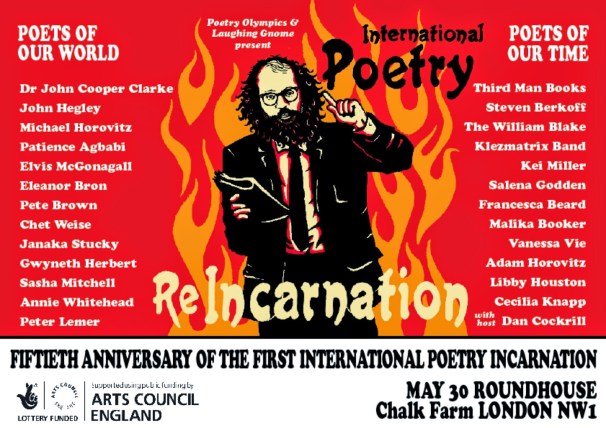
I didn’t know what I had let myself in for at the time – Poetry Reincarnation started at around 7pm, and it was stilling going past the scheduled end time of 11.15pm. I had also attended part of the earlier programme of events, with a panel discussion on poetry and, essentially, its importance in our lives creatively and politically. The evening event kicked off with Malika Booker, giving a somewhat unspoken progression this world has made beyond the Beat Poet generation of white men, and its unmentioned allegations of pedophilia, and support of the NAMBLA. Since finding this information out, I now always feel uneasy about this kind of worship of poets such as Allen Ginsberg. There were around twenty poets, so I’m going to focus on my favourites. Booker was one highlight, having recently read ‘Pepperseed’ and she was followed by Cecila Knapp, who represented the under-30s and did a stellar job all weekend. Libby Houston was a poet from the older generation of poets performing since the 60s who impressed with her poetics, humour and wide smile.

Kei Miller reminded me that I want to buy his collection, and poets such as John Hegley and Elvis McGonagall brought excitement to the event in the form of rhyme, rhythm and comedy. Music was used effectively throughout the show, breaking up the mass of spoken word, and including more experimental and psychedelic parts that were evocative of the 60s, yet Gwyneth Herbert was a powerhouse in this respect, with a voice that ranged from soft and subtle to loud and proud. Janaka Stucky was a poet I was unfamiliar with, and coming from Boston, it felt a privilege to see him perform his work. Salena Godden, recently mentioned by Hannah Silva at The Place for Poetry, was even more of a delight to watch after hearing this analysis. Francesca Beard was a poet I recently argued at She Grrrowls, and I saw her do some of the same, as well as new material, and again, she left me wanting more, with every word layered with meaning, yet also dishing out a dry, witty humour throughout her set. I sadly missed the end of Dr John Cooper Clarke’s set, and leaving after a couple of sexist, tired wife jokes, I was disappointed with what I did see, but hopefully I’ll be better impressed when I see him again in July. The way poets such as JCC are often held on a pedestal, it seems almost sacrilege to dare say his jokes were sexist, and as much as I want to suggest that perhaps I just couldn’t keep to the the speed of his speech, I can’t deny that these cliched wife jokes just don’t tickle me. And surely, if we want our poetry to be truly revolutionary, I can’t be too scared to say something is sexist. What this event did showcase, as well as the non-programmed event simultaneously taking place in the Made in Camden bar, of which I was meant to be a part, is the vibrancy and variety of contemporary poetry today, and the importance of learning about poets who came before us.

Cecilia Knapp

Finding Home

In case you’ve not noticed, Cecilia Knapp has been a regular feature in The Last Word Festival. This scratch was presented almost in full, stripped down against a backdrop of a blue moon sinking behind a horizon. We saw the first half, where Knapp delivered her usual poetic narrative, mostly in free verse, that lulled the sold-out audience into her world, painted so beautifully with her words. I felt there was a danger of romanticising things here, but this was possibly because cigarette references personally jar with me. I know this criticism is probably unfounded, and otherwise that I would struggle to find any room for improvement here, because however beautiful the language, this is her life. ‘Finding Home’ is a piece that manages to be both autobiographical, and I found that I could relate to the words, and I was taken on a journey, so that by the end – or the half-way point – I wasn’t ready for the lights to come up.

13.08.15 – 17.08.15 – Boom Town

Performing at the Wandering Word. Check out the website here.

18.07.15 – 20.07.15 – Larmer Tree Festival