Freelance Reflections #117

Things have picked up again and I thought I’d start by reflecting on my resolutions so far. I’m not doing perfectly, but the one I am really pleased with is the social media one as I thought it would be really difficult, but I’m really enjoying not going on it and keeping it to just a specific time. The ones I’m finding more difficult are putting things back where they belong (currently a bunch of jewellery beside my bed) and managing portion sizes (because I’m used to eating a certain amount and not in the habit of having regular snacks, so tend to be extra hungry come dinner time)! Sleep is still an issue and I’ve found allowing for spontaneity difficult too.
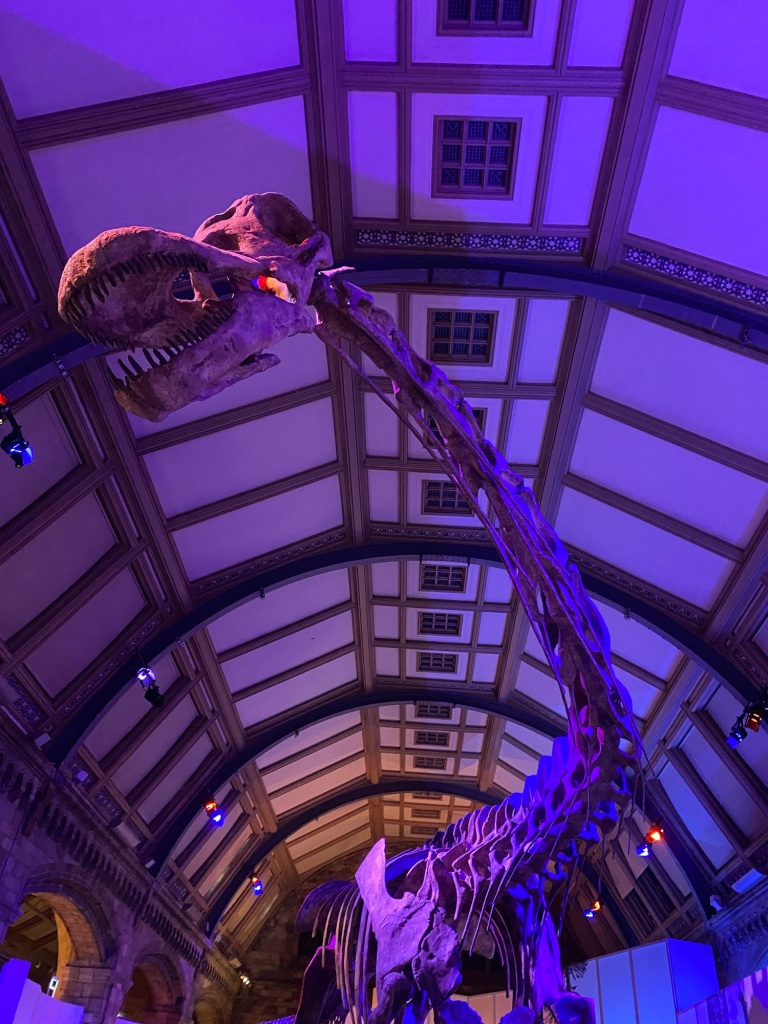
Titanosaurus

Last Friday I wasn’t working, so I went to three exhibitions! I’ll write in more detail about each of them on my Instagram at some point (it will take a while with my designated day), but it included the Titanosaurus exhibition at the Natural History Museum, where I learnt a lot of interesting things, but didn’t get to go on the games as kids were hogging them! I saw Sarah Lucas: Happy Gas at Tate Britain, whose work I had studied at college. After a hot chocolate break, I went to Re/Sisters, at The Barbican, which was so extensive it took me two hours to get through!
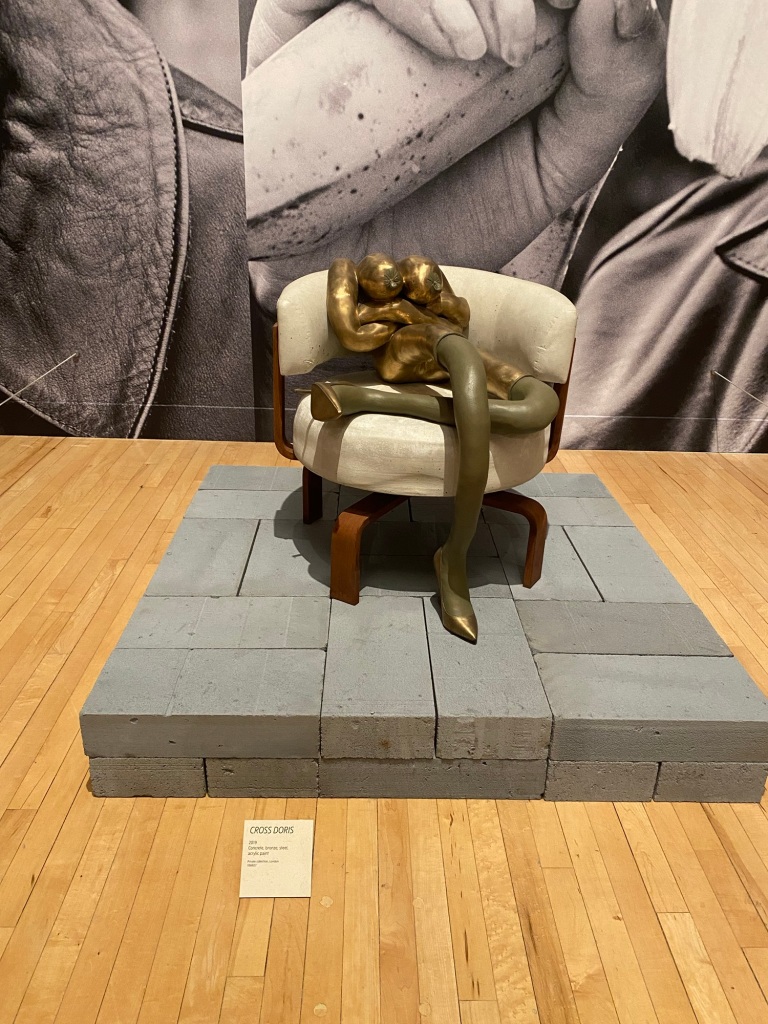
Happy Gas

I spent most of the weekend getting on top of things for the week ahead, but also went for a spa day with my mum, which was lovely! I’ve been to the Montcalm a few times, and this time we had Sunday roast at the rooftop restaurant The Aviary, which was delicious.
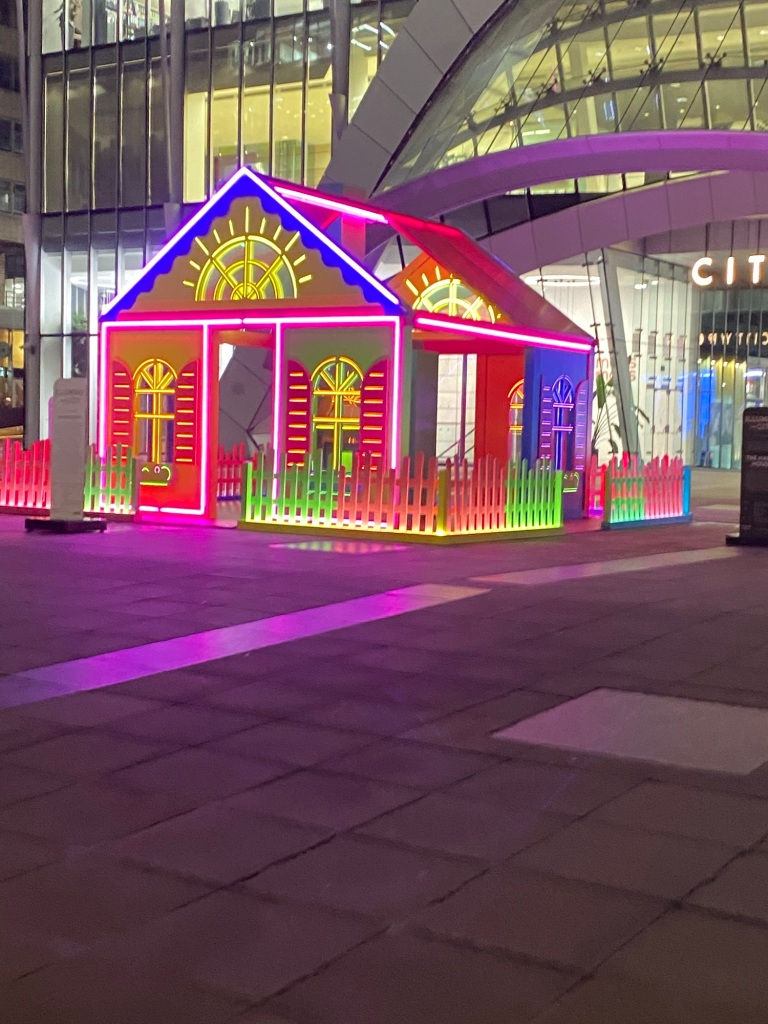
Mathis Richet

This week it’s all be back on: admin for She Grrrowls events (with a major hiccup to sort out), tutoring clients, university, clinical placement, essay and debate research and writing, and writing a new ACE application. Then on top of that, trying to keep on top of household chores. I’m pretty zonked and looking forward to a relaxing bath tonight!
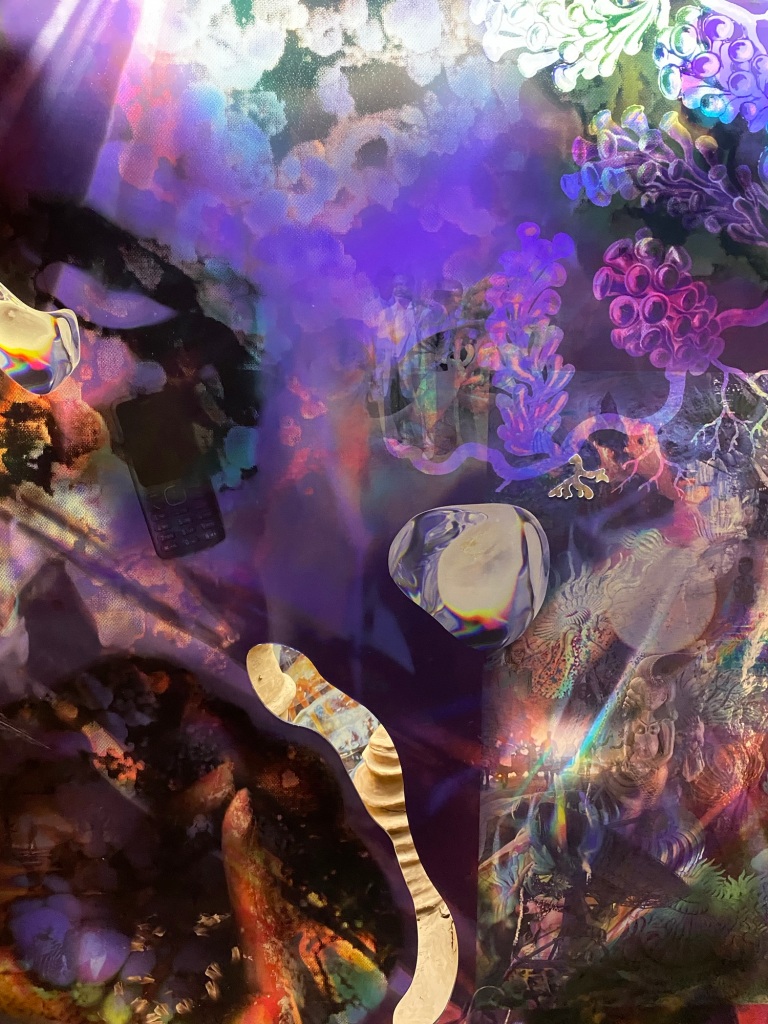
Josèfa Ntjam at Re/Sisters

Watching: Da Vinci’s Demons, The Traitors, The Simpsons

Reading: The Revealing Image by Joy Schaverian, Approaches to Art Therapy by Judith Aron Rubin, and Little Boxes by Cecilia Knapp

Podcasts: Creative Codex, On Being

Music: Pinhanı

Again, if you’re able to share or donate to my crowdfund as I train to become an Art Psychotherapist, or buy some books, please do!

Schwitters in Britain, Tate Britain: 30th January – 12th May 2013

It seems apt, for Kurt Schwitters, to be the pioneer of an underrated art form: the collage. Whilst some of his contemporaries may be more recognisable to the average person, Schwitters’ influence is often overlooked. In fact, he was a revolutionary Dadaist; making art out of anything and everything, he created the concept of Merz, ‘the combination, for artistic purposes of all conceivable materials’. So, when you question ‘is this art?’ with reference to 21st century artists, you have the likes of Schwitters to blame. Interested more in the aesthetics of his work, Schwitters himself would dissuade viewers to look for a deeper meaning than a record of modern culture at the time. However, what is interesting about the visual arts is that, like poetry, the audience can interpret the meaning as they wish.

Schwitters proves his technical ability through his portraiture work. Yet, it is the collage that really makes you think. You peer closer to inspect the materials, the texture, the composition. The apparent juxtaposition of various papering is sometimes amusing, such as an untitled piece with an early portrait of the artist himself (1937-8). Others seem to suggest a sense of despair and melancholy, for example, En Morn (1947) which included the words ‘these are the things we are fighting for’ alongside scraps of newspaper, chocolate wrappers, and bus tickets. He extended this work beyond the flat surface with collages of objects such as Merz Picture 46 A. The Skittle Picture (1921). As you walk around the Tate Britain gallery space, you can’t help but wonder beyond the pure visual surface to depict a meaning.

Other highlights of the exhibition include the cabinets of articles and letters, which include rejection letters. These provoke a feeling of hope due to his obvious success, with the knowledge of his reputation and influence in the art world today. The sound poetry Ursonate (1922–32) plays alongside shots of Schwitters reciting the piece. This complements the visual components of the exhibition, whilst also giving further insight to the history behind the work.

Fleeing from Germany and eventually ending up in the Isle of Man, Schwitters was detained in a camp there as an enemy. This gives practical reason for Schwitters’ need to create from found objects and scraps, given that there were limited resources. He also created pictures of his confined surroundings. However, he continued to push the boundaries of what it means to be a painter, even after his release in 1941. He created sculptural work such as Untitled (Opening Blossom), dated 1942-45 and Painted Stone (1945-47) which again looked at the idea of surfaces and texture, and showed the abilities to be free of apparent limitations of the medium of paint, as something which must be two-dimensional.

The Merzbarn is the crescendo of the exhibition and epitomises how radical Schwitters’ artistic practice was during this time. He started creating the piece in 1923, and on his third attempt at its manifestation; it was still unfinished when he died in 1948. It shows Schwitters as a true artist, whereby art is his lifeline. His passion for creation was all-consuming. Such a grand installation shows how inspirational a figure Schwitters has become, and this is translated by the end of the exhibition through the exhibition of inspired work from Adam Chodzko and Laure Prouvost. Whilst Chodzko takes on the more architectural and environmental, exploring the contextual side of the work, Prouvost shows a video installation and creates a narrative based around a grandfather figure, looking at the way an artist has no control over interpretations of their work.