Rainbows

[trigger warning: sexual abuse]

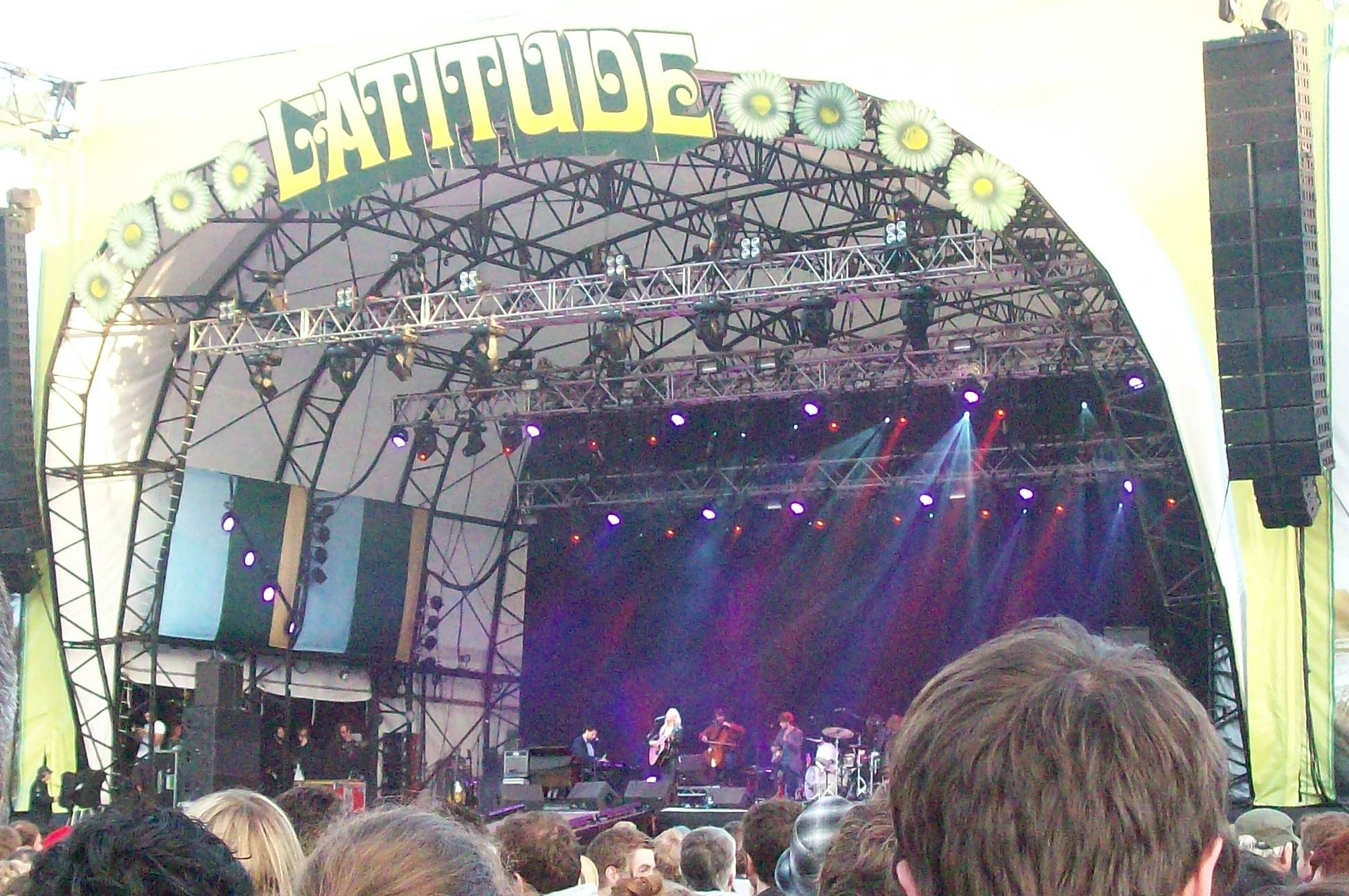
I’ve called this post rainbows because of the mix of sunshine and rain both literally and metaphorically. I’ve just come back from Latitude and have so much to get on with I don’t know where to start, so I thought I’d begin here. Here’s a summary of what went down, in the form of a list:

Things I saw:
lots of random comedians eg. Chortle Student Awards
Lianne Le Havas
Laura Marling
Los Campesinos!
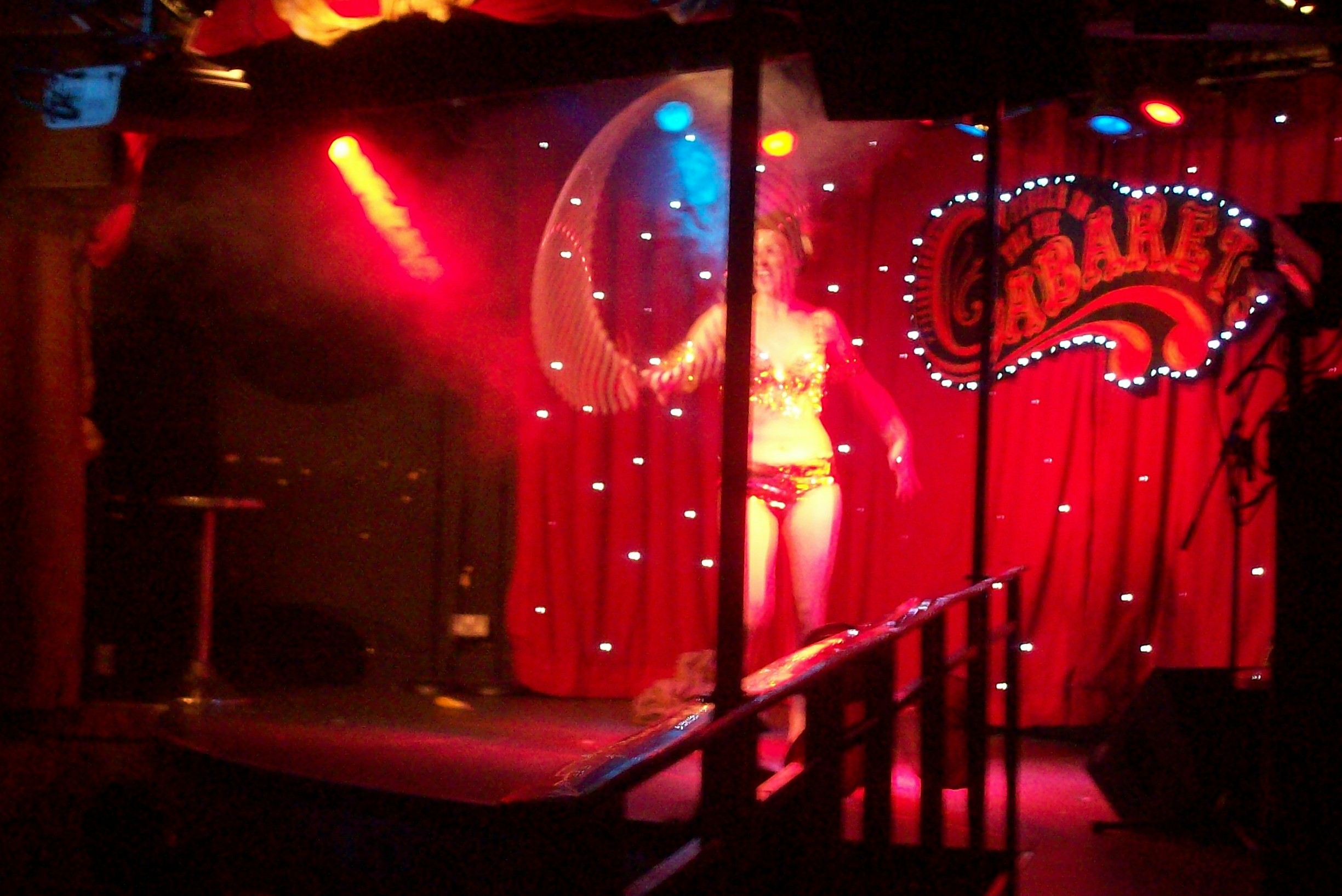
cabaret dance routine
Catherine Brogan
Intensi-T
Scroobius Pip
Bat For Lashes
Tom Deacon
Nick Helm & the Helmettes
Abandoman
Alabama Shakes
St Vincent
Glen Hansard
Rufus Wainwright
London Community Gospel Choir
a few random things I can’t remember

[actually all the above were amazing too but either I’ve seen them before or not seen enough or want to see again to see properly at their own gig]
Highlights:
Bon Iver
Bwani Junction
Tiny Dragons (hey, new fave band)
Don’t Flop (poets ftw!)
Shappi Khorsandi
Kate Tempest’s Brand New Ancients
Rosy Carrick
Janalle Monae
Josie Long
Michael Kiwanuka
Sabrina Mafouz
Katie Bonna & Richard Marsh
Benjamin Zephaniah
Hollie McNish
Jess Green

Sad to have missed:
Ben Howard
Lana Del Rey
Daughter
Slow Club
More I-Arena bands (such a trek there)
Metronomy
The Antlers
Chairlift
First Aid Kit
Sam Riviere, Hanna Silva, Gemma Seltzer & lots of poets I should have seen
John Peel’s Shed
Soko
Tall Ships
John Cooper Clarke – too packed out 😦
a play about the Diggers
Sbtrkt & Zola Jesus (major clashes)
Paul Weller

If you want to find out about it in more detail, you can read up on my article at the UEA Concrete website. In the article, I don’t mention that just before Latitude Rosy Carrick officially confirmed her performance at the event I’m organising. She’ll be representing the inspirational professional poet for the evening and I’m really excited to have her on board. I also had responses from a couple of other poets, so in order to thank them, here’s a little linkage to their websites: Hannah Silva and Sophia Blackwell. Hannah Silva is based in Devon at the moment therefore the gig payment would barely cover her costs (free travel for poets and musicians anyone?) When I got Sophia Blackwell’s email I had already accepted Rosy Carrick, but was tempted to put them both on… before I remembered I’m making quite a big loss on the event as it is. They’re all amazing poets anyway and I urge you to check them out.
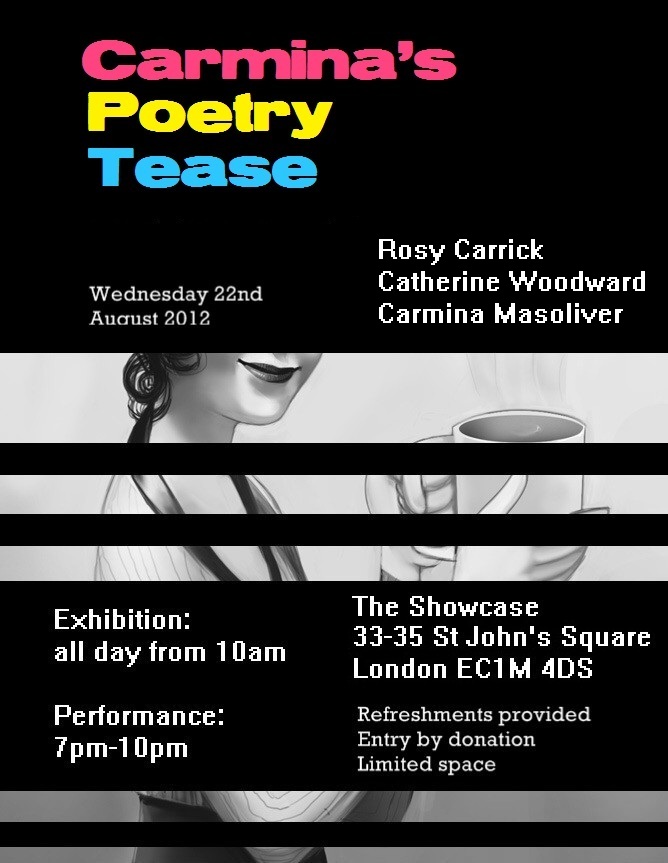
Prior to Latitude I had a headline slot at the International Youth Arts Festival in Kingston, at The Cricketers pub. I had taken on some of the promotion and think I blew things out of proportion in terms of how successful they would be. Let’s remember, marketing is a full time job! I felt I did the best I could and spent a lot of time and money flyering, as well as getting it advertised on various online avenures. However, it’s made me rather shaky about the event I’m doing in August because there was a complete lack of audience. I don’t even know if one person came that wasn’t either one of the poets, came with the poets or was a member of the IYAF staff. I brought about 7 people along myself but I’m unsure anyone paid to get in. Although a few of the acts had actually pulled out last minute, the guy that filled in as host did such a rushed job of it that it came across quite disrespectful, even asking if we really wanted an interval and giving the impression he couldn’t wait to leave. I was bitterly disappointed with the turn out but everyone still gave a good show. I feel I have to take some responsibility for the lack of audience, but don’t know how I come improve on this for next time. Other reasons that were suggested were the location of the pub being residential, rather than in the centre of Kingston, and just the bad luck that was the rainy weather.

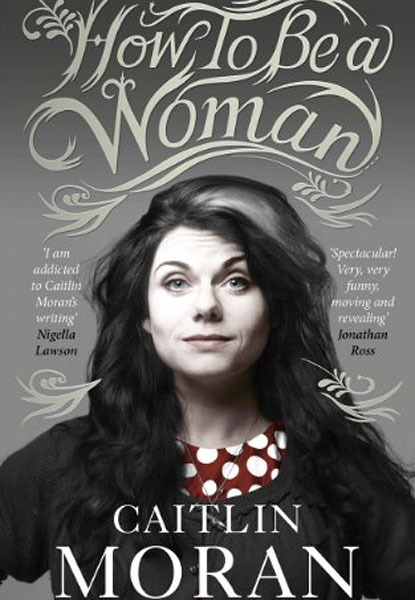
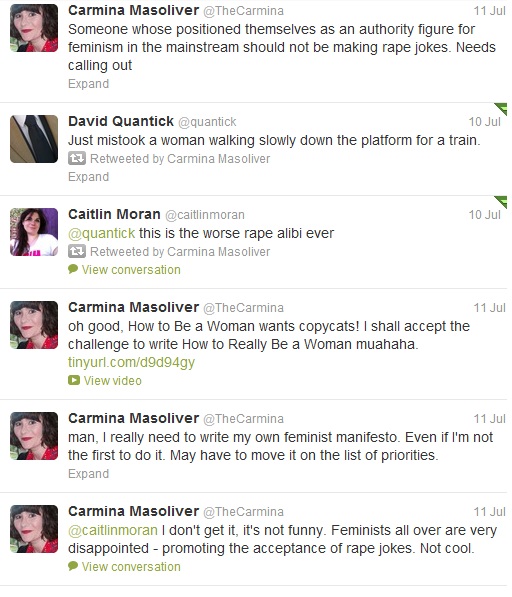
Another eventful occurrence before Latitude involved self-proclaimed Strident Feminist, Caitlin Moran and a little social media website called Twitter. For those who don’t know, Moran is the author of the book How to be a Woman, which I have reviewed here previously (although disagreeing upon some issues, I was extremely enthusiastic and fanatic about the book). Anyway, I had been linked the following convo via Facebook:

quantick: Just mistook a woman walking slowly down the platform for a train. caitlinmoran: @quantick this is the worse rape alibi ever quantick: @caitlinmoran I had a platform ticket I and a lot of people (mostly in the UEA

Feminist Society) were confused about this dialogue from the onset. Admittedly, I then received a lot of mixed views about the intentions here. On one big hand there is the simple fact that the initial comment had nothing to do with rape at all. This begs the question, why would a comedian (and a Feminist comedian at that) make it about rape? With the continuation of the joke, it makes an obvious comment on the excuses some rapists can make, along the lines of a woman “asking for it” because she’s perhaps allowed things to go as far as kissing or foreplay. Still, I was confused about the intention of the initiation of this dialogue, and thought it was problematic that someone hailed as a modern Feminist icon in Britain should be making light of rape whatever the intention. Someone from the UEA FemSoc group stated that “Jokes about rape culture – any oppressive system – can be used to mock and destabilise rape culture. Jokes at the expense of victims undermine VICTIMS” and this struck a chord with me – if that was Moran’s intention. I also saw this Twitter convo:

caitlinmoran: SohoGuy: @melissa1992 @caitlinmoran It’s not a joke about rape itself. If anything, it’s a joke about the absurdity of excuses of men who are rapists ….  @SohoGuy Bless you for being bright xx

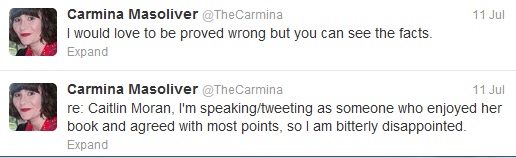
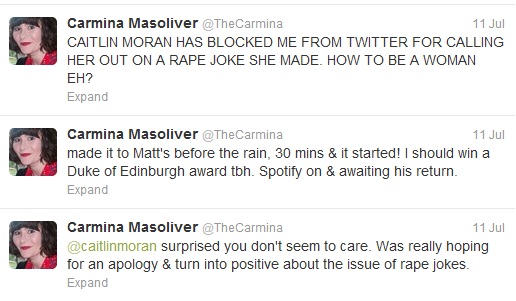
Okay, I can admit that I have come round to thinking that Moran’s intention was to mock and destabilise rape culture, however, what I am unhappy about is how the lady herself dealt with the whole situation. She immediately blocked anyone (including me) who called her out on the joke on Twitter. The only comments I saw were things like “I’m going to have to sit on this chair for a while, and feel sad. about the world.” They came across as really sarcastic and like she didn’t really give two shits. All I wanted (along with a lot of her fans) was for her to explain her intentions and defend her actions. Although I’m still not sure that making a joke about rape whatever the intention is the best thing to do for someone that many girls now see as an authority figure on Feminism, but I am willing to debate it as I can definitely see how it can help dismantle rape culture. However, the way Moran dealt with it was rude and immature, and just really disappointing for a lot of fans, who were willing to listen to what she had to say and would have liked her to use the opportunity to open a discussion on the subject. At the moment this is a crucial issue since the release of this statement about Daniel Tosh. It would have been great to get Moran’s opinion on rape jokes in the comedy scene. For the record, this is what I wrote on Twitter that got me blocked:


I also sent Moran this message on Facebook but have had no response:

Hi, Sorry to message you like this but I’m really disappointed about how you handled the reaction to the rape joke on twitter. A lot of us at UEA in the FemSoc really loved your book and just wanted an explanation/apology. As someone who has spoken out against rape jokes a lot of us were just confused about the whole thing. You have just blocked me rather than done this which just makes things worse. I understand you may not want the incident to reflect badly on you, but by ignoring the debate rather than engaging it’s not helping. I don’t think anything I said was offensive but I’m sorry if you took anything personally. I was confused and disappointed because you are someone that has made a lot of girls/women be like “yeah, I am a feminist”. So as someone who the public kind of take as an authority figure on the subject I just think a certain amount of responsibility should be taken with that. Given your posts about UniLad, this kind of thing just says to guys ‘hey, if she’s saying it’s okay then you must just have no sense of humour’. Please, don’t go down the Germaine Greer route. Note paragraph 5:http://www.squeamishbikini.com/2/post/2011/11/caitlin-moran-is-on-the-shelf.html. Also, we have 2 mutual friends so I hope you can take that to mean that I am cool and just wanting the best outcome. Thank you, Carmina x

Well, that’s quite enough of all that. Today I had a job interview at a school in Bethnal Green – how cool would it be to work around there? Very cool. I thought it went quite well but that I wasn’t as experienced or deserving of the job as others so didn’t expect to get it. I got a few phone-calls whilst on the tube on my way back from picking up my coursework and giving flyers to the Free Word Centre. I haven’t got the job just yet, but I’ve been asked to attend a session where I’ll be observed with a group of students. Scary stuff! Then I’m off to Margate for my Gran’s 70th birthday. Hopefully I’ll have time to make some meringues. I’ll be posting this a little after writing it as I’m waiting for my Latitude article to go up!

Edit: I’ve now found out I got the job! As of September I’ll be working as an English Mentor! Just need to sign the contract and hand in my notice to Sainsbury’s.

xxx
“Are you doing burlesque?” – “No, I’m doing poetry”

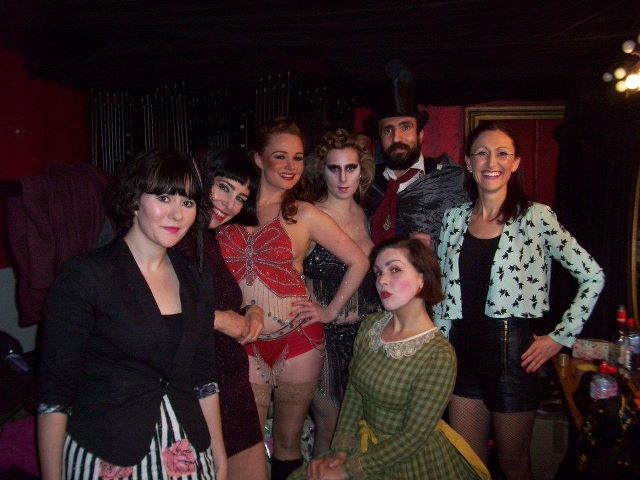
On Sunday 4th March I finally made my first appearance at Finger in the Pie Cabaret at Madame JoJo’s. I did a sound check which was a bit odd as I’ve never really done one before. I then had a long time to wait in the dressing room. My nerves were building in this time, and made all the more intense as the room was bursting with other performers; mostly burlesque dancers. The atmosphere was more intense than other poetry gigs, because there was more of a sense of unity and collectivism – we were putting on a show together, rather than just individually putting on each act. It was a very supportive and friendly environment. Everyone was lovely, but burlesque dancers Shady Lane and Velvet Lune spoke to me the most. Marga, another burly girl, from Italy, made a great effort to speak to everyone. Although not in the show, Annaliza Jennings was also really lovely – she does the marketing side of The Cheek of It!

The butterflies in my stomach, and sudden mind-blanks regarding my act, reminded me of my days at Gemini Dancers shows (Royal Albert Hall baby!) and UEA Dance Squad and Pole Dancing competitions. Before taking to the stage, the hosts (Moonfish Rhumba, reminded me a bit of Flight of the Conchords) assumed I would be doing burlesque when checking my act, and I told them I was actually doing poetry. They were going to mention I had books to sale (Carmina’s Poetry Tease) but sadly didn’t which is a shame because I would have mentioned it myself at the end and maybe would have sold some. It’s not really something you can just mention every time someone compliments you!

I wish someone had filmed the performance as it pretty much went perfectly. I was thrown a bit at one point when I thought someone had been laughing inappropriately, but I remembered all my poems – yay! I felt I performed well and gave a performance worthy of the £10/12 entry (although, as we discussed, none of us were getting paid). I think most of the material I chose suited the environment and I got a few laughs. And although I felt a little less glamorous than all the burly girls, without the glitter, I thought that my outfit gave a nod to the cabaret surroundings, wearing my pink fascinator (which I love). As I stepped out of the backstage area and into the audience, I was surprised by the people sitting directly behind the door. A guy gave me a thumbs up (which I will assume was in approval of my performance) and a few other people congratulated me on my efforts and said they enjoyed it. One girl put it on the same level as Glastonbury performances (organisers, take note for 2013!) Overall, it was a great show and I was really happy to be a part of it.

I did decide to take out one the poems I was going to read as it may have been misconstrued, as there is a line that says ‘I will not wear nipple tassels and knickers and call myself burlesque.’ I had the feeling that this may be seen as a negative statement and I didn’t want to have to explain myself. What I mean by that line is more complicated than a statement about burlesque dancing. It is more about the idea that not everyone can be a burlesque dancer, and is more a reference to girls that go out clubbing in such attire (I have witnessed a picture of one girl where she only had one of the nipple tassels on) and a comic poking at myself for times I may have gone out with too-revealing clothes, where the goal is to attract male attention. It is a statement to say I will not act like that, with an implication that maybe you have in the past but need to embrace the past and what you have learnt.

It is also about the discussions that took place at Madame JoJo’s. The burly girls told me that the clientele of the Proud Cabaret at Fenchurch Street wasn’t nice. I got the impression it had a seedy vibe, and attracted leery men that just want to see naked women, which is not what burlesque is about. If I were ‘Proud’ I’d take on board the feelings of the performers and get stricter with the audience. The point is, there is so much more to burlesque than simply taking your clothes off and I realised that more than ever being in the company of such lovely ladies; witnessing the nerves, the glitter, the hairspray and the huge amount of preparation it takes to get an act polished to perfection.

Here’s the full poem:

Tick the Box

I will buy a Yorkie bar, let it melt in my mouth and drink milk,
ignore the calories and not stick my fingers down my throat to be sick.
I will dream I have a dick
at night in my bed alone, wrapped in Cath Kidson flowers

I will be unattainable, no I’m not available
for you to screw, do what you do, and leave in the gutter
like butter wouldn’t melt.
And any tears I cry are simply for the time I’ve wasted in my life
over those that didn’t deserve more than the stir
of the spoon in my cup of tea,
because life is short and some people you just don’t need.

I will drink a cocktail or a can of lager,
and don’t want to know you if you judge me on the choice.
I will be shy as I am but you will never take my voice.

I will not wear nipple tassels and knickers and call myself Burlesque.
I will not fuck drunk, load each hole with spunk and call myself a feminist.
I will not be a nought
or throw myself over the balcony
or drown myself in the river
or have my tongue cut out by some Tereus
I will not be trapped in the attic
or be called over-dramatic,
or be told to rest, suffocated by yellow wallpaper
until my death.

I will not let you put me in a box of what you think female should be,
all I know is who I am, and I can only be me.

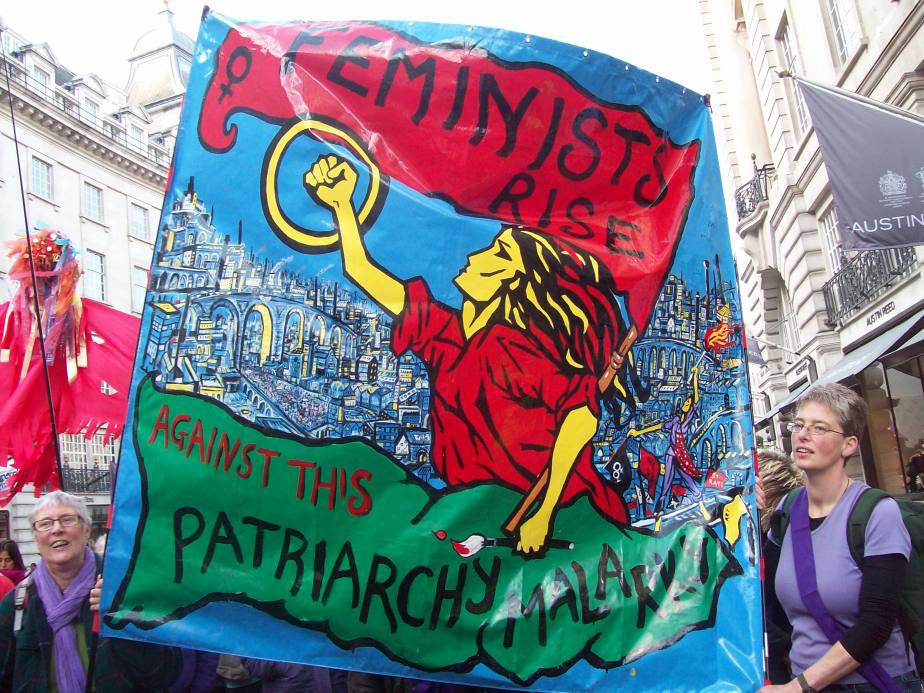
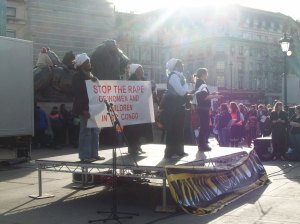
It has been a bit of a Feminist weekend. On the Saturday I had taken the day off work to go to the Million Women Rise march. Sadly, none of my friends came along so I had to go on my own. It was a rainy morning but by the time I arrived at Bond Street, the sun was shining. I got a bit of free cake from the Hare Krishna stand and chatted to a couple of people. We marched through the streets with tourists snapping cameras and filming like we were celebrities.

It was great doing the different chants and making a statement in such a way, that seemed to have more impact than Reclaim the Night due to its central pathway. My favourite was ‘power to the women, women have the power, sisters can you hear me, getting strong by the hour. Power! Power!’ This was because, it felt (needless to say really) very empowering. The rally in Trafalgar Square was interesting, informative and very moving.

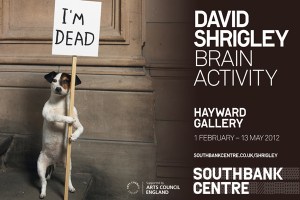
Taking advantage of my time off work, I also went with a friend I hadn’t seen in ages to the Hayward Gallery. David Shrigley’s Brain Activity and Jeremy Deller’s Joy in People was showing. I’d only seen Shrigley in books and in collective exhibitions.
It was great to see the variety of work he has done and his 3D work, which is pretty much like walking into a pop-up book of his illustration work. He is known for being very comic, but it was interesting to see the more macabre side.

I was not really that aware of Deller,
however, I really enjoyed what he brought to the show, and found it interesting how
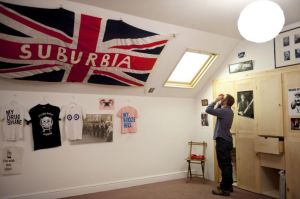
a thread of the concept of obsession in his work. The mining stories reminded me of my Grandad as he is from Barnsley, which was the setting at the point I started viewing from. It was also intriguing to watch the piece about Depeche Mode fans.

It also documented a lot
of the 80s and 90s which gave it a real sense of that era. I especially liked the quirkiness of the cafe installation, and the recreation of his bedroom exhibition. I also liked Pensées, which included extracts from his artist’s book, compiled from toilet graffiti – and in this case, surrounding an actual toilet. When a queue formed, this amused me quite a bit.
I found both artists inspiring in terms of my own work. Deller’s bedroom piece had elements of my own idea for my MA showcase. Shrigley inspired me in the more general sense, about how text and imagery work together, as well as this mixture of comedy and tragedy.

Well, it’s a longer post than usual, so if you’ve made it to here, congratulations. One last note; you can now find my work on Zukuri UnLtd – I have one piece up and running, with the next to follow shortly.

On here, look out for the Artist of the Month for March. As you can see, I’ve been busy, but it’ll be posted soon. Meanwhile, see if you can guess who it might be?! Also, I will be attending Lady Ha Ha  at Norwich Playhouse, to celebrate International Women’s Day. Let me know what you’re doing for it!

xxx

We are the 99% We are the 52%

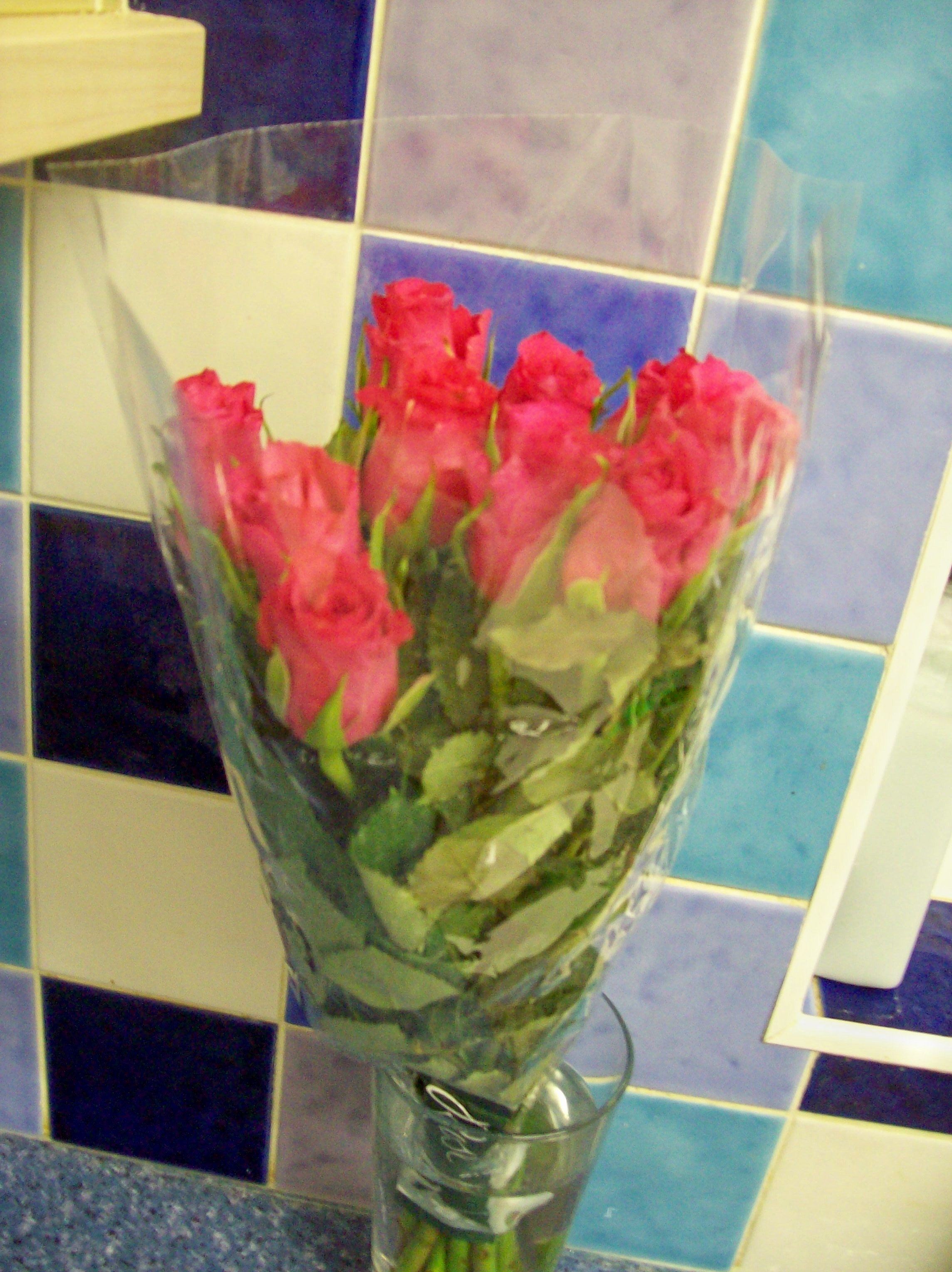
The last couple of weeks has been great.  My lovely boyfriend greeted me with a beautiful bouquet of flowers.  This may not seem like a big deal to you but I’m not used to such romantic gestures and it is, in fact, the first bouquet I have ever been given by a boy!  Well, at 22, he is a man.  But this had me all overwhelmed and girly. Although I always say my favourite flowers are Antirrhinums, I don’t think they do bouquets haha!  These pretty Roses are a such a classic and it had me smiling for days to receive them.

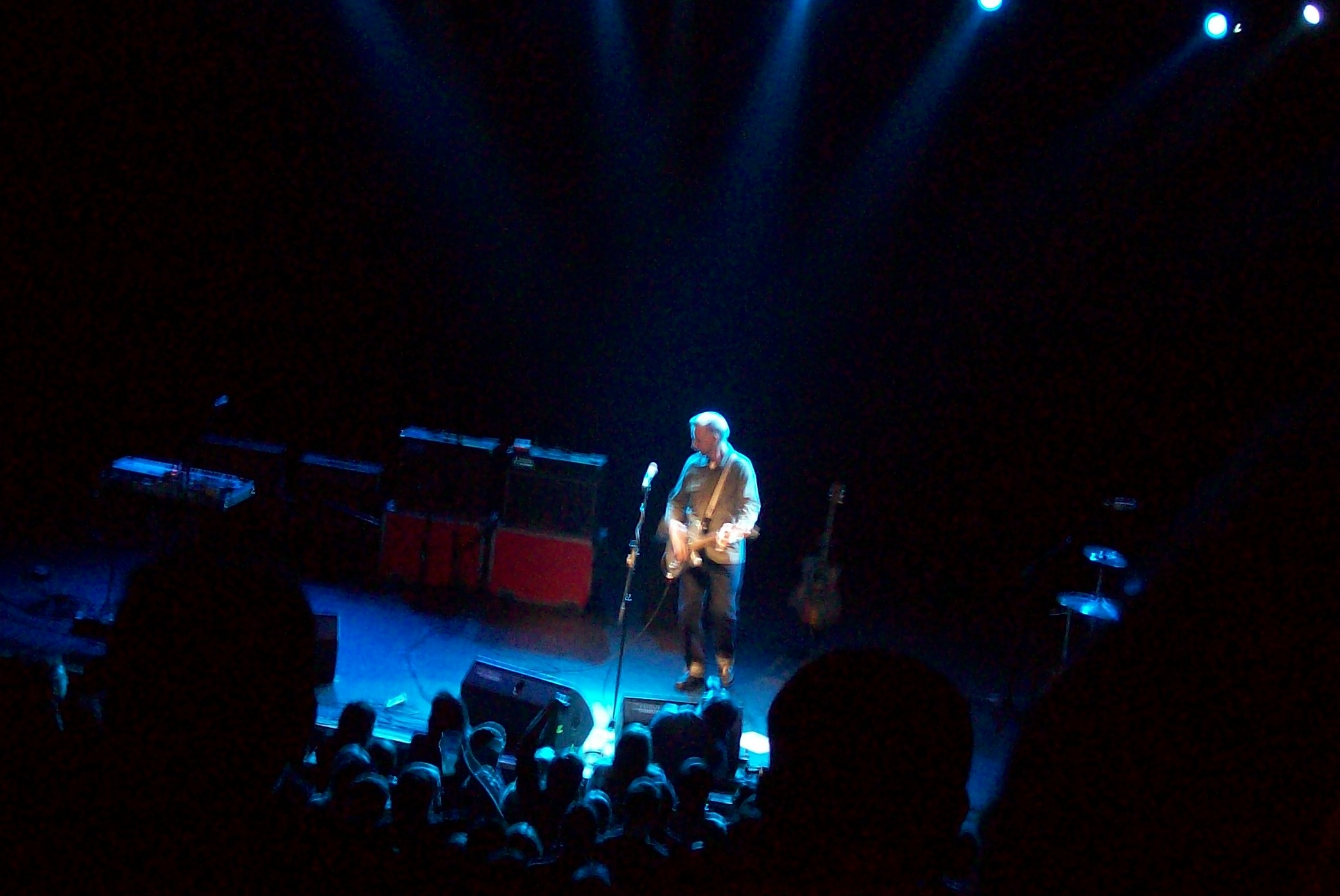
Last Tuesday I saw Billy Bragg for the first time.  I wasn’t familiar with his music but I knew Sound of Rum, having supported Kate Tempest, and was recently familiar with Akala from the programme Life of Rhyme.  I listened to some Billy on spotify and decided it was unmissable!  I tried to get some friends interested but had no luck, so I went on my own.  I went to Nando’s first and annoyingly the girl who served me got the table number wrong so I basically ended up missing most of Sound of Rum which sucked, but what I saw was amazing, as ever.  Both Kate Tempest and Billy Bragg’s words were so inspirational that I welled up.

The whole event was really empowering and there was a great sense of solidarity.  I would have loved to be in the standing section but I had my laptop with me and that wouldn’t have been sensible.  I met a nice Billy Bragg fan though and so that was cool as well!

"Hi, how can I help?"

I have been working hard at Sainsbury’s and have done about 11 hours overtime, woop!  It’s pretty good working there, I’m an even bigger fan of the company now, especially finding out they do a lot of funding for the arts.  Also, can you believe it’s been about 11 years since Jamie Oliver started his partnership with Sainsbury’s?!  That’s like, half of my life, argh!    The only thing I’d like to change is to work two days and not three, and not to work Saturdays!  I’m probably going to miss Million Women Rise because of it!  Plus, I was late for Reclaim the Night because I finished work at the meeting time. I attempted to take the tube part of the way but ended up walking to the Camden Centre and being around half-an-hour early.  I contacted the other UEA Feminist Society committee members and eventually, I heard a roar from around the corner and saw some people looking.  I had found the march! I ran past two guys making gestures and spouting something nonsensical.

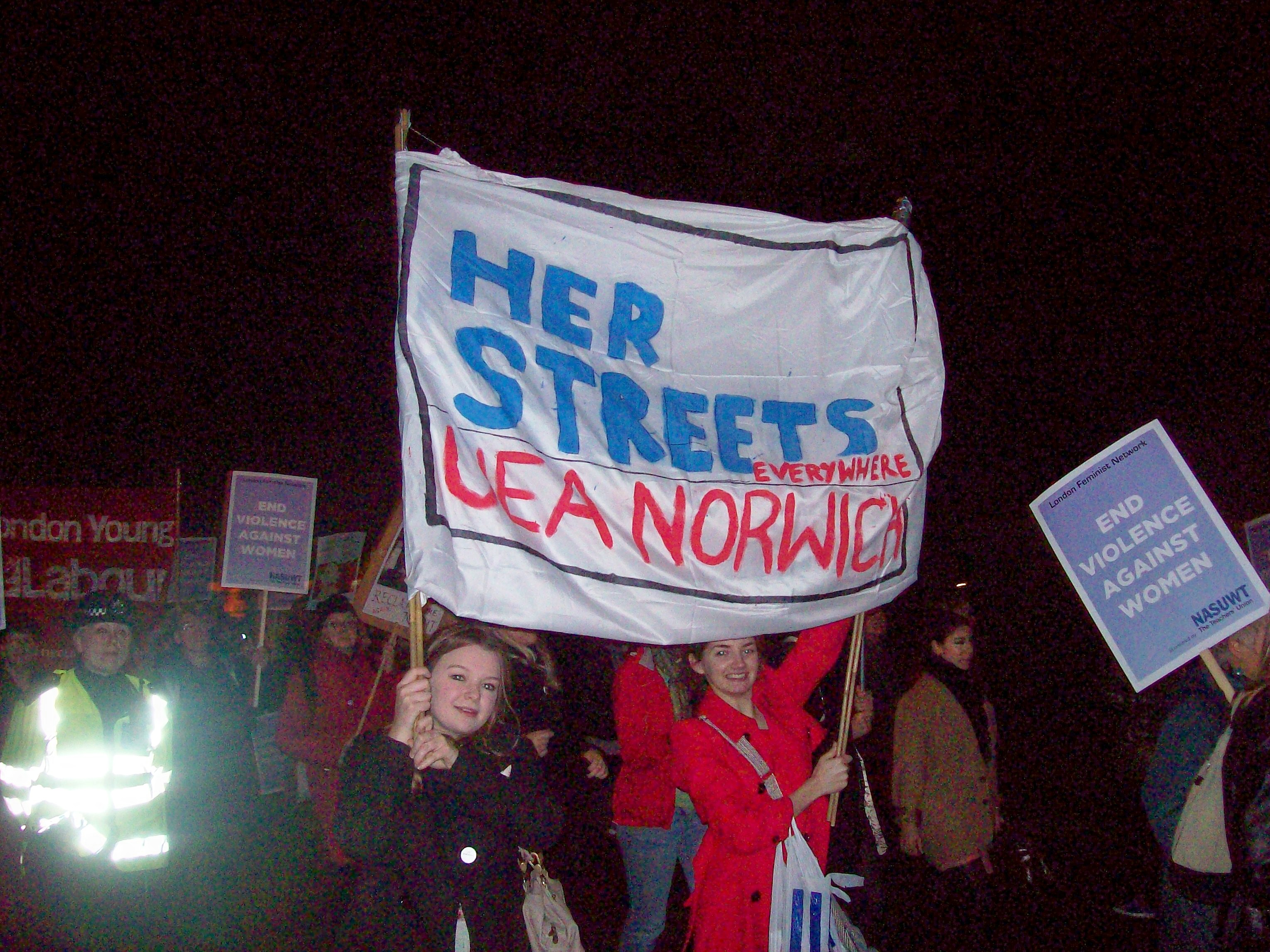
Adrenaline rushed through my body as I heard the chants clearer “Whatever we wear, wherever we go yes means yes and no means no!” and “Hey, Hey, Ho, Ho, Sexual Violence has got to go!”  I managed to meet up with the group pretty quickly and was so happy to be able to join for the last five or ten minutes of the march.

We gathered in the hall of the Camden Centre and before I even had time for the toilet, the speakers started…

  • Women against the cuts – Eve Featherstone
  • Abortion rights – Kate Smurthwaite
  • NUS National Women’s Officer – Estelle Hart
  • NASUWT Officer
  • Million Women Rise – Femi Otitoju

Although the reality of things like the cuts, particularly in relation to violence against women, were daunting, it was another inspiring evening.  Cutting billions of pounds of funding for organisations that help victims of violence, stopping free contraception and abortions… it is all making steps backwards.  This was illustrated shockingly by Kate, pulling out a wire coat-hanger.  The fact is that forced pregnancy will also bring the country down economically, and will be extremely harmful for those from low-income backgrounds because they will not be able to afford unwanted pregnancies, financially, let alone emotionally!

I ended the night with some jerk chicken and a cheeky bit of rice from the nice man serving me, for £2.  And with that, I’ll wrap it up. xxx

How To Be a Woman

I was really excited to start reading Caitlin Moran’s How To Be a Woman, but I wasn’t sure what to expect. The tone is very accessible, which isn’t something I am usually keen on, but I think that’s her point. For Moran, feminism isn’t something that only women should care about, or even a certain type of woman. And damn right. I’m sick of women not knowing they need feminism and this book’s appeal to the mass market means that maybe the women who aren’t interested in women’s issues will realise it’s nothing to do with men-hating and maybe they will be able to see the inequality that still exists in the world.

I wasn’t expecting such an autobiographical text. However, on reflecting on the discussions within the UEA Feminist Society, I realise that this is a great way of communicating feminist topics – through recounting experiences and assessing the problems. In reading this book, it is impossible not to have an opinion. Due to disagreements within feminism, there is not a hard-and-fast manifesto of feminist utopia. We all have to come together and offer our opinion, to come to a compromise about what is best for both women and men of every race, culture and class. We have a long way to go. So, I thought I’d attempt to give my thoughts on some of the topics Moran covers. I imagine this will be longer than a blog post should be, yet shorter than a book.

Moran was inspired by Germaine Greer’s The Female Eunuch and so from one generation to the next, I will be using this book as an inspiration to give my two pennies worth. Although the age gap between Moran and Greer is almost triple that of mine and Moran’s, it would be too complex to do this with The Female Eunuch, which I have also read. Moran’s ideas are all easy to follow, whilst, when reading other more ‘intellectual’ writers, such as Cixous and de Beauvoir, there can be parts that go over my English-Literature-BA-(Hons)-2:1-head (I recently graduated – yay!). A little less high-brow than Butler and Appignanesi, this is a book you would enjoy reading on the beach or by the pool on holiday; this is a book that will make you run up to the diving board and shout ‘I AM A FEMINIST!’ before taking a big plunge.

Speaking of Greer, Moran comments on how she doesn’t agree with all her views. This reminded me of a poem I wrote in response to an article Greer wrote.

Germaine Greer

Germaine Greer writes about Mrs O’s dress
As the USA gets its first black president.
The Guardian call this news that they press
But it’s worth about as much as 50 cent.

It’s like taking one step forward and then two back
And demeans the event for the sake of controversy.
As the world celebrates the result for Barack,
Germaine Greer points out the bits that we failed to see.

The dress looked like a butcher’s apron
And the children were not girly enough.
Glad that I’m not one of them;
I wouldn’t be caught dead in that stuff!

Oh, Germaine Greer, as an academic scholar
Are you trying to tell us feminism is dead?
If this is your idea of irony, it isn’t worth a dollar,
If it’s a joke, I’d say be serious instead.

Germaine Greer what is feminism now, in your books?
Should we judge what every other woman wears?
After all, a woman’s role is shown by how she looks
And her importance equates to the number of male stares.

Germaine Greer did you not know we still fight
To be considered equals to men?
Should I be ashamed to say I’m a feminist and want my right?
It bleeds out through the ink of my pen.

Anyway, back to Moran. She begins on what many people would see as the first step to becoming a woman. Periods. Now you can (technically) have sex and reproduce, and you are open to the complexities of life and a have to plan your life around the damn thing. Luckily, my periods haven’t been as traumatic as those described in the book, but it’s still an extra pain in the arse, or rather a pain in the vag I guess. So, on top of my number one annoyance (hair removal – both especially annoying when it comes to sex) that women have to plan their life around, the period is there to disrupt things and I’m sure everyone would wish it didn’t exist. Because even if we are glad to be a woman, it is not something we can ever be ready for (and certainly not at age 11 or whatever) but we get used to it, like THAT customer that comes in every so often on your part-time retail job “not you again” we think. Things like counting down the days to realise it’s going to clash with a festival, or holiday, or anything that we actually want to look forward to. So, the first sign of becoming a woman appear to be that it is annoying, unfair and, as Moran put it, BULLSHIT. But, we can’t blame the patriarchy for that, so, let’s moves on.

As I have said so many times, I have given in to the pressure of hairless airbrushed images and try to remove as much as possible whilst still retaining an element of “womanliness” (I’m not going to spell it out). However, rather bizarrely I haven’t been for a wax since reading itMoran, what have you done to me? (Edit: I have had one since writing this as I took so long to get on with finishing it). I’m pretty sure it’s for practical reasons (time and money) rather than brainwashing. I did find this section very funny though, because a lot of the time, I don’t think men understand that woman are also born with hair all over our body and that ours is just generally thinner and lighter in certain places. One friend, describing these dilemmas says ‘I can’t budget correctly with all these “Random Fuck Factors” in my week. No wonder everyone’s a slag these days. Even if you don’t like anyone at the party, you want to get some return on your wax” (p. 49).

Even though this is humorous, I personally disagree with the term ‘slag’ (it’s too long to go in right now) and I also feel it should be noted that not all women get waxes “for” men – it helps with confidence (in addition to during sex), cleanliness (being “groomed”) and makes you feel like, not just a woman, but a strong woman. I got my first wax when I was 21 and it was a sign of being a woman prior to getting it done, but afterwards, I thought ‘wow, that was worse that any boy has broken my heart; now I can cope with anything, I am a STRONG woman and I can take on the world.’ Though it’s partly funny, it’s also rather tragic, and this is pin-pointed by the idea that these thousands of pounds we spend on hair removal is ‘just to look normal’. It is then my thoughts escalate to thinking that sanitary towels and hair removal should be on the NHS. It’s just not fair!

Moran makes it clear that men can be feminists too, but she does confuse the point on page 79, when she states that working out if you are a feminist is determined by asking yourself ‘Do you have a vagina?’ and ‘Do you want to be in charge of it?’ I wouldn’t say it that way myself, but it makes clear that her target audience for the book is female, and to be fair, she’d be right – not many men would read a book entitled ‘How To Be a Woman’. So, time to move on again.

She mentions ‘Girl Power’ which I know has been criticised for different reasons, but, thinking back, it was the Spice Girls that made me aware of any vague notion of feminism, so it can’t be all bad. My favourite was ‘Sporty Spice’ and as I’ve always been quite “girly” really, it probably helped make me who I am today – happy to be “girly” but uncomfortable with stereotypes and equally happy to challenge the idea that my gender stops me from doing anything, for example taking up boxing, cutting my hair short, drinking lager, and being an internet nerd (stereotypically speaking again). I saw a boy drawing flowers and his older brother (or someone else who should have known better) telling him flowers were for girls and I said ‘no, everyone can draw flowers’ or something to that effect.

Forgive me if this is all a bit slap-dash, I read the book a while back now and made notes in my phone and am writing this very sporadically and trying to make sense of notes. At the moment I’m trying to work out what ‘pc words, bitching hmm, underwear, nt all about men’ means. Okay, I have now found the point in the book about political correctness. Personally, the whole thing irritates me; the fact that people need others to tell them about what is right and wrong. And Moran states that ‘people keep using the phrase without really knowing what it means’ (p. 84). This is true, but more so, that people hear the word feminist, and misjudge what it means.

She moves on to the topic of bitching. I find this difficult because I believe that bitching is not nice, and that as a human being, and not ‘as a woman’ I believe niceness is underrated. However, I am now reading Odd Girl Out by Rachel Simmons which is largely about how women are expected to be nice and these expectations lead to alternative aggressions, which are usually psychologically damaging, as opposed to physically damaging. This whole area is complicated, as there is a difference between letting off steam, and bitching, which is the intention to hurt someone. And I believe that the whole idea of setting women up again other women is very dangerous. I know women who have been scornful towards women, and I find that shocking and unpleasant. Women need to be supportive of one another and inspire each other, because men are already in competition with us on an uneven pegging field. Plus, Moran’s whole ‘being polite’ (p. 87) is kind of contradictory when you take into account the acceptance of bitching.

I found the part about over-eating interesting (p. 117). I know I’m mostly healthy but I think maybe I could be healthier (okay, and that would correlate with being a tiny bit slimmer) and this is mainly due to the fact I eat too much. I can be sensible in the day, and count my fruit and veg and water intake, but when evening comes it goes downhill – if I am not eating a 2-person portion and having a compulsory chocolate-based dessert, then I would be piling on the pounds with alcohol. Perhaps this is why I am able to talk about how much I ate in the same humorous way Moran describes a shepherd’s pie indulgence; because I am only fat in model terms. I remember when I did feel I was overweight, which was likely just a bit of teenage puppy fat, and I would never tell anyone how fat I felt, because ‘the only people who aren’t talking about it are the only people whose business it really is’ (p.118).

I find it hard to pinpoint where I have encountered sexism because I feel it is so engrained in society, and throughout my childhood it has been somewhat acceptable. When I hit puberty, I didn’t even know that men’s making me feel uncomfortable by “cat-calling” was a feminist issue, it just seemed it was another part of life you couldn’t control.

Relationships and the subject of love are also complex because of the different areas that come up; it can seem like a power struggle when there really shouldn’t be one. From monetary matters to those of sexual behaviour, to the idea of adhering to ‘rules’; women’s relations with men are bound up in these issues.

Another subject matter I find interesting is that of performing as a pole dancer or burlesque act. As I have performed a few times as a pole dancer and I have watched a couple of burlesque shows, I know there is a fine line between the seedy strip bars, and the more artistic performances. Moran states her ‘rule of thumb’ is as to whether gay men flock there because ‘they are up for glitter, filth and fun – rather than a factory-farm wank-trigger’ (p. 176) which makes sense but is a hardly scientific measurement. It is also about the intentions of the viewer. I have performed my pole routine in front of a large audience at a talent show, and although the judges tried to remain unfazed, there were still innuendo comments about male students’ responses. This made me uncomfortable as it was about strength and confidence, and the creativity behind the dance, rather than anything sexual or seedy. I have an idea for an event, at this stage (being in my head) called ‘Poetry and Poles’, whereby pole dancers can perform beautiful routines alongside poetry in a space other than trashy clubs and bars. In the same vein as pornography, women should be free to choose these paths, but without the derogatory and demeaning contexts.

The section on marriage is another good one. When I was at secondary school, and had no contact with the opposite text other than teachers and family, I thought marriage wasn’t for me and that I would be a “career woman”. Although my aspirations for a successful career have not changes, these things some call maternal instincts have kicked in and I have recently found myself wanting a family. Not now, but, at some point, probably from the age of 25 (although this is not something anyone ever has a choice about, obviously).

The religious reasons for marriage would not be my reasoning, but I would like a celebration of love and unity. I find the cost of weddings horrendous and I would want to keep my as cheap as possible, going for an understated but beautiful ceremony, with practical presents. I do also like the idea of a fun hen night with my girl friends, the honeymoon; the whole shebang. In terms of guests, I can’t stand massive family gatherings where I find out I have relations I didn’t know existed, or don’t remember what they look like; I’d want close friends and family only to avoid this awkwardness. After years of shaky birthday plans, I can understand the huge pressure the day would have to be ‘the best day of your life’ (p. 182) which is why it would need to be a simple and small as possible. Moran reiterates this by stating ‘the quickest and easiest way to kill the fun good-times is to put a massive pressure of expectation on it in advance’ (p.193). I also wouldn’t want to change my name. I do that thing when I’m with a guy I like, try out their surname, and it never sounds right, not that I would have the intention to do it. I would like to include it in some way, but who knows how, my name is long enough already!

Next up, fashion. Again, the fashion industry is flawed, with all the horrible size-zero malarkey. But, blame the Barbies, whatever, I do love a bit of fashion. I’m not a great follower but I think it’s easy enough to keep up to date just by shopping, as I don’t just blindly follow and like to pick and choose what I like. Starting with shoes, I tend to wear the same ones and am a massive fan of the mini-heel. The last attempt to wear this great pair of platform black heels ended up with me (amongst all of my friends) changing back to a lower heel five minutes later. People tend to associate shoes with me and buy me presents connected to them, and I have always enjoyed drawing them in art classes. I think their just beautiful objects and by owning different shoes, I can beautiful myself. Though never wearing nice heels defeats the purpose somewhat!

In terms of handbags, I am a big fan of Chanel handbags. The only problem is, I can’t afford them. Therefore, I try and get the nearest possible high street version – the best being from Marc B (at Topshop). However, I use bags to death, and like my favourite shoes, I tend to hold on to old scrappy items. As for clothes, I frequently encounter the ‘I have nothing to wear’ (p. 211) problem, despite my bulging wardrobe. I still look at clothes and want them (to the extent that it is too painful to look at clothes because I know I can’t buy any). On a more serious note, I find the idea that ‘a woman is still to blame for being raped if she dresses ‘provocatively’’ (p. 209) disgusting, and that is why I support things like the Slut Walk.

Moran states two cases for having children, and not having children. As I state previously, I used to not want children, but now I would like children when the time is right. I think it is a personal decision, and that’s why the argument about an over-populated world being a positive about abortion exists solely as a comfort for those having an abortion (i.e. not the other way around). On the topic of abortion, I am pro-choice but it is never something which I would personally do, because it is a personal matter. For myself, I know my parents could have aborted me but they didn’t, and although it was hard work, having children is never going to be easy and always involves sacrifices. There are all sorts of complex reasons for a woman having an abortion, and I have friends that have had abortions. If I think more deeply, I would consider having an abortion if there were tests for a life-shattering disability because I believe the child would not lead a pleasurable life, and I would not want to be a carer of a child with such an upsetting disability.

The points I don’t completely agree with are as follows. Firstly, there is the idea of ‘good’ and ‘bad’ abortions (p. 272). Although I agree with the basic idea of it, in that one should not be judged for their actions, regardless of the reasoning, I disagree with the ‘repeated abortions, late-term abortions, abortions after IVF’ (p. 272). In regard to repeated abortions, if an abortion becomes a regular occurrence (common amongst teenagers) then this is an education issue and that person needs to take responsibility for their actions and take precautions in future, or they are not learning from their mistakes. Late-term abortions, I can have some sympathy for, because this decision is extremely difficult, and at times you may not even know you’re pregnant until very late, but this is also very dangerous. For example, the experience Tracey Emin has described, which was through no fault of her own, sounds devastating. As for abortions after IVF, I don’t understand why anyone would do that, unless there were other factors. Secondly, I find it unusual that the grief and guilt ‘never arrives’ (p. 283) for Moran, post-abortion, as I think any human would be emotionally changed afterwards, and someone I was friends with had an unemotional reaction and it just strikes me as cold and strange, but, that said, a woman is perfectly able to be so. I can’t help but think there would be some underlying emotions that are not being dealt with, even if it was due to outside opinion.

Overall, the book does the job it intended and has friends of mine who once wouldn’t have called themselves a feminist, doing just that and it makes me so happy. If this book can do that to a mass audience then it will do a world of good. One large point that it does not tackle is the issues of the wider world, as there are countries where women face horrific injustices. But, we do have to start somewhere.