Blog

CELTA: Certificate in English Language Teaching to Adults

So, I passed my CELTA course! From mid-September to mid-December I went to International House every Monday and Wednesday after work, plus some Saturdays. I expected it to be a lot of work. It certainly was hard work, but there was a lot that I didn’t expect. It wasn’t a walk in the park – it wasn’t simply a case of getting on with it and putting the hours in. The worst lesson I had was when I had planned for ten hours! The fact that progress wasn’t linear meant that it ended up being quite an emotional journey, and finishing on my final TP (teaching practise) was anticlimactic, because it wasn’t my best lesson. I wasn’t yet perfect.

By the end, I had managed to pass all my assignments the first time, had bounced back from my #weak lesson – managing not to fail any – and had saved lessons when I had made them too difficult for the learners. I’ve always had high expectations of students, but by the end of the course I definitely learnt when I need to lower the level of challenge! Although you accept the fact you’re being observed by five people every lesson, there must be an underlying nervousness that comes from that, and I 100% feel confident and relaxed about moving forward into this new profession. Initially I was a bit disappointed not to get a “Pass B” grade, but I’ve since understood just how hard it is to get them – with these trainee teachers getting Above Standard lessons, what was I thinking?
12360430_10153878078114653_2227171848900357682_n

The move itself is a sideways one. I work as an Academic Mentor for English, so I teach language skills every day, but in a very different context. I see it as a another string to my bow, but, like any, one that needs honing and developing continually. In the future, I hope to have this as part of what I can offer whether tutoring or teaching. After volunteering at work and after work next year, my dream at the moment is to find a job in Spain in September/October. Having a Spanish name and not being able to speak Spanish is a constant disappointment. I admire my grandmother for learning so many languages, and feel that with enough dedication and some time actually living in the country, maybe I’ll be able to grasp enough of the language to at least hold a conversation.

What I really wanted to write about here is my journey through the course, and other than the certificate that should arrive in a couple of months, I gained so much from doing the course. I wanted it to be a good investment, so opted for the CELTA, which is around £1,600. I worked out the most convenient location and time, and it happened to be one of the most reputable places to do the courses. International House has centres all over the world, and though it may be unrealistic to expect to work within the organisation any time soon, I was particularly inspired to know that many people who work there also have creative practices they do alongside ELF teaching.

As so much of my time was taken up by the course, I could no longer attend poetry events I wasn’t featured at or running, and couldn’t visit my boyfriend all the way in Norwich. It meant we took some trips to half-way points like Colchester and Ely. What started as a seed that was planted by my boyfriend’s desire to live abroad has blossomed into a dream of my own. Now I’m left hoping he still wants to travel with me on my mission to see the world and to soak up some Spanish sun, or anywhere I can learn Spanish and be in warmer weather than the temperamental UK.

The past three and a half years I have been so focused on attending events that I had been doing it out of obligation rather than feeling I had a choice in the matter – a feeling shared by others in a similar position. Not being able to attend events has given me a renewed perspective. I now I feel I am able to prioritise other things, like actually writing, and taking care of myself both physically and mentally. Since Christmas Day I have been participating in an online challenge to write a poem per day for 12 days (The 12 Days of Form) and I have so far been able to rise to the challenge. The rollercoaster ride of the CELTA has shown me what I can achieve within the space of a few months, and I feel I am able to set myself practical goals, and writing is a lot more tangible than performing at random events.

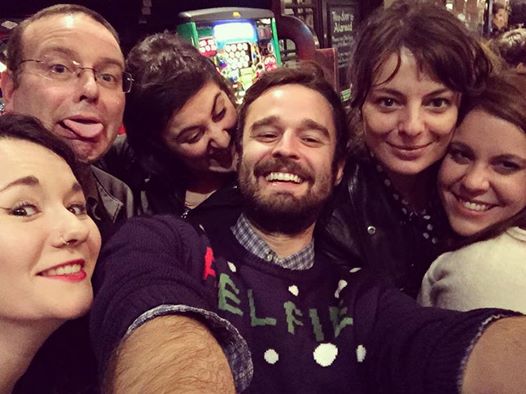
Lastly, I saw a couple of members of Kid Glove, and after a difficult period leading up to our show and some time apart, it was good to reconnect as friends over a pint, new MAC make-up and pub grub. On the course I also met a great bunch of people, and we had a massive celebration on the last day of the course – great Korean food, and drinks at good old ‘Spoons. As much as I try to make time for friends, I want to be more flexible to see them too. Let’s see if performing at less open mic’ nights will give me more time to do other important things!

ihlondon-logo

I do still want to perform, but hope I can be more free to attend events on my terms, rather than feeling like a puppet to whatever voice in my head. I want the time to write, to work on memorising newer pieces, and my boyfriend Matt has a fancy new camera he is keen to use to record a piece. Working and commuting take so much out of me, people in the same role are surprised that I manage to go home and be productive. So, by going out less I needn’t feel like a failure. I’m an introvert at heart, and I think it’s about time I embrace that and finally get a good lot of writing done. It’s still cold outside after all.

Now, onto today’s form: the ballad.

Feminism in London: Engaging Men in Feminism

Last year at the FiL conference I went to a similar workshop about men and Feminism. This year, The Great Initiative came to deliver the workshop, which went through a some of the activities they would do with school children as a way of engaging them within discussions on gender and equality. Although the focus is on men and boys here, it is a far cry from the misogynist MRAs one can get used to trolling online. The men who are serious about addressing gender do so in a pro-Feminist way. Through ‘Great Men’, they aim to disrupt gender stereotypes and engage participants in the movement towards gender equality. The diagram below shows how they go about this.

workshop-topics

In the workshop, we started with word associations on big pieces of paper connected to men and women. The main bulk was in groups, where we discussed pros and cons men being engaged with Feminism. Our initial reaction to the task was that there simply aren’t any cons to men being engaged with Feminism. We then thought more about it in terms of either the act of engaging men itself and what are essentially maybe teething issues, so things like feeling men are to blame rather than it being about a system of power, but arguably paradoxically having to think about being in a position privilege and how that can be used for making the movement stronger. Yet, in terms of men who are engaged in Feminism, there may be a resistance to, in some ways, giving up power, and in turn a danger to dominate rather than listen and try to understand how life is coloured with experiences of being a woman. I managed to take a photograph of our notes on the topic. When the discussion was opened up, we managed to summarise, and there were moments where it descented into debate, but at the end we were left with this list to keep in mind, and some tools and approaches to engaging men and boys in Feminism.

IMG_3332

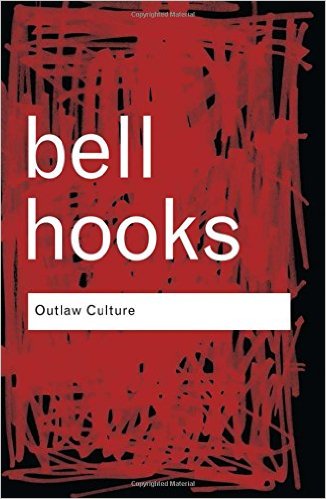
bell hooks: Outlaw Culture

When reading Feminist texts, it is usually unlikely that you will agree with 100% of what they write. It’s hard to be right about everything, and Feminists are human and it’s natural to disagree. I don’t know about you, but I think it’s a pretty impossible feat to solve the world’s problems. But, you know, we try. And when it comes to bell hooks, she gets pretty close to that 100% for me. This notion of a perfect kind of Feminism is also something bell hooks addresses.

In conversation with Caitlin Moran, Bridget Christie and Shazia Mirza at Southbank Centre, they asserted that there’s no such thing as a perfect Feminist, and that they shouldn’t have to face a backlash for saying things others had issues with. Whilst I agree that the vile abuse that can come out of this through such “Twitterstorms” is bad (goodbye sisterhood), I think it’s important to be critical and create a dialogue rather than stick your fingers in your ears and say ‘la la la, I’m not listening’. bell hooks states her books ‘rigorously critique and interrogate aspects of feminist thoughts, they also insist on the primacy of a fierce feminist commitment to ending sexism and sexist oppression.’ She goes on to say that ‘a progressive, revolutionary feminist movement must welcome and create a context for constructive conflict, confrontation, and dissent. Through that dialectical exchange of ideas, thought, and visions, we affirm the transformative power of power politics.’ Maybe a utopian vision, but something we do have the power to achieve.

I have a copy of ‘Feminism is for Everybody’ still on my shelf, and bought my boyfriend a copy of ‘The Will to Change: Men, Masculinity and Love’ after a recommendation from a male colleague, but I started with ‘Outlaw Culture’. It’s a collection of essays and interviews which focuses on pop culture, weaving in perfectly placed profanities within an academic discourse that gives legitimacy to engage critically with the kinds of things that surround a majority of people’s everyday lives.

51z8-boklgl-_sx324_bo1204203200_

I have folded down SO MANY CORNERS. I cannot recommend this book enough, even if it isn’t the one that most people would typically go for. Although bell hooks has been questioned on her academic style, I still think it’s somewhat accessible. Coming from an academic background myself, it may be hard to assess that concern properly, but I was actually gripped when reading it. And to get that from a non-fiction feminist text is pretty impressive.

One of the big things I liked about the book, is the amount of times the ‘white supremacist capitalist, patriarchy’ is referenced, as well as comments on heteronormativity and imperialism. I think it’s so important to see the ways these systems of power intersect and to find strength in that, as well to see what part you have to play in the struggle against these multiple oppressions. Although there are some references to films I’d not seen, it made me want to watch and re-read, and these were just as interesting as those I was familiar with, or the more broad essays, such as the fantastic ‘Gangsta Culture – Sexism and Misogyny: Who will take the rap?’ This was the one that made me rush to my bag in a debate with my Dad to slam the book down at the table, opened at one of the turned-down corners.

Published in 2006, Outlaw Culture is available from Routledge Classics and you can buy it here.

Body Hair: Armpit Alert

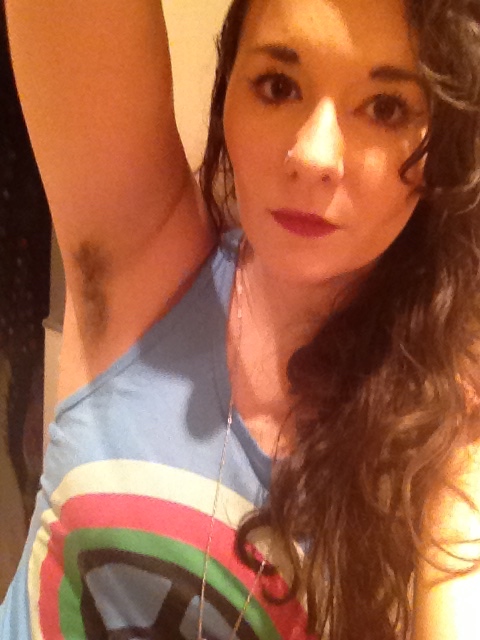
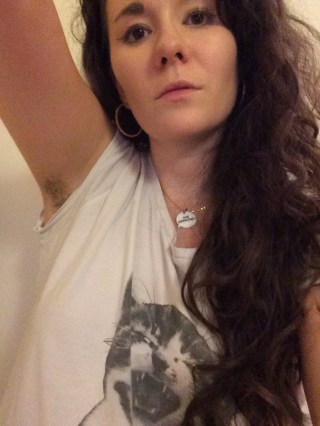
Dr. Breanne Fahs has been quoted to say that when a woman shows her armpit hair it “becomes an act of political resistance because it highlights the presence of an otherwise silent or erased aspect of women’s bodies.” It’s winter, so it’s been an act of political resistance that has been easy to embrace. The picture below is probably the closest I’ll get to exposing my hairy armpits to the world. When not on show, I’m happy to grow! But if I’m honest, there’s a deep-seated attitude ingrained in me that probably underlies just why I will continue to shave in the summer months, despite the fact the hair grows back within what seems like minutes, and with such sensitive skin, it’s near impossible for it to be smooth unless the optimum amount of time is left in between shaves.

IMG_3391.jpg
How more hippie can you get?

It’s not complex to work out why I’m embarrassed to bare my hair on the beach. I think it’s around 90% of women who remove armpit hair. It even feels a little silly that messages that are so obviously articulated are still able to influence me so powerfully. I remember when I was about seven years old, in Italy, I thought I saw the armpit hair of an older, American girl. It seemed like such a shock to me. I remember telling my Mum, who has, of course, handed down body-hair shame to me like a precious heirloom.

When I started to grow hair there myself, I was still at primary school. A girl saw that I had hair there. It was almost like I hadn’t noticed it myself. I don’t remember thinking anything of it growing there until it was pointed out to me by another girl. This was obviously accompanied by an “urgh!” All it took was these two experienced, strong enough for them to stand out in mind mind all these years later, to form this idea that I’m not presentable in my natural state.

IMG_0010

Maybe one day, I’ll become brave enough to step out in the real world like this. But for now, this is as Feminist as my armpits get. Meow. Just had a massive curry and going to have a bath, eat chocolate in front of telly, half wishing I was dancing to Beyonce (but only half, because I’m like 26 now, getting old, staying in for NYE etc). #Iwokeuplikethis #flawless

Feminism in London: Suppressed Histories

I wanted to start blogging, like, actually properly. I often plan so that I blog for a specific reason and by the time I get round to it, I end up writing so much that I would be surprised if anyone bothered to read it! Blogging is meant to be short and frequent, right? Maybe it’s some subconscious fear about putting y writing out there, that part of me is scared that people will read it and so write so much to put them off!

Feminism in London was nearly two months ago. I could only attend on the Sunday, so the first talk I went to was by Max Dashu, who spoke about women’s suppressed histories. It was so eye-opening that I immediately noted down the website. I have also just signed up subscribed to the YouTube account. I’d highly recommend watching this extract from the Women’s Power DVD.

It is important when talking of empowerment from a position of historic oppression, that we don’t paint ourselves solely in a position of inferiority and victimhood. This connects very much to how power is perceived: in terms of ‘domination, force and supremacy… these systems are more than patriarchal; they are colonial and imperial’ Women’s oppression is one story, but, as Chimamanda Ngozi Adichie stated in the video below, it is vital that we hear all stories. Here we can consider a global perspective: one that doesn’t necessarily align with the story we get told.

The video states that ‘in classic Eurocentric history, women end up as footnotes to the main story’ and this is a view so widely accepted that when watching The Apprentice on catch-up, one team decided to cut off the woman’s long hair in a silhouette in order to make the image look like a man, which they described as “gender neutral”. No, my friend, man is not neutral, but is often deemed so because of the patriarchy’s position of this as the default. Whilst Feminism becomes more and more about challenging gender as a social construct, it is still important to raise the voices of those who have been silent too long.

Over Land, Over Sea – poems for those seeking refuge

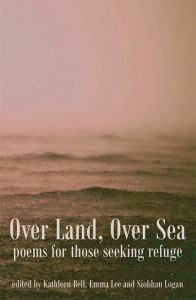
poets4refugees-over_land_over_sea-196x300My poem Sinking Ship is featured in a collection of poems for those seeking refuge, Over Land, Over Sea, where proceeds from sales of the book will be shared between the charities: Médecins Sans Frontières, Leicester City of Sanctuary and Nottingham Refugee Forum. It is available for purchase for £9.99 from Five Leaves Press and would make a lovely Christmas present for those who care about this issue. Charitable presents are something that has recently interested me, and I’d like to also recommend the Roy Castle Lung Foundation, which funds vital lung cancer research. I particularly like the statement necklaces and chunky earrings on offer here.

Contributors include: Alan Baker, Kathleen Bell, A.C. Clarke, Kerry Featherstone, Chrissie Gittins, Mark Goodwin, Tania Hershman, Siobhan Logan, Emma Lee, Carol Leeming, Joanne Limburg, Aoife Mannix, Roy Marshall, Hubert Moore, Thomas Orszag-Lund, Simon Perril, Sheenagh Pugh, Mahendra Solanki, Maria Taylor, Rory Waterman, Gregory Woods, and Siobhan Logan.

It is available to buy in the Five Leaves bookshop in Nottingham, by phone  (0115 8373097) or by email (bookshop@fiveleaves.co.uk) with free p&p for UK orders.(Overseas orders welcome, please email for delivery estimate). All major Credit Cards & Paypal accepted.

Also, current Young Poet Laureate for London, Selina Nwulu touches on these themes in her poem Before. Watch here.

20.11.15 – Origin Stories: Superheroes and Villains

Performing alongside other Burn After Reading poets Zahrah Sheikh, Cameron Holleran, Tyrone Lewis and Eleanor Penny.

Deptford Cinema, 7pm

Priya’s Shakti’, India’s first Augmented Reality comic book, was launched at Mumbai Comicon 2014 June 2015. The comic book tells the story of Priya, a villager from India who is gang raped by men in her village. With the aim of raising awareness of the evil of rape and to bring about a change in the way rape victims are treated, a pilot scheme of distributing the comic boks to rural schools has subsequently begun in India.

For the Origins Season, and the upcoming Internation Day for the Elimination of Violence Against Women, join us as we discuss the work and ideas behind the comic book with Ram Devineni, a co-creater of ‘Priya’s Shakti’.

Article of interest.

12.11.15 – Reading Room, Wellcome Collection

sexology-book (1)

I will be reciting poetry and entering into a discussion on FGM with Ubah Egal at The Wellcome Collection’s Reading Room, as part of the ‘Sexology Season’ on Thursday 12th November at 6.30pm.

24.10.15 – Feminism In London: Evening Party

Performing alongside Sara Pascoe, Bronwen Stephens, Kate Smurthwaite, Mercedes Benson, Claire Mooney, Nula Hula, Ada Campe and Suzy Bennet. Taking place at the Hilton London Metropole. Book tickets here.


Bad Poet: Sometimes You Have to be Bad, Before You’re Good

Today, in case you hadn’t heard, is National Poetry Day. I’m feeling like a bad poet because I’m not attending any events to mark the occasion. At the most, I’ll probably watch and listen to all the stuff that’s happening online, trying to understand the mixture of pride, envy and joy at watching/listening to poetry by my peers featuring on national television and radio.

As I write this, I’m on my way back from my day job, where I work as an Academic Mentor for English. This morning I played Year 10 ‘Origin Story’ by Sarah Kay and Phil Kaye, whilst trying to convince them to come to my Creative Writing Club. This is something I will do again no doubt, and in fact, I ended my day going into a class to hand out letters with permission slip. One student took one. There are currently two members in my club. Replacing First Story is going to be harder than I thought. But still, it’s early days. Last year, two Year 8 students – a boy and a girl – made their own version of ‘Origin Story’ and, along with my new Feminist Group, my main goal this year is to make this a success.

That goal applying to my day job. By night, I used to be able to go to events like National Poetry Day Live at the Royal Festival Hall, which is where I was this time last year. However, tonight I will be largely writing an assignment for a CELTA course I’m studying part-time. This means I’m doing two 13 hour days each week (because, you know, full time job), plus attending some Saturdays. On Mondays and Wednesdays, I rise at 6.30am and go to sleep at 11.30pm. On top of this, I have to do these assignments, thoroughly plan lessons for the course, observe others teaching, and be observed myself… By five people (I was less than happy when informed I’ll be observed twice in my day job too, but hey, I should be used to it, at least!)

Tonight I’ll also try to fit in a rehearsal for a poem I’m performing on Saturday night (details below), and if I’m lucky, I can work on the poem I started writing last night when I should have been sleeping.

If I sound like I’m being negative, I am. I have Generalised Anxiety Disorder, plus some mild symptoms of depression. I’ve had six weeks on CBT, and been offered to take part in a trial. However, I find it too stressful to go to my “local” service provider, so we’ll see what happens with that. Sometimes it just feels like another thing to tick off the to-do list. 

Poet Tim Clare suggested the book ‘Feeling Good’ by David D Burns, M.D. and it was when reading it that I realised I was guilty of pretty much all of the cognitive distortions. Here’s a list:

  1. All-or-nothing thinking: I’m not on TV, I’m a failure as a poet.
  2. Overgeneralisation: This can be really bad, it’s like when things pile up so much that one thing sets off a continuous stream of negative thinking and it’s like there’s no way out. These days are usually a write-off, and the best thing is forced relaxation and an early night.
  3. Mental Filter: I hate making mistakes, so whenever this happens, or if I say something stupid, I will thinking about it constantly for multiple days. Sometimes if I feel like I’ve been talking “too much”, I have to just not say things I think of saying because I overthink what I say so much.
  4. Disqualifying the Positive: I guess this one is similar to number 6, but my parents’ support probably best explains this.
  5. Jumping to Conclusions: a/ Mind Reading: I haven’t heard from members of my poetry collective; they must not like me anymore. b/ Fortune Teller Error: If there’s a slight indication of a problem I have to nip it at the bud. This is probably how this one manifests itself as I worry about the outcomes of things so much that I do everything I can do to prevent the disaster in my head to the extent that I don’t seem to care how others perceive me in that time, until afterwards when I feel immense paranoia about how I’m viewed.
  6. Magnification or Minimisation: Like I said, links to 4, but I will focus on not being picked for one thing, and minimise the success of other things, such as recently being emailed about an opportunity linked to a project that saw my poetry played at the Southbank Centre, where the individual described a new poem I sent as”Visceral and shattering.  Hard to hear but necessary.”
  7. Emotional Reasoning: For this one, I guess it’s mostly in terms of relationships with other people. I find it hard to keep up with my friends because of lack of time, and distance with certain people, but they’re so important to me. However, when I don’t hear from people, I assume because I feel sad about it that they’re not as bothered about seeing me.
  8. Should statements: There was something in the book that was a bit of a revelation. By expecting too much of myself, I obviously end up exhausted and unable to keep up, but in turn I also place those same expectations on others and I become “bitter and self-righteous” when they are not met. This was something I realised was really harmful to my relationships with others. Communication is the key here.
  9. Labelling and Mislabeling: I feel like I don’t do this as much, but it could be because it can be quite subtle in a way. The automatic thought of “I’m so stupid” etc. is so familiar that it’s hard to even be conscious of it. The last time I did this, I cried and felt bad on my journey home from my Gran’s, where I’d stayed with my boyfriend, as I’d left chicken and fish bones in the bin because I didn’t know where to put it outside.
  10. Personalisation: This happened on a project where everyone was so positive about it, but the person I was working with said they couldn’t wait until it was over. I took their honesty as being about me, and saw it as a failure, when really they had a lot more going on that was nothing to do with me.

I hadn’t intended this to be so long, but this seems to be what happens… I write nothing for ages and then ramble on for so long that people will inevitably get bored before the end! But if you’re still with me… I guess my point is that I have been feeling disappointed in my progress within the world of poetry, but that part of me knows that I need to enjoy the journey rather than be so focused on an essentially imaginary end-point. I’ve been working on overdrive since I started working full-time, to the point where I don’t know what a normal existence looks like. Now I’ve taken on this CELTA course, I know that I won’t be able to participate in the poetry world as much as I would like to… including my beloved Burn After Reading events (now on Mondays) and The Writing Room Presents… Jawdance (Wednesdays). Recently, I wanted to take more care of myself. My goal was to give myself the time that normal people have to unwind, to make it Sundays. But, I need my Sundays now to work as I have such little time to do so otherwise. Maybe a New Years Resolution then.

I was inspired by one of my tutors on the course, who now works freelance. This was my aim over three years ago, and I’m now making plans to launch my career properly. I’ve been performing my poetry for nine years now. I count it from my first open mic’ event, and why not? There are poets out there who have achieved more than me and haven’t even been doing it a year! Is that the negative voice talking? Maybe.

Anyway, my plans – or my hopes – for the future are to use this CELTA course to live abroad for around a year, a year and a half. I then hope to come back having saved enough money to move out of my parents’ house (that was why I’ve been in this job for so long) and buy myself some time. I’ll try to get some part time work that will allow me the flexibility to truly focus on my passion. I’m hoping that with time to devote to my artistic practice, that I will start enjoying the journey more. I’m also hoping that my travels will allow me some perspective that I simply can’t seem to get when I’m exhausted on the 7.25am train towards Waterloo. And as fellow poet Sophia Walker pointed out, that other than just thinking about what I can offer the countries I go to, they will also have much to offer me and I will grow as a writer and as a person in ways I won’t know now.

So, these will be the last few things I’m up to this year, but I reckon it’s the max I can afford to do time-wise:

-Feminism in London Evening Party

-Working on a Burn After Reading project

-An event on Superheroes and Supervillians

-Homeless Not Hopeless event

Hopefully I’ll catch some weekend events and open mic nights, and, of course, there’ll be She Grrrowls… I don’t want to end it so soon, so maybe I’ll do a January goodbye party… I’m not sure exactly when I’ll be going, but January seems like a good time for a bon voyage!

shegrrrowls logo crop

Okay, I can’t quite end it there. Here are some nice things to look at for National Poetry Day:

  1. Selina Nwulu won the prize for Young Poet Laureate for London. Since working with her on Word’s a Stage (Apples and Snakes), we’ve shared pre-poetry food, post-show feminist discussions and dressed up in 1920s gear to see Laura Marling. She’s a fantastic poet, has featured at She Grrrowls, but is also such a lovely person. Representing the shy girls!
  2. Jodi Ann Bickley’s animated poem called ‘Brave’ on BBC Radio 1xtra’s Words First. I met her at Bestival last year (I think… the festivals blur!) and I’m so glad to hear new work from her.
  3. Some of my friends and peers on this Buzzfeed list. 
  4. I’m currently reading R.A. Villanueva, Reliquaria, and have just finished Sophia Walker’s Opposite the Tourbus.
  5. Chocolate Poetry Club put up this video of me featuring there and is celebrating its first birthday on Sunday 1st November.