Pussy Riot and the Power of Art

I’m going to begin this post by writing about my Gran’s 70th birthday, otherwise it might appear a little tame compared to the titled news. I went to Margate with my family and loved being near the sea, as well as the second-hand furniture shops and vintage stores. We stayed at the Walpole Bay Hotel which I would have liked to look more at as it is a living museum, giving it an eerie quality. Whilst in Margate I got to see Tracey Emin’s new work at the Turner gallery in ‘She Lay Down Deep Beneth the Sea.’ Emin tends to polarise people, but having seen her exhibition at the Hayward, I am ever the more passionate about her work. I feel that she is more of a writer than a visual artist, which some people may think is strange, but as she has said herself, she doesn’t care if she’s not the best visual artist in the world because ‘that isn’t my job.’ That’s not to say she’s not very skilled at the visual – she can make embroideries that look like paint! But, to me, it’s about more than just the visual, it’s about the story and the emotion.

The exhibition was free but I would urge anyone who sees it to spend the £2 for a headset so that you can really explore the work. What I found especially interesting, which you would be able to gather without the headset, is the inclusion of JMW Turner and Auguste Rodin alongside Emin’s work. Erotic nudes are displayed in a corridor-like room and seeing as the work shown was from the 1800s to the early 1900s, it makes me wonder what people find so crude and shocking about Emin’s work. There is a juxtaposition of gender here. I’m not sure I can offer any insight as to why Emin depicting her own body is so controversial. Perhaps people see it as self-indulgent, or cocky, but surely, writing and painting what you know best is the most natural thing to do? What I remember hearing Emin say through my headset, and what I believe also, is that although you are creating from yourself, once placed in public, the meaning transcends so that these bodies become not just Emin, but every woman.
Photography Copyright © 2012 Paul Singer – streetpix.co.uk

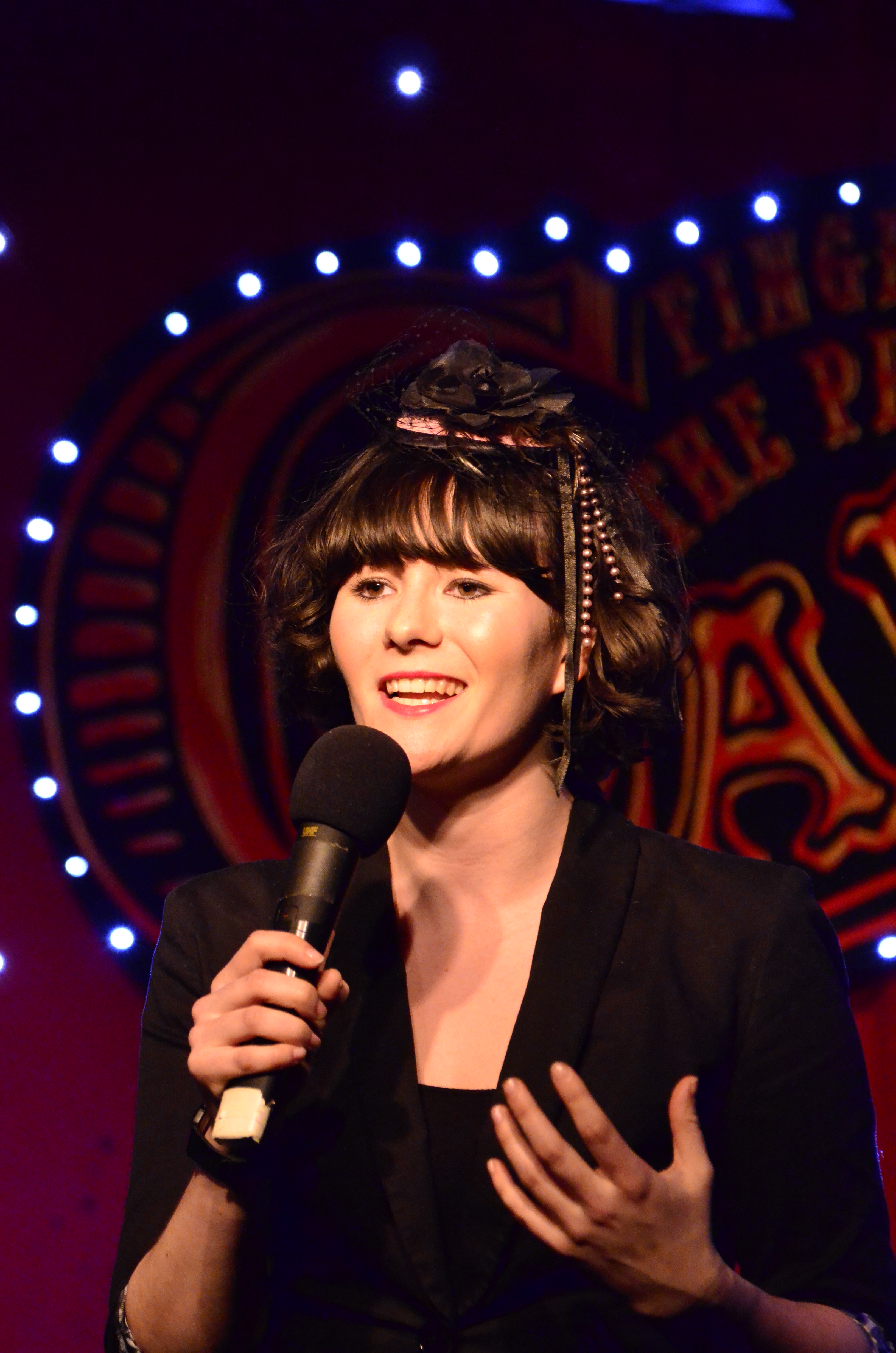
I recently bought these pictures and some footage (which I’m still awaiting) of my performance at Finger in the Pie. I realised that I had forgotten to mention that after my feature slot for IYAF and when one audience member stated he was ‘too critical’ to give an opinion, I pressed him for one. The first comment her made was that ‘it was very… feminine.’ He said a bit more and ended with something about being myself, but this comment stuck in my head. At the time I was a bit taken aback, but the more I thought about it the more it annoyed me. I reflected on the poems I had read, and a lot of them were autobiographical ones, or else ones about female characters ‘Cinderella’ and one quoting Sylvia Path with ‘the woman is perfected,’ plus another based on a Russian film called The Mirror. So, I can understand that someone would then make the comment that they were feminine.

However, the thing that annoyed me about this statement was that it was pitched as a negative. I am capable of writing poetry that is neutral or genderless and as I have written less of the autobiographical, this is more so the case, but there was an implication in the comment that feminine is the opposite of masculine. The context appeared to deal with those pesky binary oppositions that equate the masculine with right and the feminine with wrong. It begs the question, if my poetry is feminine, then what poetry is masculine? Or is masculine the elite poetry and feminine poetry just the Other? Can a man write feminine poetry? This idea was bothering me. However, much of the time I want my poetry to express my views, and some of what I write is as a Feminist, an activist, and… guess what? As a woman. So, if someone sees my poetry as ‘feminine’ I don’t mind. My problem, as I said before, is the assumption that ‘feminine’ equals ‘bad’.

I think it’s an incredibly loaded statement to describe someone’s writing is feminine. In some ways feminine writing has a lot to do with modernism, stream of consciousness and writers such as Virginia Woolf and Sylvia Plath. Some say that this style can also been seen to be adopted by James Joyce, a man. If I am counted alongside these writers, I won’t complain!

There are also writers such as Dorothy Parker who I love. But just because Parker writes as a woman, and as a feminist, does this mean her writing is feminine? Is feminine writing lady-like? Does it wear lipstick? A quote on the back of her collected works by Peter Ackroyd says ‘she managed to express her real feelings in stanzas which snap and glitter like a Chanel handbag,’ which I like. But this idea of emotional writing, as well as writing from the body, is synonymous with feminine writing.

In a discussion I wrote about during Poetry Parnassus, women writers discussed our place in literature today. The consensus seemed to be that women should do more than write from the body, especially as they pointed out, that some publishers (referencing Africa) will put a body on the cover of a book by a woman, even when unrelated. I agree that women can and should write about everything, but I don’t think that writing from the body should be excluded. If it feels natural for you to do so, then by ignoring that desire surely you are placating to a patriarchal idea that the feminine writing is ‘wrong’?

‘Oxymoronic writing: perhaps, but it’s reality that is oxymoronic.’

This criticism has made me want to rush through Hélène Cixous essays. Perhaps the critic at the event wanted my performance provide a more bisexual offering? But then, as a woman on stage, perhaps anything I could have said would have heralded me as ‘feminine’. As a Feminist, part of me would like to think I can write whatever way I chose. However, I also acknowledge that there is a difference, to write as a woman. And I would rather embrace it, play with and experiment with it, than ‘function within masculine thinking [and] restrict [myself] to the range of its logocentric vocalizations’ (Elmer G. Weins).

Moving on… Pussy Riot are a group of Feminist using art and music to protest against Putin. The group has over ten-members, anonymised through colourful balaclavas, and grabbing attention in miss-matched tights and dresses. I read about it on The Guardian website and found out that three members have been arrested and the rest are in hiding. One member, referred to as Squirrel, states Putin is ‘scared of girls’ which gives the article a punchy ending. However, these young women are incredibly brave and serve to remind us of why women around the world should be Feminists and support struggles such as those the population of Russia currently face. As Poetry Parnassus reminded us, free speech is often taken for granted in countries such as the UK. Maybe that’s why I’m not ashamed to be a ‘feminine’ writer – because we still have a reason to fight, and we have something to say about the feminine experience of the world.

xxx

May the Birthweek Commence

Yesterday I handed in my latest four pieces of coursework, including my interview piece with Benjamin Zephaniah. I met with my Gran at the Tate Modern, where we started our day with the Yayoi Kusama exhibition.


I first came across Kusama whilst studying my art foundation at Central Saint Martins and I became fascinated by her use of polka-dots and her use bright colours, and her poetry. I bought a book of hers which I sadly lost in a photocopier (or so I suspect). I did write down this quote:

“A polka-dot has the form of the sun, which is a symbol of the energy of the whole world and our living life, and also the form of the moon, which is calm Round, soft, colourful, senseless and unknowing. Polka-dots can’t stay alone; like the communicative life of people, two or three polka-dots become a movement.”

I was also inspired by use of cherry blossom depicted in the poem below, which I used in my paintings in order to symbolise the conflict between childhood and adulthood.

I want to eat cherry blossoms.
I want to kiss their pink colors.
Their scent that would have reached the universe dissipated in my youth.
Remembering that, now tears roll down my eyes.
Scattering cherry blossom petals on the path of my faint love, I will be facing death someday.
When that day arrives, all the love that I have had in my past, I will enwrap life.
On that moment, the flower path of cherry blossoms will envelop the whole of me without fail.
Cherry blossoms, cherry blossoms, cherry blossoms.
They explore my life and death.
Dear Cherry blossoms, I thank you


I first saw her exhibition at White Cube, and so this exhibition was interesting in terms of exploring the variety of her work, of which I loved every bit.

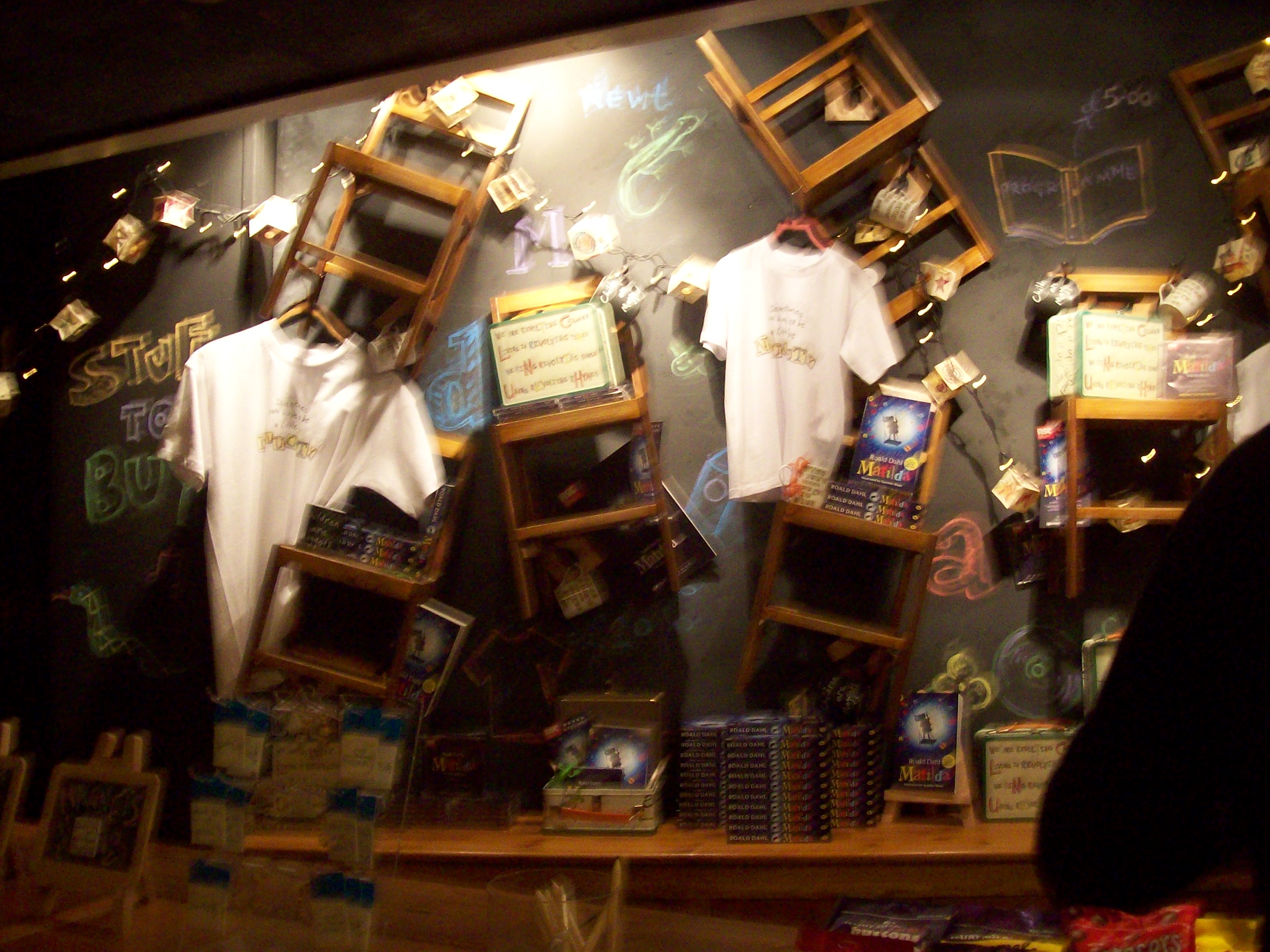
We went for a quick meal at Mon Plaisir which was nice. The main meal was quite small, but the desert was lovely – a rich chocolate mouse with a passion-fruit ice cream. Then, it was time for my birthday treat – Matilda the Musical! I thought it was good that it was faithful to the story-line but also was not restricted by it, making adaptions, and infusing more magical threads to the narrative. It did feel really magical and I loved the songs, as well as some of the messages they conveyed about being the writer of the story of your life, and although the main star, Matilda, is generally a good girl, that ‘sometimes you have to be a little bit naughty’ when you feel like something is not right to you.

In other news, I’ve had a couple of rejections – the Charles Pick Fellowship and my first application for Arts Council funding. I was disappointed that I’d had to email to ask about the Fellowship and that I would have not been contacted otherwise. I’d had a nightmare about not being accepted for it so it was really gutting that I’d not even made the short-list. Next year I think I’ll reapply with my novel idea, as maybe proposing to write a series of children’s short stories was not good enough, especially as a faculty member at UEA had told of the polarised views of children’s literature by the other staff.

I didn’t expect to be successful for my first arts council application. As I have the money to put my event on from being a Poet Shadow in Shake the Dust, I don’t have to worry about actually not being able to afford it. Though, making a profit will be unlikely. And although you can’t make a profit with Arts Council funding, it does mean the money isn’t coming out of your own pocket, resulting in a loss. Anyway, I emailed for further feedback and got a great response and so have lots to learn for any future applications. Particularly the idea of whether I actually do want to do any more events – do I want to be a writer or a producer? I’d say 100% a writer, first and foremost, but that I would like involvements in events and sometimes enjoy putting on my own events. Also, this pilot project is more about just putting myself out there and learning from the experience, so we’ll have to wait and see!

xxx

Welcome Home

Today is going to be the end of a very social and productive week, before the start of a very busy week to follow (which will also include a bit of socialising). I’m going to my friend Jo’s house for her housemate’s birthday, and I’ve also managed to see my friend Natalie who’s moved to Coventry and Hannah who’s about to move to York! What I wanted to write about is Tuesday. I viewed a gallery space called The Showcase, which is part of Craft Central, as this is where I will be holding an event later this year, on 22nd August. Afterwards I went with Siobhan Belingy to see Gillian Wearing’s exhibition at Whitechapel Gallery.

I’m really glad that we went as it was so interesting. We started catching up with each other but the exhibition was so engrossing and all-consuming. We both have had the experience that the stories expressed through Wearing’s work was so strong that we couldn’t get them out of our head.

As a writer, I found it inspiring in terms of presenting a narrative and the ideas explored between fiction and reality. This was extended further to the concept of public verses private personas.

Wearing’s most well known work is probably Signs that say what you want them to say, and not Signs that say what someone else wants you to say (1997)shown above. As I didn’t know that much else of her work, it was interesting to see everything else – each piece of work stood out and made an imprint on my mind.

In 10–16 (1997) adults lip-sync to the voice-overs of children expressing their fears and insecurities. This results in a disturbing yet sometimes comic effect (I witnessed one woman have to escape the room in a fit of laughter) which shows the strange way emotions can sometimes work in response to tragic events. Her videos depicting familial relationships deal with the ‘expression of both love and conflict so common to most families,’ and sometimes touches on metaphor, asking the viewer to interpret the implied meaning.

In the same room as the sign photographs are three sculptural maquettes of uncelebrated modern-day heroes, which was thought-provoking in regard to the way we put historical figures on both literal and metaphorical pedestals. Her self-portraits were intriguing as the prosthetics looked so real that you could only tell it was a facade from looking at the eyes.

Lastly, the confession booths presented the result of an advert Wearing posted Confess All On Video. Don’t Worry, You Will Be In Disguise. Intrigued? Call Gillian….(1994) Like the grip of reality television, it was difficult to pull away from this seemingly never-ending reel of different true stories. It was tragic but thought provoking, and made me wonder how much we really know about the people that surround our daily lives.

Although at Sainsbury’s I’m quite aware that nobody knows me that well and I like it that way because I don’t want to enter into the petty problems that can occur in environments like that. I tend to distance myself from others and talk on a superficial level, and back away from questions asking how my long-distance relationship is and how my Valentine’s day was (err… weird, mind your own business cheers). I use the time to focus on the task in hand and sometimes zone out and spend time in my head due to the physical nature of the job.

However, the idea of everyone thinking you’re a great guy at work is turned sinister in the confessions booth as one man reveals his dark past as a murderer. The stories told elicit a response in you, ranging from sadness and sympathy to anger and disgust.

You can catch the Gillian Wearing exhibition until 17th June 2012.