The Party’s Over

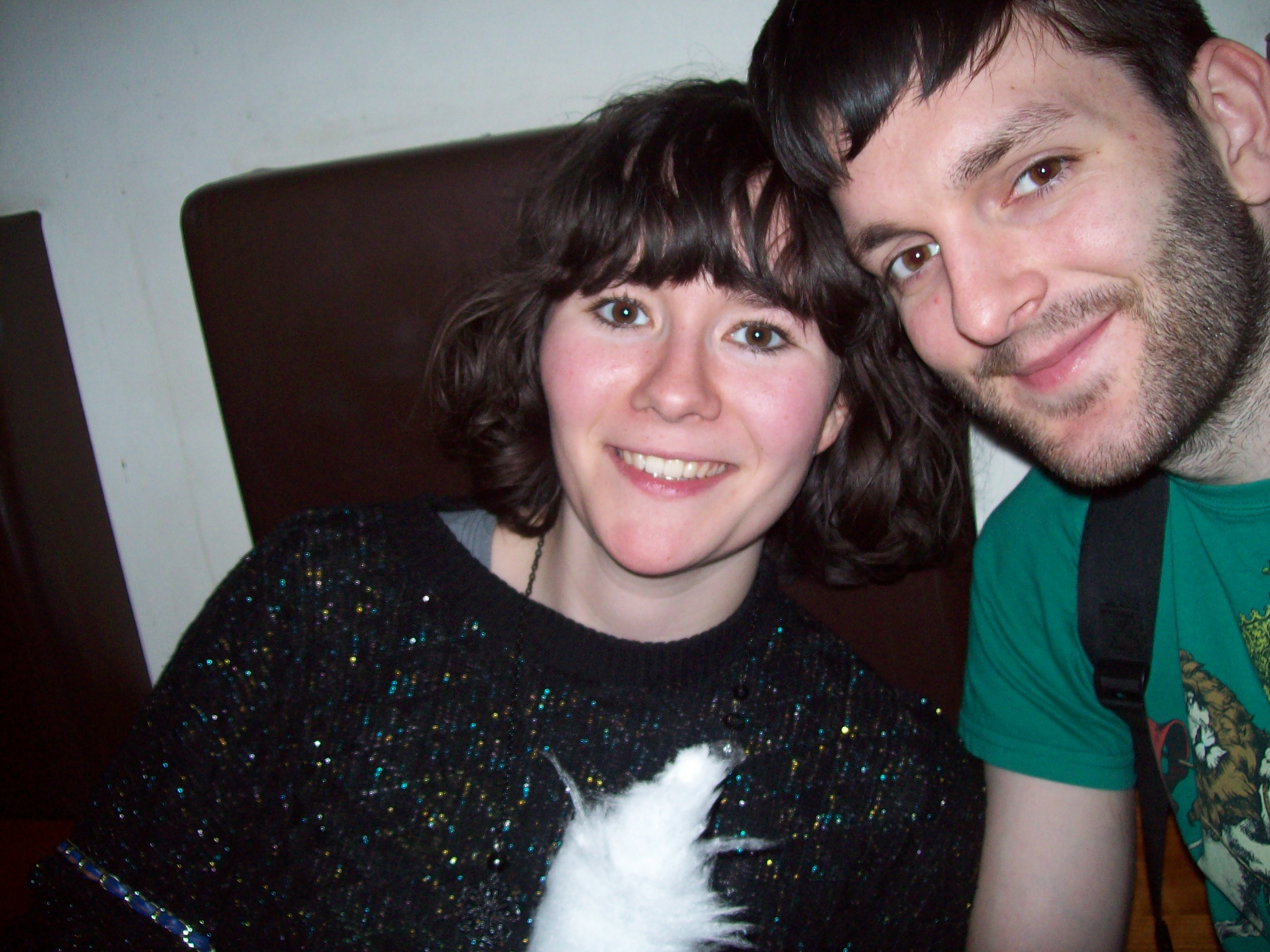
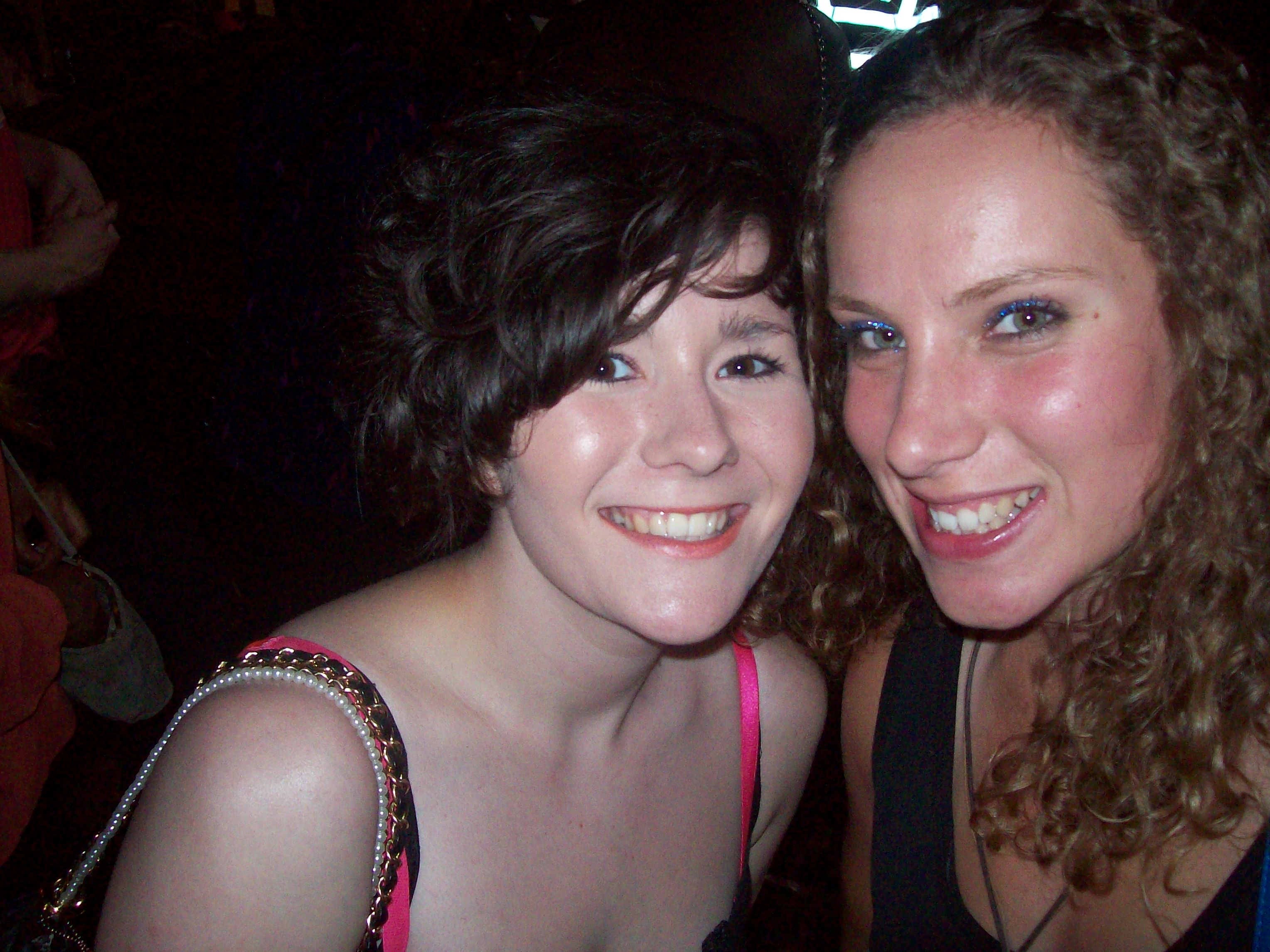
Hannah and I at Mystery Jets
Scroobius Pip at Dragon Hall
Birthday bowling 🙂
cards and pressies
Singing and miming along to I’m Just a Girl by No Doubt. I’ve had it up to here [with the patriarchy] ladies.
“You are not the victim of your life, you are the creator of your life” – wise words on the cubicle door at The Mill
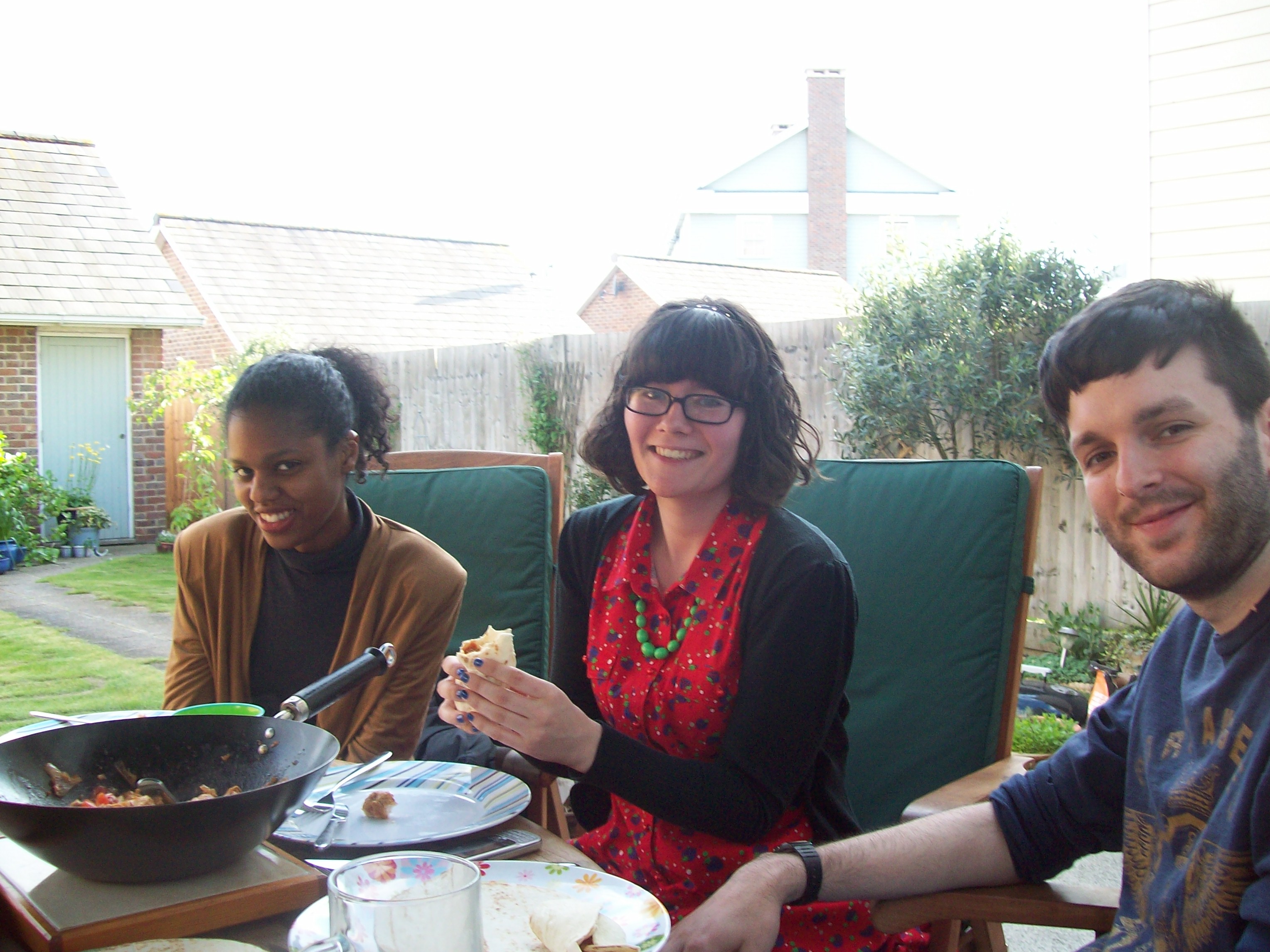
fajitas and bean chilli
family reunion (dad’s side)


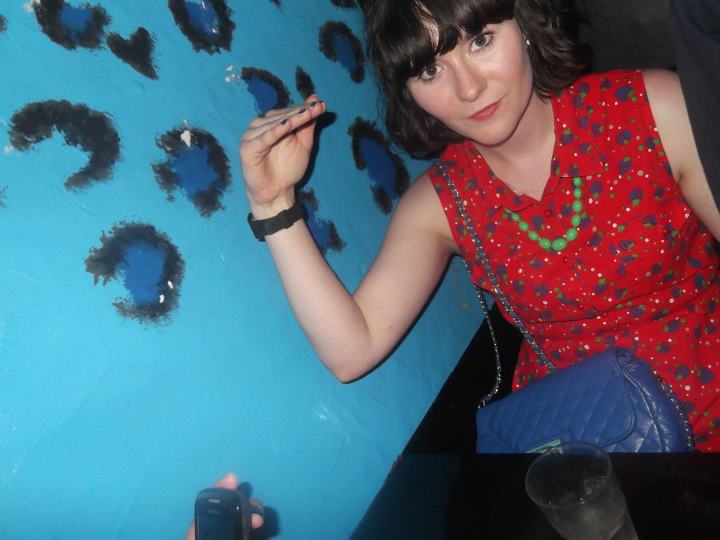
A picture paints 1000 words today. For my birthday weekend I had a family BBQ, followed by friends and fajitas. We went to Bacchus in Kingston after a few drinks at The Mill. Matt and I got home around 3.30am. I went hungover for an eye appointment and was rewarded with a roast dinner. On my actual birthday I opened present and cards, and the sunshine stopped so Matt and I went bowling. We won one game each and played arcade games, pool and ate candyfloss.

He went back to Norwich for his job seekers appointment (but he has a job[s] now – yay!) I had a Chinese take-away with my parents and watched Towie, 56 Up and Desperate Housewives. I joined Matt in Norwich the next day.

We forego-ed a party sadly, but watched Eagle Vs. Shark. We saw Scroobius Pip at the Dragon Hall in Norwich, with great support including one of my favourite poets, Russell J Turner. I was working for Shake the Dust in Cambridge on Thursday and Friday. After the second workshop I dashed off, Cornish pasty in hand, to see the Mystery Jets in Brixton, with support from Theme Park and Slow Club.

Saturday night I went to my friend’s house, got more pressies and watched Two Lovers, stayed up until 3am and then was back at Sainsbury’s on Sunday, where I sprained my wrist.

xxx

Don’t Fritter Your Fiver

Since I’m saving for my MA whilst on little more than minimum wage, and, I’m pretty sure this recession stuff is still rolling, I thought it would be useful to think of little ways to save money.  One tool I should point out is the Drink Aware website, as it promotes healthier drinking habits too.  Out of interest, this month I kept track of how I’ve spent my fivers.  Although I have at times given into the urge to splurge on sale items I can’t afford, it is often the little things that add up and make all the difference between a a healthy balance and, well, overdrawn.  As my mum always says, ‘look after the pennies and the pounds will look after themselves.’

So I looked at ways that I have been frittering my fivers!  This way I can see what my spending habits are and whether I am spending it on necessities or luxuries.  It went a little something like this…

– 04/01/12: £1.50 – Basmati Rice from Iceland.

– 07/01/12: £3.26 – Chocolate Crêpes, Terry’s Chocolate Orange, and 5 Aero Xmas Trees, from Sainsbury’s.

– Chocolates and a present: £4.50, from Sainsbury’s.

– 10/01/12: £1.52 for postage of poetry submissions.

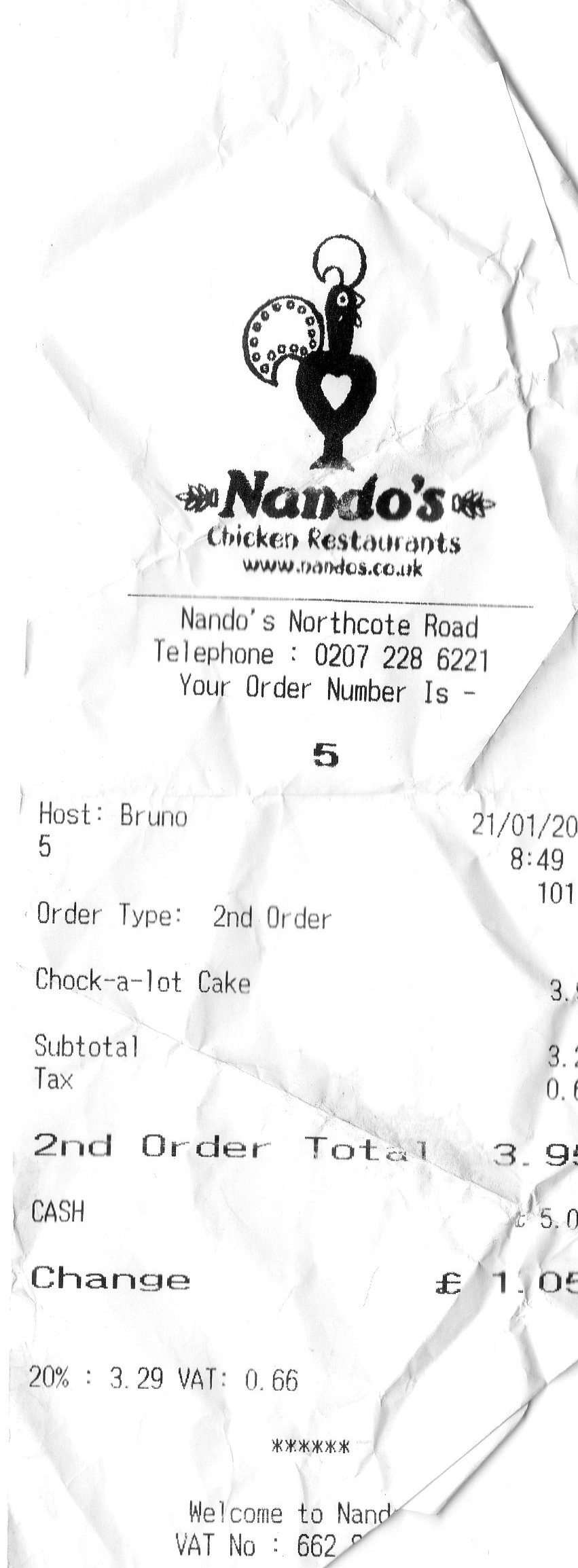
– 21/01/12: Dessert at Nando’s.

– 26/01/12: More chocolate.

– Various: £2.60 to get to work in Epsom.

So, looking over my spending, I spend a lot on chocolate, which tends to be when I’m visiting my boyfriend.  I had a feeling I was doing this and told him maybe we should try not to do it so much.  The only necessities were the rice and travel for work.  The postage was also a wise spend.  And the present could be argued as unnecessary but I think it was worthwhile!

Okay, I’m partial to a bit of chocolate in the evening but I think I can go for a couple of days without (as I write, there’s a strip of chocolate in the cupboard which I am foregoing to get some things ticked off my to-do list.  So, if I stopped buying as much chocolate, I could save approximately £10-15 a month.  That’s £120-180 a year!  That could practically get me a festival ticket or a cheap holiday! That could buy me more poetry books – even though I have around 10 to read, my Gran got me a membership for the Poetry Society which I want to use.  And I think supporting poetry is probably more important than chocolate (although that arguably helps with serotonin levels and increases happiness – yay!)

So, if you fancy not frittering your fiver, you could use it to buy some poetry… perhaps even help me out and get a copy of my book/eBook, as I could do with the feedback (and the chocolate money – okay, what if I promise I won’t fritter?)  So, I’m not doing anything silly like giving up chocolate, but I am thinking more wisely about spending so much on it, so maybe I’ll only get some if it’s like a really good deal! 😉

I’ll end this post with a new poem that Matt and I are going to use for a project we’re working on.

January

New year, same you; but with added shine,
a slicker rhyme, I’m feeling fine,
each day is mine – and I’m on fire.
I am climbing, I am always getting higher,
as I shoot and grow,
my roots, I know, are firmly on the ground.
I am free to feel, myself, so real,
I am finally unbound.

xxx

AdSense

<p>This post confirms my ownership of the site and that this site adheres to Google AdSense programme policies and Terms and Conditions. ca-pub-8382237468564352 </p>

Glory Days

I’m watching Glory Daze atm and am still recovering from a day bein hungover, hence the title of this post.  A note to Adele’s Someone Like You as well. Also, it’s a bit of a random post!

I’ve just read an article about the Slutwalk happening in June by Ray Filar.  She’s a very interesting lady and it’s a great read, will try to keep up with her stuff.  I should probably write more about this myself but I would probably go on forever and I’m tired.  Yes, I screwed up again and drank too much last night.

I’ve been really feeling song ‘Kill’ by Jimmy Eat World.  It totally describes how I’m feeling about this guy I like.  I attempted singing it but I don’t recommend you watch that. 

I’ve also listened to a bit of Mélanie Laurent.  I particularly like the songs with Damien Rice.

In other news, the birthday celebrations have begun!  I had a picnic last weekend with the family as it’s also the month of my mum’s, aunt’s and Gran’s boyfriend’s birthdays.  Tuesday, it was my mum’s and we had an Indian takeaway and watched The Apprentice – loving it!

Yesterday I prematurely spent my birthday money.  I got this dress.  I also got a headband, there’s loads in Topshop that are amaze.  I’d seen some things shopping for presents from my parents (two Topshop dresses) so I had my eye on them.  I splashed out on an hourglass necklace and a locket-clock necklace, oh, and some bird stud earrings (Urban Outfitters).  There was also cool whiskey flasks and sunglasses but it’s expensive. 

I then came home and bought Rihanna tickets, eek!

I went off out again to get my haircut – I just looked up my hairdresser on Facebook, one mutual poet friend! Also, he looks like a model.  He annoyed me at one point as he was a bit of a chatter and I quite like relaxing in the silence, watching the music videos and zoning out, and he said to me “are you ok? you seem quiet” which is weird because I just assumed we were past the small-talk and he was just gonna get on with cutting haha.  But he was a really nice friendly guy.

I then saw Insidious with my friend Natalie.  I didn’t much like the “demon” in it as I’m a bit funny with such overly unbelievable portrayals.  But, I did really enjoy it, there was an interesting storyline and made me think again about looking into different dimensions (previously, I thought about it after seeing Rabbit Hole).  It was scary and also seemed a bit old-fashioned in a good way, with great melodramatic music!

I went straight to Kingston to supposedly celebrate my birthday with some London people (I’m travelling back to Norwich on the actual day).  I sat on my own for over an hour in The Mill, pacing my Fosters, watching 90s videos on the screen above.  It was really embarrassing, especially when people asked if the seats were free, then a girl’s 18th was going on behind me, and one of these guys that came along said hi to me then asked if I was with the others… more embarrassment.

However, Kev turned up, and shortly after Emily did too.  So, it was nice to see them, and me and Emily ended up in Oceana and I had way too much to drink.  I had a good time though!

I’m obviously very upset about certain friends, especially those who I count as my closest friends.  It’s a real let down, and just rude… I was calling them and obviously being ignored.  I’m not going to let it get me down though, and I’m really looking forward to the weekend.  Apart from the ‘heavy rain’… I really hope that changes because my mood is influenced by the weather!  I’m also eating at Thai Tho in Wimbledon Village tomorrow with my parents, never been there before so hopefully it’s good, I already know what I’m having! Chicken satay and prawn pad thai, standard ha! May go elsewhere for dessert of have it at home!

Fingers crossed that Nando’s let me book a table for 15 people tomorrow!  I’m going to ask to speak to the manager because they said they couldn’t do it when I rang before.  And fingers crossed for sunshine, or at least no rain! Rain, rain, go away, come again when it’s not my birthday!

xxx

My terrible essay that I got a 57 for….

Although I got a bad mark, it connects to poetry so thought I’d post about it.  I’m also going to attempt at a couple of different essays related to the module of ‘Words & Music’ around May/June.

Blurring the Boundaries: An Argument for the Musicality of Poetry


The study of the relationship between words and music is centred around the debate on the ability to define music in linguistic terms. One way of defining music is often by describing the impossibility of the task in hand, or resorting to define it in terms of what it is not. Therefore, one might claim, music is not poetry. However, this essay will explore this statement in an attempt to prove the opposite. To do this effectively it is necessary to concentrate the argument. Poetic form will act as a starting point prior to looking at the four perspectives of voice as outlined by Simon Firth – voice as an instrument, body, person and character. Beyond this, the role of genre will be considered, along with any general arguments that arise through this exploration. In the comparison of poetry to music, the popular song will be a focal point, as opposed to classical music. As poetry itself is a vast subject of comparison, there will also be a focus on the contemporary. The aim is to establish, not only a relationship between words and music, but a blurring of the boundaries that takes place when one finds the musicality of poetry.

Although there is a contemporary bias in the argument for poetry as music, it is important to note that there is a ‘modern scholarly reluctance to interpret poetry, music, philosophy and politics in the same breath,’[1] yet in Ancient Greece they did not ‘distinguish song from poetry.’[2] This can be explained as being due to the natural associations that tie song and poetry together. Robert Bridges notes that as speech developed, humankind was ‘bound to take an aesthetic view of it, that is, to be more pleased with some sounds than others.’[3] He also states that ‘poetry selects certain rhythms and makes systems of them, and these repeat themselves: and this is metre.’[4]  Metre does not only hold explicit associations with song lyrics, but it is also related to the patterns of music itself, in the repetition of sound and rhythm. Calvin S. Brown suggests in Amy Lowell’s After Hearing a Waltz by Bartók that ‘it would be an easy task to write out the time of the entire poem in musical notation, in spite of irregularities indicating rests and syncopation.’[5] In this example, the poem’s musicality may be coincidental, and this could be argued as stronger support than when deliberate as it implies a natural association between music and poetry. However, when the musicality of the poetry is intentional, it shows the poet’s belief in the ingrained relationship between poetry and music.  For instance, this relationship cannot be denied in the case of Basil Bunting’s writing, as ‘he believed that poetry should skilfully take over some of the techniques that he only knew in music.’[6] Not only was he influenced by his love for music, he used the musical form as a model for writing; a method which he saw as essential to the success of the piece.  This can be seen in Briggflatts where ‘Bunting had Scarlatti’s B minor fugato sonata (L.33) in his mind from the outset of the poem and the eighteenth century composer’s readiness to modulate between the light and shade of major and minor informs the shift from’ the ‘fells’ late spring’ (l. 4) to the ‘solemn mallet’ (l. 24).[7]

It is worth outlining obvious similarities between music and poetry in order to establish valid reason in the comparison being made here. In contrast to other art forms, both music and poetry are temporal arts, unfolding with time and reliant on one’s anticipation of what is to come. Whether in composition of poetry or reading the end product, similarly to music, sound is of major significance, and as mentioned previously, there is an importance of structure, as much of the pleasure of both art forms is contained in the patterns of rhythm created.  Brown again, asserts that ‘the impossibility of reading more than one thing at a time makes poetry incapable of really reproducing any contrapuntal or polyphonic forms of music.’[8]  However, if one takes the oral tradition of poetry, this is not entirely true, as one can see in the existence of ‘poetry choirs’, or ‘poetry collectives’, such as Aisle16 and Spoken Word All-Stars, whereby lines can run simultaneously as in song, often accompanied by instruments.   Roland Barthes analysed the historical meaning of the French mélodie and concludes it ‘derives very little from the history of music and a great deal from the theory of text.’[9]  He makes a connection between language, poetry and performance in relation to the mélodie; when encountering poetry, perhaps as opposed to prose, one needs to read the text aloud in order to engage with it.  The sound produced creates meaning in the individual’s mind.  Thus, this act of interpretation relies on the experience of the individual, which brings about the ideas of person and character as proposed by Simon Frith.

          In the same way as song, there are different layers of meaning in poetry.  Firstly, there is the intended meaning of the poet, and within this there may be a character created either as an extension of the poet, or separate from them.  When the poem is performed there may be an extra layer added through a stage persona, and lastly the multiple interpretations of the audience.  When poetry is spoken aloud, the text is brought to life because when a poem is on the page it is not fully formed; it lays incomplete and waiting for a body to give it a voice.  In explaining the idea of mimesis in poetry, Aristotle believed it ‘dramatises and embodies human speech and action.’[10]  Both are cathartic by nature, and it is when spoken aloud that the emotional expression that is embodied in the words is fully produced.  This is where the boundaries blur as ‘the music of poetry and the poetry of music are one and the same thing.’[11]  There have been surges in the popularity of poetry, and since Kenneth Rexroth noted in the 1970s, with regard to the Beat generation, ‘poetry has become once again an art of direct communication,’ poetry has seen a rise in recognition within pop culture, not only with live literature events, but also with its associations with music.[12]  Like certain genres of music, poetry can be seen as elitist.  However, the current ‘poetry scene’ is more easily comparable to a wave of underground music.  With connotations of fashion and poets achieving a celebrity status, it may be argued that this is a phase or fad, yet this merely asserts the notion that poetry and music are one and the same thing.  Between these surges of popularity ‘the geyser is grumbling underground and gathering its strength.’[13]

          Basil Bunting believed ‘music and poetry are twin sisters born of the primitive dances.’[14]  With their roots both in the body and movement it is essential to the nature of poetry that it is voiced, using the body as a vessel for its sound.  Lawrence Kramer used the word ‘gestural’ when describing the relationship between music and poetry, reflecting the idea that both ‘define their formal shape as a function of rhythmically integrated time.’[15]  The movement of the body in dance has a natural rhythm that is mirrored within the spoken word.  This can be seen in any school playground where clapping and skipping games are played such as Down Down Baby, where the rhymes are combined with hand claps, stomping feet and other movements.  The poet, Tracie Morris establishes a connection between the body and the voice as an instrument, stating ‘the body is full of these cavities that reverberate sounds.  Sounds are physical things.’[16]  The sound of words can be manipulated by the slight movement of the mouth, and in the way one’s body dictates the sound when singing, it does the same in speech.  Poets and singers are not restricted to rules of sound as both are free to fluctuate between talking and singing.  For example, PJ Harvey is categorised as a singer, yet she varies her voice considerably, at times not just talking, but whispering.  In Poeticat, a current ‘poetry band,’ Catherine Martindale performs poems which include parts that are sung in a genre they call ‘folk n word.’[17]  This leads on to the idea of the voice as an instrument which the individual, poet or singer, can use to determine the sound that is produced.

          The idea that a performance is dependent on the individual, means the performer also has the freedom to change the how the words sound and toy with the audiences expectations, for example, elongating certain words or adding extra pauses.  Therefore, the idea that a singer of popular music (as opposed to classical whereby the score dictates the singer) having less control over the sound than the poet, who ‘can never be fixed by or to a performance,’ seems archaic of Simon Frith, writing just over a decade ago.[18]  The spoken word and the sung have the same role.  Poetry is often assumed to be more concerned with meaning over sound, than lyrics of songs.  For example, in recent years there has been an emergence of genres of music such as post-hardcore, screamo, metalcore, deathcore and crunkcore, whereby a common feature is that lyrics are often screamed to an inaudible degree.  However, it is arguable that this does not necessarily mean the words have less significance.  For example, in the post-hardcore band, The Blood Brother’s 1, 2, 3, 4 Guitars, lyrics can contain poetic elements such as metaphor and simile with ‘guitar one fastens languid years to busty bones like dust and skin on a dull antique moon.’[19]  In reverting once again to the example of Tracie Morris as a poet, she experiments with ‘sound poems’ whereby the sound overtakes the meaning, as apparent within certain genres of music, originating from the Dada movement of the 1920s.    Edith Sitwell defined this type of poetry as ‘abstract poetry’ and claimed they act as ‘virtuoso exercises in technique of extreme difficulty, in the same sense as that in which certain studies by Liszt are studies in transcendental technique in music’[20]  Critics have noted that her poetry ‘seems to cultivate multiple voices… and forces a more nuanced reading of the relation of performance poetry to avant-garde experimentation,’ where words are repeated to a degree that they merge into one another and form a new sound, epitomizing the concept of the voice as an instrument.[21]  An example of the blurring of boundaries between music and poetry is I Am Sitting in a Room by the experimental composer Alvin Lucier; the piece of text is recorded and re-recorded until it becomes inaudible.  As poetry is often assumed to be more concerned with meaning, than lyrics of songs, it is interesting to note these formats, and the examples given here mark a merging of music and poetry, increasing the difficulty of distinction between the two.

          Contemporarily, the most obvious ‘musical use of spoken language’ is in rap music.[22]  Although the genre of rap is rooted in African culture, in today’s society it is unlikely that any colloquial language will be ‘misunderstood when taken over into a white town,’ at least by younger generations, not only due to multiculturalism, but also because there are less limitations in regard to popular music – sounds described as ‘indie’ and ‘alternative’ have become assimilated into the mainstream and rap is one of the many genres of what is popular.  Rap is arguably not only a genre of music, but a genre of poetry, and thus bridges the gap between the two.  Without venturing into the complexities of musical history, recently rap music has seen the emergence of ‘alternative rap,’ which includes the concept of rappers distinguishing themselves as poets.  This includes artists such as Scroobius Pip, who began collaborating with laptop musician dan le sac in 2006 after working as a solo performance poet, with lines such as ‘hip hop is art, don’t make another pop hit, be smart,’ in a pastiche of rapper Dizzee Rascal’s Fix Up, Look Sharp, thus promoting the poetics of music with an emphasis on the meaning of words.  Another example is poet Kate Tempest, who performs both solo and with her band Sound of Rum, and has gradually adjusted to being described as a poet rather than a rapper, before the publication of her poetry in print.  Although there is admittedly, in some cases, a distinction that can be made between poetry for the page and that for the stage, it is no longer required for an artist to place oneself in a box in terms of an artist distinguishing oneself as either a poet, rapper or musician – one is able to bridge the gaps through defining oneself within a multitude of disciplines.

          In writing about Arabic song, Virginia Danielson stresses the importance of both sound and meaning, and notes that ‘musical genres often shared the names of the poetic genres to which their texts belonged, for instance the mawwãl and the qasida.’[23]  This raises the question as to why there is even a need for such differentiation between music and poetry.  The point that is being illuminated here is that poetry is simply a genre of music, rather than something distinct from it.  If one looks at song in comparison to performances of poetry, the components are the same.  Conversely, Peter Manuel argues ‘when a poem is set to music, it loses its literary status and becomes part of the music, with a purely musical function and value.’[24]   Whether or not poetry is a higher art form that lyric-writing is solely a value judgement, which has no function other than to create a pretence surrounding poetics, distancing it from its roots.  If the function is said to be purely musical, this undermines the importance of the words and renders the textual element meaningless.  The art of poetry is interdisciplinary by nature, thus it lends itself to an amalgamation with music, drama, and so on.  The difficulty of the issue is that it is not black and white, and it is the grey areas that make poetry so interesting.  Music is tied to the roots of poetry, and the performance of poetry serves to highlight the musicality ingrained within it through the use of the voice as an instrument.  In poetry, one is not purely concerned with the meaning of the words, but also with the sounds created, and in music, one is not just concerned with the sound, but equally desires to attach meaning to it, with the meaning often enhanced by words, where song is considered.  The function of genre is to create taxonomy for simplicity’s sake; however, once conventions are over-used, there is a welcome relief when the restrictions of genre are defied.  To separate music and poetry is to celebrate the mundane.

          One can see the similarities between music and poetry in regard to the form, features such as repetition, as well as the temporal nature of both art forms.  The roots of poetry have been established as being the same as those of music, and thus there will always be a connection between the two.  If poetry is regarded as a genre of music, one can see many sub-genres that are produced from it, such as hip-hop, the avant-garde sound poetry, contemporary performance poetry as we know it today and so on.  As new seeds are planted, and as poetry is expanded upon, the roots remain the same.  The poets themselves express the influence of music, the importance of sound and the use of voice, thus through the many difference ways of performing poetry, the unification of music and poetry is highlighted.  The poem on the page is incomplete unless sounded, whereby meaning is created and it can be fully understood as a whole.  The role of genre has its place, but it can also be a hindrance when it is used to pigeon-hole unnecessarily.  One needs to allow the boundaries to blur, to merge somewhat, in order to see the musicality of poetry.

[1] Kramer. Music and Poetry: The Nineteenth Century and After (London: University of California Press, 1984) p. vii

[2] Nagy. Poetry as Performance: Homer and Beyond (Cambridge: Cambridge University Press, 1996) p. 2

[3] Bridges. Collected Essays Vol. 10 (London: Oxford University Press, 1936) p. 216

[4] Bridges. p. 217

[5] Brown. Tones into Words: Musical Compositions as Subjects of Poetry (Athens: The University of Georgia Press, 1953) p. 26

[6] Forde. The Poetry of Basil Bunting (Newcastle: Bloodaxe Books, 1991) p. 11

[7] Brinton.  ‘The Poetry of Basil Bunting’ in English Association Bookmarks No. 61 (Leicester: The English Association, 2007) p. 3

[8] Brown. p. 39

[9] Barthes. The Responsibility of Forms: Critical Essays on Music, Art, and Representation, trans. Richard Howard (Berkeley: University of California Press, 1991) p. 274

[10] Nagy. p. 4

[11] Kramer. p. 241

[12] Rexroth. The Alternative Society:  Essays from the Other World (New York: Herder and Herder, 1970) p. 148

[13] Rexroth. p. 39

[14] Bunting. Basil Bunting on Poetry ed. Makin, Peter (Baltimore: The John Hopkins University Press, 1999) p. 19

[15] Kramer. p. viii.

[16] Crown. We Who Love to be Astonished: Experimental Women’s Writing and Performance Poetics, ed. Hinton, Laura and Hogue, Cynthia (Tuscaloosa: The University of Alabama Press , 2002) p. 223

[17] http://www.myspace.com/poeticat

[18] Frith. Performing Rites: Evaluating Popular Music (Oxford: Oxford University Press, 2002) p. 179

[19] http://www.songmeanings.net/songs/view/3530822107858628757/

[20] Sitwell. The Canticle of the Rose Poems: 1917-1949 (New York: Vanguard Press, 1949) p.xii

[21] Crown. p. 219

[22] Frith. p. 175

[23] Danielson. Music, Words and Voice: A Reader, ed. Clayton, Martin (Manchester: Manchester University Press, 2008) p. 92

[24] Manuel. Music, Words and Voice: A Reader, ed. Clayton, Martin (Manchester: Manchester University Press, 2008) p. 103
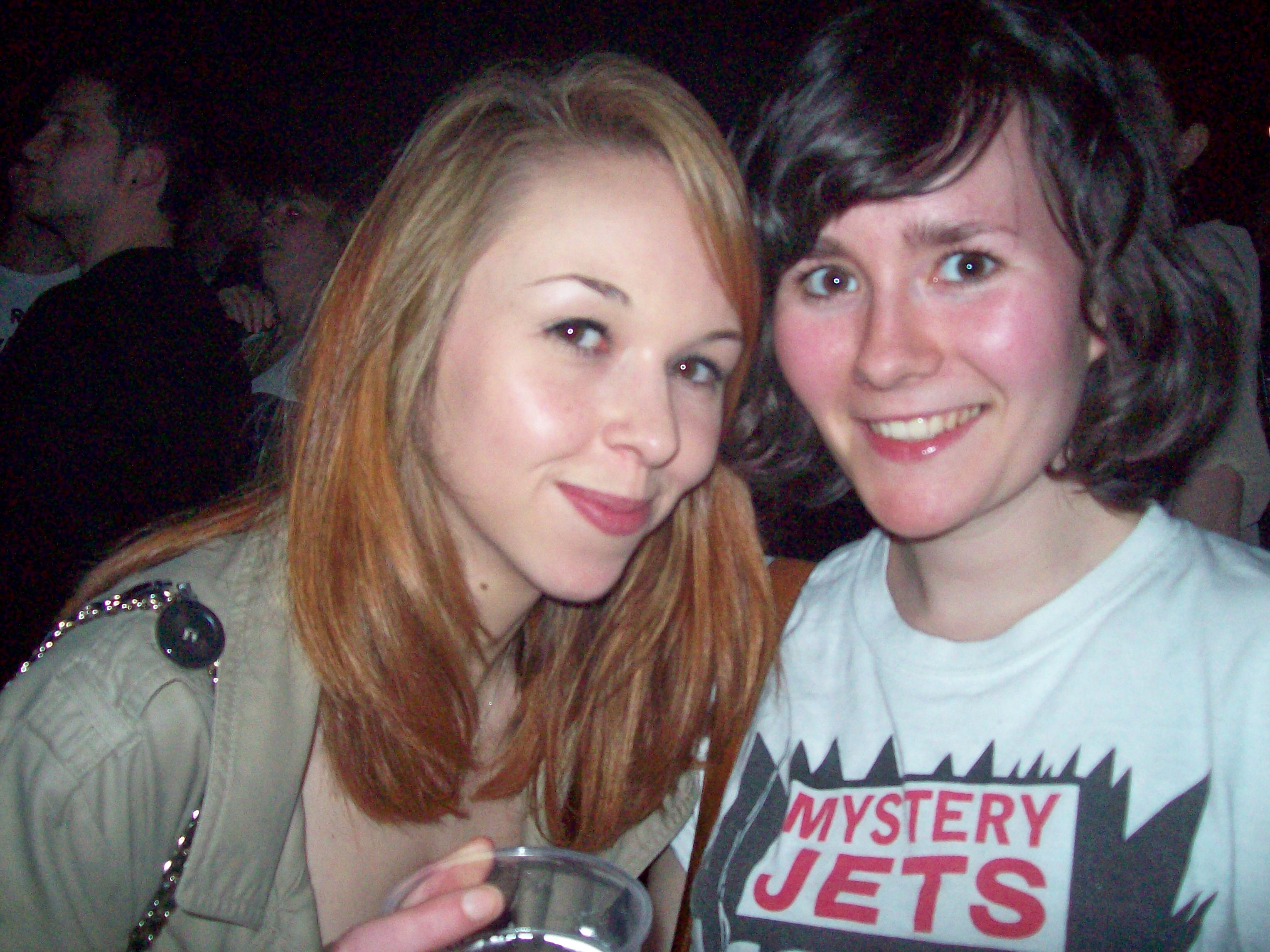
Joshua Jones – Thought Disorder

I know too much (and yet, too little) about Josh to write a review of his first collection of poetry, Thought Disorder.  Though I will write a little about my reading of it here.  I told my mum about his book and out emerged the competitive mother.  She skimmed through to a page and spotted an Americanism, scoffed and criticised him.  I told her he was really smart.  She said so am I.  I told her his girlfriend designed the cover.  She said I could do better.  I told her some of the things I knew of him.  She changed her mind.  And here, where it says Elliott, that’s his son.  She didn’t bother reading anymore.  But then, neither did I, I wanted to wait until I had a nice section of time to sit with it.

When reading Josh’s poetry collection, it’s a bit like reading about song lyrics about the famous to find out about their lives instead of reading gossip magazines.  However, I don’t know much more than what I started with; Josh has eyes and his room is an ashtray.  And he’s shit-hot at this poetry lark.

The opening poem, Exposure, is not his best but it lures you in enough to make you want to read more, and introduces you to the collection thematically.  I’m trying to avoid any pretension here, and just say bits I liked, so I think it was a good poem to start with; there is clear imagery, and I like the use of the viewfinder.

I love the way Josh uses similes and metaphors and this strength starts to show by the second poem, with ‘fill your sugar bowl with rubber shavings,’ and ‘I built this cabin out of explanation’ the italics seeming to emphasise my favourite parts.  An example of this from another poem is ‘I tear the moon off like an old sticker’.  I find these moments really imaginative and beautiful.

In Bus the ‘jewellery store of tears dressing her cheeks’ reminds me of Jeff Buckley’s Jewel Box, which I love, as well as the wonderful idea of “moist windows”.

Pub is humourous and familiar, and by Eyes I’m thinking this must be the best of Josh.  However, I turned the page and was engrossed in all parts of Sigging.  I’ve always shunned prose-poetry because my experience of it through other people’s work was always just nothing resembling poetry at all, just (bad) prose.  This is my favourite part of the book, I think it’s amazing.

Then we are left with After the Pull, and it feels like snapping out of hypnotherapy.  Back to the real world then.

So, yeah, buy the book by clicking here.

There’s More to Life Than Cheese

Because I love writing lists and love food I have decided to write a list of the different foods I like!  Plus, I get irritated when people think that just because I don’t like cheese that there’s loads of things I can’t eat (which is only true for the most part because cheese is something that’s added to dishes a lot).  I used to be ‘fussy’ but I object to this label, because in the past the reason for this is due to fear of being scared to try new things in case I didn’t like them and therefore it would be a waste and I’d get no food.  I was locked in a classroom and forced to eat fish fingers at primary school though I hated them, and so this probably has something to do with that fear.  I am now not afraid to try new food, though I still know what I like and like to eat those things!  I also hate to waste food, so with often either over-eat or save some for the next day’s lunch.  I still worry I won’t like things but am willing to try new foods, but this worry, combined with my weird little particularities and habits about how I like my food means I’m sometimes still called fussy.  However, I also have been known to have things in my packed lunch that aren’t as traditional as others expect, so I don’t think it’s fair to say that just because I don’t like what YOU like that I don’t have a varied palette.

So, here’s the list, which will probably expand in the future!

-Chicken – in pretty much any form, my consistent and reliable love.

-Satay sauce – the reason why Dexter’s Grill/Tootsies became my favourite restaurant and I nearly cried when they took the dish featuring the sauce off the menu and I switched to the BBQ sauce burger.

-dark chocolate and milk (not full fat) – sometimes I worry I drink so much I’ll become lactose-intolerant

– Tortilla Española – my Gran makes the best.  Basically this food sums up my BIGGEST love for both potatoes and egg which I love in every form possible.  I also have tortilla paisana after having peas in an omlette at The Noshery in Isleworth with friends Ricky and Eamon, and have sadly not been since.

-Olives – you can’t be a Masoliver and not like olives… my favourite are pitted with pimiento.

-Kiwi juice – only ever found some in Sainsbury’s, pricey so it was a rarity, but sooo worth it!

-Seaweed peanuts – another one showing my peanut addiction, also love cashews, pistachios, brazils, walnuts etc. 

-Crab – although I’m not sure of the amount of actual crab in them, I used to have seafood sticks in my packed lunch.

-Raisins – my friends from secondary school once cut out and wrote on an advert for Sunmaid because they thought of me.

-Meatballs – specifically from Ikea with that lovely gravy and chips, yummm!

-Currywurst as made by my housemate Kirstie.

-In terms of meats… beef steaks, pork belly, sausages (proper hotdogs with ketchup and onions or chipolatas), maybe a bit of lamb or turkey but they’re not faves!

-Salmon stir-fry with lots of veg and soy sauce.

-And so in terms of more fish… lobster, cockles, shrimps, prawns, crayfish, squid/calamari – I have been asked by friends how to peel their prawns and also have friends who have been scared to eat squid. Tinned tuna only though. Mussels I’d rather not have but can deal with.

-Fruit – grapes, raspberries, strawberries, mango, oranges, pineapple, apple, pear, melon, grapefruit, cherries, peach, nectarine, blackberries, blueberries, plum, currents, lemon, lychees, avocado, banana, kiwifruit, passionfruit, watermelon, butternut squash.

-Vegetables – peas, broccoli, pepper, carrots, raw mushrooms, sprouts, lettuce (good old iceberg is best), kale, chickpeas, most kinds of bean, cabbage, onion, seaweed, cress, cucumber, lentils, asparagus, garlic, spring onion, bamboo shoot, water chestnut, sweetcorn, babycorn, sugarsnaps, greenbeans.

-Weirdly I don’t like tomatoes or cheese but still like tomato sauce with pasta dishes, and cheesy flavoured snacks such as mini cheddars, cheese twists, Watsits, Quavers, cheese & onion flavoured crisps, and pesto.

-I cook Quorn quite a lot when making spaghetti bolognaise (Ragu sauce best!), cottage pie, chilli (con carne/quorni) and tacos.

-Soup! Covent Garden ones are best.

-baked goods and naughty stuff… cakes, bread, biscuits, waffles, crisps (salt & vinegar McCoys, prawn cocktail Walkers, any Pringles or Hula Hoops, Skips, and so on), pancakes, ice cream (chocolate preferably, such as Ben & Jerry’s brownie, also cookie dough, or sour flavours in summer such as lemon or sobets)

-Obviously a main meal needs some carbs, ones often found in my cupboards are… rice, noodles, fusilli, spaghetti (try to get wholemeal).

-Spreads: marmite, margarine/butter (thinly spread), honey, peanut butter, jams, chocolate spread.

-Breakfast in a bowl: Weetos, Choc Shreddies etc, porridge oats with honey, Frosties, Golden Grahams, Fruit Crisp, Fruit & Fibre.

– Falafel and homemade hummus with chili.

A little list of favourites from different countries and typical things I order when getting a take-away or at a restaurant:

–          Indian: poppadoms, Naan bread, japati, Bombay Aloo, onion bhaji, vegetable samosas, chicken or prawn curry up to about medium

–          Chinese: prawn crackers, vegetable spring rolls, satay dish, Chow Mein.

–          Thai: satay skewers, pad Thai.

–          Italian: risotto. Pizza without cheese haha. Panettone.

–          Greek: chicken souvlaki, baklava, Ouzo.

–          Spanish: paella, chorizo slices, sangria, Pa amb tomàquet/Pa amb oli, churro.

–          American: fajitas, burger and fries, BBQ stuff.

–          English: Cornish pasty, Full English fry ups and tea, Sunday roast, pies, gravy.

–          Portuguese: Nando’s

–          France: French Stick/bagette. Crossiants.

Sometimes a Cigar is Just a Cigar

I can’t enjoy Peep Show in the same way anymore, since reading this article: http://www.guardian.co.uk/commentisfree/2010/apr/18/students-pole-dancing-david-mitchell

While I don’t agree with the spokesperson quoted in the article that pole dancing is ‘empowering,’ I don’t agree with David Mitchell either.  I’ve recently joined both the UEA Feminist Reading Group and the Pole Dancing Club.  So, I thought I’d write a post questioning whether a woman can be both a feminist and a pole-dancer; I argue that we can!

I’ve quoted Freud in the title in order to highlight the idea that one doesn’t always have to over-analyse something.  Why would someone who claims to be a feminist, knowing its connotations of strip bars and objectification, take up pole dancing?  Well, because it’s fun!  However, it is a sad fact of society still that we can’t simply enjoy such an activity and have to question the implications and how such behaviour reflects on us as women.

It’s like a combination of gymnastics and dancing, and you do feel a great sense of accomplishment when you learn a move and after a bit of practice you finally get the hang of it.  In just a few months my friends and I have moved up to the Intermediate class, and I’m even planning to take part in a competition in the Beginner s category.  I enjoy trying new things (I’ve also taken up boxing at the same time) and I am always trying to find ways to improve my confidence.  I don’t feel very sexy when doing it, but the better you can fake it, the better you look doing the moves, and the better you feel.  If executed in the right way (and personally, without those awful ‘stripper shoes’) it can look beautiful and elegant.

Just look at videos such as these:

http://www.youtube.com/watch?v=UrPf-ImD_H8

http://www.youtube.com/watch?v=fYci4f0nEZo

When I’ve told people about my new hobby, some (men) have made suggestive comments and asked if we do it in our underwear.  The reason why people may do it in underwear or costumes that resemble underwear is because you need as much flesh-to-pole contact as possible.  But when we practice we just wear shorts and a vest top or t-shirt… nothing more sexy than what you would wear to the gym.

It would be ignorant to not expect attitudes such as Mitchell’s, but we do not have to accept these kinds of judgments.  As someone who has dance since the age of five, it adds another element to what I already know, and shows that life’s experiences are never-ending.  I do these classes because they are fun, but I won’t lie and say I don’t enjoy the sexual aspect of the dance form.  I wouldn’t personally feel comfortable doing a routine to a bunch of leering men, as that is something I would find degrading, but if I happened to own a pole and be in a committed relationship, who wouldn’t want to show off some moves in the bedroom to spice things up a bit?  You could even try to teach your man a thing or two!  Though painful moves such as learning to ‘sit’ on the pole could be more painful for the opposite gender!  It’s not just for girls though.  I once went to a club in Norwich which has poles, and a massive mixed gender group took over the poles and one guy even got told off by security for hanging up-side-down. 

Yes, the world we live in is still dripping with sexism, but for every guy that just thinks ‘phwoar’ at the prospect of a girl pole dancing, I would hope there are still some that appreciate the skill involved in the same way that I might think a swimmer is hot, but marvel as he does the butterfly.  If pole dancing is still viewed in this one very black and white way, then it just serves to give men the excuse that they are incapable of thinking beyond what goes on in their trousers and presents them as animalistic, which comes right out of the school of thought that says a rape victim is ‘asking for it’ by wearing a skirt.  I’d hope for a bit more from men.

I find it offensive that Mitchell would question my role as a woman and a feminist simply because I enjoy spinning around a pole from time to time.  The article just latches onto the word ‘empowerment’ and goes off on one in an attempt to get the reader to agree with him because if you don’t then you are a poor excuse for a women, most defiantly not a feminist and should be ashamed of yourself.  Well, fuck you Dave!

No, I don’t find pole dancing empowering, but I enjoy it.  I may even go as far in proving my point as to adding it to my CV (though I may refer to it as vertical dancing, because I am aware of the misconceptions made clear by Mitchell).  I do many other things that I find empowering, but, sometimes, in the words of Cyndi Lauper, girls just want to have fun.